The air inside your home can actually be much more polluted than the air outside, even though we often don’t think about it when it comes to healthy living. We’re careful about choosing organic produce and non-toxic cleaning supplies, but the invisible air we breathe for hours every day needs just as much attention.
Making sure your home is well-ventilated isn’t just about getting rid of bad smells; it’s a basic step to support your family’s health and well-being.
Why Air Quality Matters
We spend most of our time indoors, constantly breathing in a mix of airborne particles. Everyday household items like furniture, paint, and cleaning products can release volatile organic compounds (VOCs) into the air. These, along with dust mites, pet dander, and possible mold spores, can create an unhealthy environment.
Poor indoor air quality is linked to various health problems, from headaches and dizziness to allergy flare-ups and more serious breathing issues. That’s why it’s important to think about improving lung health. Fresh, clean air helps dilute and remove these pollutants, which can boost concentration, increase energy levels, and make your living space healthier for everyone.
Signs of Poor Ventilation
Your home often gives clear clues when the air isn’t moving around properly. One of the most common signs is condensation that keeps appearing on the inside of your windows. This means extra moisture isn’t getting out. You might also notice stale or musty smells that never seem to go away, even after you clean.
The American Lung Association points out that frequent headaches, tiredness, or allergy symptoms that get better when you leave the house are also possible signs of unhealthy indoor air. If you see mold or mildew growing in corners, on ceilings, or in bathrooms, that’s a definite sign your home’s ventilation needs immediate attention.
Strategies for Fresh Air Flow
You can improve your home’s ventilation with both simple habits and bigger changes. The easiest way is to just open windows and doors for 15-30 minutes each day to let all the air swap out. Get into the habit of using exhaust fans in the kitchen when you cook and in the bathroom when you shower to pull moisture and pollutants directly outside.
For a more lasting solution, think about how your home’s design could improve airflow. Adding features like operable roof lights can greatly boost circulation, especially in stuffy upstairs rooms or single-story additions, and also bring in more natural light. The U.S. The Environmental Protection Agency offers many other tips for improving indoor air quality, from using high-efficiency air filters to making sure your HVAC system is properly maintained.
Humidity Control for Comfort
Controlling your home’s humidity level is a key part of keeping the air quality good. The ideal indoor humidity is usually between 30% and 50%. If levels are too high, it creates a perfect spot for mold, mildew, and dust mites to grow.
If your home feels damp or you notice condensation, a dehumidifier can help take extra moisture out of the air. On the other hand, air that’s too dry can cause dry skin, irritated sinuses, and static electricity. During dry winter months, using a humidifier can add much-needed moisture back into the environment, making your home more comfortable and reducing how long airborne viruses survive.
Clean Air for Better Sleep
The air quality in your bedroom directly affects how well you sleep. A stuffy, poorly ventilated room can have higher levels of carbon dioxide, which might lead to restless nights and feeling groggy in the morning.
Allergens like dust and pet dander can also trigger symptoms that mess with your sleep. To make your bedroom a better sleep sanctuary, try airing it out for about 15 minutes before you go to bed. Keeping the door slightly open can also help with airflow. If you have significant allergies, an air purifier with a HEPA filter can be a worthwhile investment to catch airborne particles and help you breathe cleaner air all night long.
Taking small, consistent steps to improve your home’s ventilation can make a big difference to your overall health. Just start by opening a window and letting the fresh air in; your body will thank you for it.
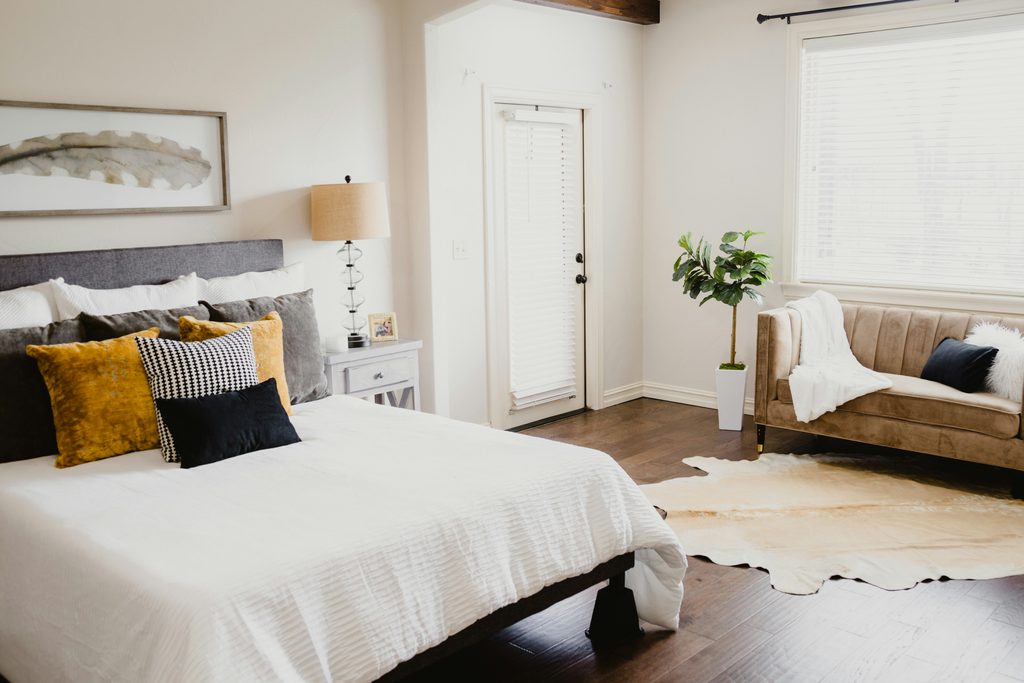
Stepping into a high-end hotel room often brings a unique sense of calm. The space feels tranquil, clean, and perfectly designed for ultimate relaxation. While recreating that feeling at home might seem like an expensive indulgence, you can actually transform your bedroom into a five-star sanctuary using eco-friendly principles. By making thoughtful choices about materials, lighting, and decor, you can craft a luxurious retreat that’s both beautiful and kind to the planet.
From the sheets on your bed to the air you breathe, every element can be picked to boost your well-being and lessen your environmental footprint.
Start with the Foundation: Your Bedding
The heart of any luxury hotel room is an impeccably made bed, just begging you to sink in. This is the best place to start your transformation. High-quality bedding not only feels better but also lasts longer, which means less waste over time. Look for sheets made from natural, sustainable fibers like organic cotton, linen, or TENCEL Lyocell. These materials are breathable, soft, and produced with less environmental impact than regular cotton or synthetic fabrics.
To get that cloud-like hotel feel, layering is essential. Begin with a mattress protector to keep your mattress fresh, then add a fitted sheet, a flat sheet, and a cozy duvet. Investing in one of the best hotel-quality duvets can make a huge difference in how comfortable you are and how well you sleep. Pick a fill and weight that suits your climate and how you like to sleep. Finish the look with a collection of pillows; a mix of firm and soft options gives you both support and a plush, inviting appearance.
Choose Sustainable and Natural Materials
Creating an eco-luxe bedroom goes beyond just the bed. When you choose furniture and decor, pick items made from sustainable and non-toxic materials. Look for furniture crafted from reclaimed wood, bamboo, or wood certified by the Forest Stewardship Council (FSC), which guarantees it comes from responsibly managed forests. These choices help prevent deforestation and give beautiful materials a second life.
The paint on your walls also significantly affects your room’s health and environmental impact. Traditional paints can release volatile organic compounds (VOCs), which are harmful chemicals that can pollute your indoor air for years. Instead, choose low-VOC or zero-VOC paints. They’re widely available in every color imaginable and will help you create a healthier space to breathe in. For textiles like curtains and rugs, stick with natural fibers such as wool, jute, or organic cotton. These materials are biodegradable and don’t shed plastic microfibers into the environment like synthetic ones do. The main goal is to create a room that feels as good as it looks, and that starts with clean, natural materials.
Declutter for a Serene, Minimalist Vibe
One big reason hotel rooms feel so relaxing is their complete lack of clutter. You won’t find piles of mail, stray clothes, or unnecessary knick-knacks vying for your attention. Adopting a minimalist mindset is one of the most effective and eco-friendly ways to get this serene atmosphere. It doesn’t mean getting rid of everything you own, but rather being thoughtful about what you keep in your space.
Start by removing anything that doesn’t belong in a room meant for rest and rejuvenation. This means finding new homes for work-related items, exercise equipment, and general household clutter. Invest in smart storage solutions, like under-bed drawers or a stylish ottoman with hidden storage, to keep necessities out of sight. A clean, organized space helps your mind relax and leads to more restful sleep. This minimalist approach is naturally sustainable because it encourages you to buy less and truly value the items you choose to keep.
Layer Your Lighting with Energy-Efficient Options
Lighting plays a crucial role in setting a room’s mood. Luxury hotels master this with layered lighting that can be adjusted for any activity, from reading to relaxing. You can get the same effect in your bedroom while also being mindful of energy use. The trick is to have multiple light sources.
Ambient Lighting: This is the general light for the room, usually from a central ceiling fixture. Pick one that spreads light softly.
Task Lighting: These are more focused lights for specific activities. Bedside table lamps or wall-mounted sconces are perfect for reading.
Accent Lighting: This type of lighting highlights architectural features or decor, like a piece of art or a beautiful plant.
For all your fixtures, use LED bulbs. They use up to 85% less energy and last up to 25 times longer than incandescent bulbs, saving you money and reducing waste. Installing dimmer switches is another excellent way to control the ambiance while saving energy. You can brighten the lights when you need to see clearly and dim them in the evening to signal to your body that it’s time to wind down.
Incorporate Biophilic Design with Houseplants
Bringing elements of nature indoors, a practice known as biophilic design, is a powerful way to create a calming and healthy environment. Houseplants are the easiest way to do this. They not only add natural beauty and color but can also improve your indoor air quality. Certain plants are especially good at filtering out common household toxins.
Some of the best air-filtering houseplants are also surprisingly low-maintenance, making them perfect for the bedroom. Think about adding a Snake Plant, Spider Plant, or Pothos to your space. These hardy plants thrive in various light conditions and work to purify the air while you sleep. Placing a small plant on your nightstand or a larger one in a corner can instantly make the room feel fresher and more alive. Choose pots made from natural materials like terracotta or ceramic to keep with your eco-friendly theme.
Curate Your Scent-scape with Natural Aromatherapy
Scent is a powerful sense often overlooked in home design, yet hotels use it expertly to create a memorable experience. You can create a signature scent for your bedroom without using synthetic air fresheners, which often contain phthalates and other harmful chemicals. Natural aromatherapy is a much healthier and more sophisticated alternative.
An ultrasonic essential oil diffuser is a great investment. It uses water and a few drops of essential oil to create a fine, fragrant mist that gently scents the air. Choose high-quality, pure essential oils known for their relaxing properties. Try lavender, which promotes calmness and helps with sleep. Chamomile has a soothing, gentle aroma that helps reduce anxiety. Sandalwood offers a warm, earthy scent that is grounding and meditative. Bergamot, a citrus oil, can help lift your mood and reduce stress.
You can also make a simple linen spray by mixing distilled water with a few drops of your favorite essential oil in a glass spray bottle. A light mist over your pillows and sheets before bed can make your sleep space feel incredibly luxurious and help you drift off to sleep more easily. This small ritual transforms your bedroom into a true sensory retreat, enhancing the five-star hotel comfort you’ve worked to create.
By focusing on sustainable quality, minimalism, and natural elements, you can turn your bedroom into an eco-friendly haven that rivals any luxury hotel. It’s a space that not only promotes better sleep but also reflects a deeper commitment to your personal well-being and the planet’s.
Building an eco-friendly home means living in sync with nature. But sometimes, nature gets a little too close for comfort! The same things that make your home sustainable, like fresh air from natural ventilation or beautiful landscaping, can sometimes accidentally invite pests. That’s why many homeowners look into DIY Pest Control’s ant baits. Luckily, protecting your green sanctuary from unwanted guests doesn’t mean you have to ditch your values. With a smart, eco-conscious approach, you can keep your home healthy and pest-free, working with nature, not against it.
The Link Between Home Health and Pests
Pests are rarely the main problem; they’re usually just a sign of something else going on. That’s why it’s good to know ways to keep pests away. If you’re seeing lots of ants, roaches, or rodents, it often points to an underlying issue like too much moisture, easy access to food, or simple entry points. In an eco-friendly home, understanding this connection is even more important. A damp spot from a leaky pipe doesn’t just waste water; it also creates a perfect hangout for mold and pests. Leftover crumbs on the counter or an overflowing compost bin can quickly roll out the welcome mat for ants or other scavengers. Thinking of your home as a whole ecosystem helps you see that a healthy, well-kept house is naturally better at fending off pests.
Common Entry Points in Sustainable Homes
Sustainable homes often have special features that, if not managed carefully, can become pest highways. It’s smart to know about these potential weak spots so you can tackle them before they become a problem.
Passive Ventilation: Natural ventilation systems are awesome for saving energy, but they can be an open door if not properly screened. Make sure your vents have secure, fine-mesh screens. They’ll let air flow freely but keep bugs out.
Reclaimed Materials: Using reclaimed wood or salvaged bits adds tons of character, but these items can sometimes hide pests or have tiny gaps. Always give any recycled materials a good once-over before you bring them inside.
Foundation and Siding: Gaps in your foundation, siding, or around utility lines are common entry points for any house. Pay extra attention to where pipes, wires, and ducts go into your home, and seal up any openings with caulk or steel wool.
Attached Greenhouses and Gardens: Having a garden right next to your house is lovely, but it can also be a bridge for pests. Make sure there’s a clear space between your house’s foundation and your garden beds.
Eco-Friendly Pest Prevention Strategies
The best way to deal with pests is to get ahead of them. Being proactive is the most sustainable and effective strategy, focusing on making your home as unwelcoming as possible. Simple, consistent habits are your secret weapon. Start by keeping kitchen surfaces sparkling clean and storing food in airtight containers. Empty your trash and compost regularly, and make sure those bins are a good distance from your house.
Sealing up potential entry points is another important step. Spending a weekend checking your home’s exterior for cracks and gaps can save you a lot of headaches later. Use a tough, weather-resistant sealant to close up anything you find. Taking care of your yard also makes a big difference. Smart landscaping methods to prevent pests include trimming branches away from your roof and avoiding dense plants right up against your house. These easy actions mess up the paths pests use to get inside and are key to helping you prevent common household pests without reaching for harsh chemicals.
Targeted Solutions for Persistent Pests
Even with the best prevention, a few determined pests might still sneak in. When that happens, a focused and thoughtful approach is much better than just spraying chemicals everywhere. Take ants, for example: sprays often only kill the workers you see, while the colony and queen stay safe, ready to send out more. A more effective and contained solution is to use baits.
Modern baits are designed for worker ants to carry back to the nest. This tackles the problem right at its source without contaminating your living space. Placing baits strategically along known ant trails helps you get rid of the whole colony and stop the problem for good. This targeted method keeps environmental impact low and focuses control only where it’s truly needed.
Maintaining a Pest-Free Environment
Once your home is secure, the trick is to keep it that way. Pest prevention isn’t a one-and-done chore; it’s an ongoing part of keeping a healthy home. Get into the habit of doing seasonal checks. In the spring, look for any damage winter might have caused to your home’s outside. In the fall, make sure everything is sealed up tight before pests start looking for a cozy spot to spend the colder months.
Keep up your good habits of cleaning and yard care. A little bit of vigilance goes a long way in making your home unattractive to pests. Weaving these simple checks into your regular home routine helps you enjoy the peace and comfort of your eco-friendly space without sharing it with unwelcome critters.
Protecting your sustainable home is all about finding that sweet spot. By understanding how pests operate and taking proactive, eco-friendly steps, you can make sure your home stays a healthy sanctuary for you and your family.
A home remodel is such an exciting chance to make your space truly yours, and for lots of us, that means making it sustainable. When you’re dreaming up a renovation, your flooring choice can actually have a pretty big impact on the environment. Think about it: from the resources used to create it, to all the waste generated during installation, every little step counts. Luckily, it’s easier than ever to make an eco-conscious decision, with tons of beautiful and tough options out there that are much kinder to our planet.
Start with Sustainable Materials
First things first, pick a material that comes from a renewable or recycled source. Look for eco-friendly flooring materials that were harvested responsibly and didn’t require a huge manufacturing footprint. Some popular choices you might consider include:
Bamboo: This is technically a grass, and it grows super fast, making it a really renewable resource. Just try to find products from companies that use mature bamboo and low-VOC adhesives.
Cork: This comes from the bark of cork oak trees, and the best part is you can collect it without harming the tree itself. It’s naturally insulating, feels soft underfoot, and even has antimicrobial properties.
Reclaimed Wood: Using wood salvaged from old buildings gives you that classic hardwood look without cutting down any new trees. Plus, each plank has its own unique story and character!
Linoleum: Don’t mix this up with vinyl! Real linoleum is made from natural stuff like linseed oil, cork dust, and jute. It’s biodegradable, and you can find it in a huge range of colors.
Checking out these sustainable flooring options will definitely help you find a style that fits your home’s vibe while also hitting your green goals.
Assess Your Project’s Waste Needs
A flooring remodel actually creates a surprising amount of waste. We’re talking about the old materials you rip out, plus all the scraps and packaging from your new stuff. Handling this waste responsibly is a huge part of doing an eco-friendly project. For smaller jobs, your regular trash bins might be enough. But if you’re tackling a whole room or the entire house, that debris can pile up super fast. Planning for this ahead of time will save you a lot of last-minute stress. Often, arranging for a skip bin hire is the easiest way to keep all that construction mess in one spot for proper disposal.
Understand Material Durability
Here’s something many people overlook when it comes to sustainability: how long something lasts. A floor you have to replace every five years isn’t really a green choice, no matter what it’s made of. A floor that’s tough and lasts a long time means less consumption, less waste, and a smaller overall environmental impact over its lifespan. When you’re comparing materials, try to look past just the initial look. Think about how well it stands up to scratches, moisture, and daily wear and tear. Check out the manufacturer’s warranty and read some reviews to get a real sense of how the material holds up in actual homes. Making informed, environmentally friendly flooring choices means finding that sweet spot between how it looks and how it performs over time.
Disposing of Old Flooring Responsibly
Before your gorgeous new floor can go in, you’ve got to take out the old one. Just sending it straight to the landfill should really be your last resort. Many common flooring materials can actually be recycled or repurposed if you know where to look.
Carpet: Some carpet makers and recycling centers have programs where they’ll take back old carpet. You can check with groups like the Carpet America Recovery Effort (CARE) to find drop-off spots near you.
Wood: Untreated hardwood planks can often be used again for other projects or even as firewood. If they’re in good shape, think about donating them to a local architectural salvage store.
Tile: While it’s tough to recycle, clean and unbroken ceramic or porcelain tiles might be accepted for donation at a building material reuse center.
A quick online search or a call to your local waste management office can often reveal some disposal options you might not have even known existed.
Planning for Packaging Waste
Your new flooring will show up with a fair bit of packaging. Cardboard boxes, plastic wrapping, and foam inserts are pretty standard, and they can quickly overflow your recycling bin. Before your project even kicks off, make a plan for all this waste. Break down all those cardboard boxes and bundle them up for recycling. Lots of grocery stores and recycling centers have spots to collect soft plastics like shrink wrap. Foam packaging can be a bit trickier to recycle, but some towns have special collection days or drop-off sites for it. Dealing with this packaging thoughtfully is the final step to making sure your remodel is as green as it can be.
Choosing an eco-friendly floor isn’t just about the material itself. By thinking about your flooring’s entire journey, from where it comes from to where it ends up, you can make sure your home remodel is a project you’ll feel great about for years.
Many articles about what kind of flooring to bring into your home are focused on a design question, when in reality the issue is about durability disguised as design. What does the best-looking floor in the showroom matter if it looks terrible after five years? What does the most sustainable material matter if the product is tossed into a landfill long before your kids move out?
That’s the wrong question to be asking about every room in your house (or your client’s). The best floor for a room is the one that’s been tested for its ability to withstand the unique conditions of that room and not have to be replaced for decades.
Here’s what to think about when considering materials for every space in your home:
Durability is a number, not a vibe
Retailers will try to convince you that their product has premium heft and substantial build, but ignore those feel-good words and look for specific numbers. For solid hardwood or engineered wood, you’ll want to research the Janka hardness scale. Woods like oak and hickory score high on this test, meaning they’re more difficult to dent and will hold up to chairs better than softer woods like pine. With luxury vinyl plank and luxury vinyl tiles, it’s the mil thickness that matters most – 6 mil would be fine for a guest bedroom, but 20-25 mil would be better for a home with pets. Tiles have the PEI rating, which measures the number of passes over the tile’s glazed surface it would take for the finish to start coming off. Pick a rating high enough to withstand the conditions in the space you’re finishing, and remember that low PEI tile is not fit for floor covering at all. For the traffic areas in your home, such as the main entry, look for PEI 5; for walls, PEI 1 will be sufficient.
The greenest floor is the one you don’t have to throw away
Recycled materials and rapidly-renewable resources sound good, but remember that any floor covering that needs to be manufactured, transported to your home, and installed will have a footprint. But a floor that lasts three times longer than another has a footprint three times smaller – so think about how long you intend to live in the house, and how often you intend to replace the flooring. According to the National Association of Home Builders’ Study of Life Expectancy of Home Components, carpeting lasts 8-10 years, vinyl – 25 years, and hardwoods properly maintained can provide service for a century or more with refinishing. Now compare the cost per square foot of a $3 per square foot carpet to the $9 per square foot hardwoods, and you’ll see that the initial investment is quickly paid off by the long lifespan of the right material. The same goes for laminate floors, which have a shorter lifespan but require no special maintenance. The ability to refinish is a huge plus for solid hardwoods, which allows the surface to be rejuvenated several times during the life cycle. Other materials such as carpet or laminate parquet generally cannot be refinished.
Room by room: matching the material to the conditions
Water is your enemy for most flooring, be it the humidity, potential for flooding in the basement or regular water exposure in the bathroom. For these conditions, ceramic and porcelain tiles as well as luxury vinyl planks are excellent options. Tile is a natural choice for the bathroom, but it has to compete with vinyl in the basement, which is usually poured over a concrete slab heated from below.
This is where the difference between water-resistant and waterproof becomes extremely important, as many a consumer has been fooled by the language on the packaging at the time of sale. Water-resistant floors slow down water penetration for a period of time while waterproof products do not allow water to get through at all, preventing mold growth and subsequent rotting of the subfloor. Water-repellent laminated vinyl planks in the basement will help combat constant moisture down there, despite a vapor barrier.
For less extreme conditions of bedrooms and living rooms, comfort is often prioritized over general durability since those areas tend to see less traffic. Carpet, cork, and hardwoods are all viable options, with decisions being made based on comfort and the potential for spills and stains in a particular room. If choosing between types of carpet, nylon carpets are the most resistant to staining and crushing, making them ideal for a family room, while wool is a rapidly renewable resource and extremely comfortable, but more expensive and prone to staining.
This is where the actual experience of visiting a showroom matters, since the look and feel of the carpet’s nap, tile’s surface, and so on, is difficult to grasp on an online photo. The opportunity to evaluate the characteristics of different materials in parallel also helps in understanding how the given material will perform in the desired space. The Carpet Company & Tile can help compare the characteristics required for a specific room with the options available, narrowing them down to the ones worth considering further. Having the opportunity to see and touch the materials helps avoid purchases of a carpet with low face weight or tile with an unreasonably low PEI rating – mistakes that are difficult to understand on a photograph.
High-traffic areas and stairs
Stairs put some of the greatest strain on any material, because the entire body weight is placed on a small area with every step. For this reason, hardwoods and porcelain tiles that mimic wood tend to be the longest lasting, although carpets still win in terms of comfort and safety for families with young children or elderly members.
Indoor air quality is a sustainability concern too
The sustainability of the flooring material depends not only on where the resources for it come from but also on the effect the material has on the environment after being installed in the home. Many types of flooring and their adhesives emit volatile organic compounds long after installation, and the highest concentrations of VOCs are found in the rooms where the flooring was recently laid. It means that sleeping, studying, or spending a lot of time in a room with new flooring can be harmful to your health long after the installation is over.
To avoid VOCs, look for FloorScore or GreenGuard Gold certification on the product, which indicates low emissions. In addition, you should inquire about low emissions adhesive and underlay if these are required for the type of installation you’re going to do. It may surprise you that the adhesive can be much more harmful than the flooring itself. If you want to go into rapid-renewal materials, such as bamboo, look for FSC certification, which ensures that the material was not harvested from old-growth forests that have long been subjected to clear-cutting. Bamboo deserves special mention as a resource that is rapidly renewed, but it should be noted that flat grain bamboo is less dense and more prone to damage while strand-woven bamboo is comparable to hardwood in terms of strength. Cork is another great rapidly-renewable material that is comfortable on your joints, especially for people with back problems, but it must be sealed properly in the kitchen or wherever spills are possible.
A subfloor is just as important as the floor itself
Even the most durable materials can fail prematurely if installed on an uneven subfloor. Water on the subfloor will make its way up through the new floor, and cracks in the concrete will create pressure points on the surface layers, causing a vinyl floor to buckle or a hardwood to crack.
Make sure to do a moisture test in kitchens, bathrooms, and basement before installation, and budget for floor leveling if the subfloor is uneven. This step is often overlooked by people trying to save money on the floor, as well as dishonest installers who want to hide their lack of expertise. In reality, it’s the difference between a floor that lasts until it’s due for replacement and a floor that fails prematurely. If you have radiant floor heating or plan to install it, this will also influence the choice of the floor covering, as materials like tile or engineered wood are good at conducting heat while thick carpets and cork are poor conductors and can be a poor choice for the heating system.
Pets, kids, and honest appraisal of the current state of affairs
Families with pets and children put some of the greatest stress on floors, as pets’ nails can scratch almost any surface and spills happen much more often than in a household without them. For this reason, nylon carpets, harder woods, and luxury vinyl planks with a thick wear layer are the most practical choices, while more delicate materials such as natural wood finishes, thin carpet planks, or delicate tile are better left to a pet-free and child-free environment.
It’s always best to think about pets and children before purchasing materials, so that a beautiful matte finish of the walnut hardwood in your family room doesn’t become a disappointment with the first pet scratch. A similar consideration should be given to the choice of sheen, since lower gloss levels hide wear and tear much better than higher ones. Lighter wood tones also hide scratches better than darker ones, so keep that in mind when choosing between maple and walnut.
Waste management considerations for when the floor is finished
The end of life of a floor covering is another sustainability factor you should consider, as most materials will ultimately end up in landfills. This means researching what happens to the product once it’s reached the end of its service life. Materials like sheet vinyl are extremely difficult to recycle, while porcelain tiles are much easier to process. Hardwoods, even if they can’t be sanded again, still have value and can be sold or donated when the time comes. Inquire about the recycling options and take-back programs before buying, because a responsible seller will also be up front about the material’s sustainability and longevity. This goes hand-in-hand with considering the product’s lifespan – a durable material may have a higher purchase price, but it will pay for itself over time. A knowledgeable retailer should have information about both topics, as they affect the choice of flooring.