
Archive | PROJECTS AND ACTIVITIES

How to Build a Sustainable Business From the Start

It’s easier than ever to start a business that fits with your environmental values. More and more, people are looking for brands that put sustainability first, which means there’s a big market for entrepreneurs who care about the environment. If you want to turn your passion for green living into a business that makes money, you need a clear idea of what you want to do and the right tools to make it happen. This guide will show you the key steps to getting your green business off the ground and helping it grow.

Crafting Your Eco-Vision

Before you order anything or design a logo, you need a strong foundation. Your “eco-vision” is the main reason your business exists. What specific environmental or social problem are you trying to fix? Do you want to cut down on plastic waste, support ethical manufacturing, or offer personal care products made with clean ingredients? A clear mission statement will help you make decisions and tell customers what your brand is all about. This vision will be your guide, helping you stick to your values as your business grows. Having a clear mission is a big part of growing a sustainable business from the start.

Sourcing Sustainable Materials

For your green business to be believable, your products and supply chain need to be honest. This means you have to carefully check out your suppliers and materials. Look for certifications that back up claims about sustainability, like Fair Trade for ethical labor or Forest Stewardship Council (FSC) for wood and paper that’s managed responsibly. 

Think about using recycled, upcycled, or reclaimed materials to keep your environmental impact low. And don’t forget packaging. Choose compostable mailers, recycled cardboard, and as little plastic as possible. Being open is important, so be ready to learn about and share the story behind your materials and sustainable sourcing practices.

Setting Up Your Sales Foundation

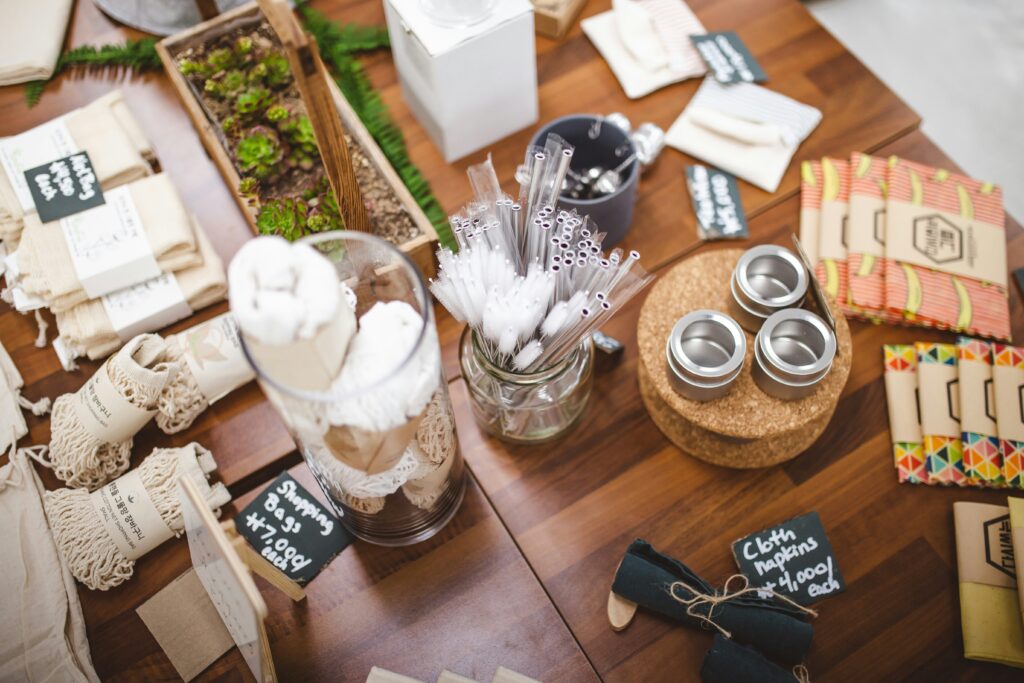
Once you have your vision and products sorted, it’s time to set up how you’ll actually run things. This covers the practical parts of running a business, from registering it legally to handling money. A key piece is how you’ll take payments, especially if you plan to sell at farmers’ markets, craft fairs, or pop-up shops. Modern tools can make this much smoother. For example, a smart POS system can do more than just accept credit cards. It can help you keep track of inventory in real time, manage customer info, and look at sales data. This gives you useful insights to grow efficiently without creating a lot of paper waste.

Marketing Your Green Products

Marketing a green business is all about telling your story in an honest way. Your customers pick you not just for what you sell, but for what you stand for. Use your marketing channels to share your eco-vision and be open about how you do things. Show off your sustainable materials, explain your low-waste packaging, and introduce the people who work for your brand.

Social media is great for visual storytelling, letting you post behind-the-scenes content that builds trust. Don’t “greenwash” or make vague claims you can’t back up. Instead, focus on specific, provable facts that show you’re serious about sustainability. Being honest will bring in and keep customers who share your passion.

Building a Community Around Your Brand

A successful green business does more than just sell stuff; it builds a community of people who think alike. Connect with your customers and give them a way to feel connected to your brand and to each other. You can do this by working with other local, sustainable businesses, hosting workshops, or giving a part of your profits to an environmental group.

When customers feel like they’re part of something bigger, they become more than just buyers; they become loyal supporters of your brand. This community involvement strengthens your mission and creates a powerful network of support.

9 Eco-Friendly Summer Outings for Kids

Now that summer break is in full swing – you may be looking for some fun activities that will get your kids out of the house. Green outings are a great way to get your kids involved in the environment and add a little more excitement to long summer days. Here are 9 of my favorite eco-friendly summer outings for kids.

1. Local Farms
A farm is a great outing to show your children how our food is grown and harvested. They can see which fruits and vegetables grow in your area and can also have a hands-on experience with a farm animal. Many local farms have classes that allow the kids to milk a cow, collect eggs from the hens, feed the goats and sheep, and ride a horse. You could also visit a fruit farm such as a strawberry patch and spend the day picking strawberries, find a nice place to sit, wash the berries and enjoy on the spot with a whipped topping that you packed.

2. Nature and Science Museums
Our local nature and science museum offers exhibits that allow the children to see, touch and even climb on parts of their environment. We recently experienced fabulous exhibits on natural disasters and your health. At these particular exhibits, you could see the effects that a natural disaster has on our environment and the other showed what your face may look like as you age. You can also check out an IMAX – it’s always a super fun time.

3. Butterfly Pavilion
Visit a butterfly pavilion and experience free-flying butterflies, birds, subtropical and tropical flowers, plants, and trees. We love the butterfly pavilion and could spend hours there looking at the butterflies up close and personal.

4. Zoo
Your local zoo may offer a junior zookeeper program where your child can learn about caring for the animals as well as learn about their natural environments and any threats that they face. This is an amazing experience for children who are especially interested in animals and show interest in growing up to work with them as a career.

5. Nature Preserves
Your local nature preserve may offer guided tours to learn about the animals that live there and many offer classes as well. You can also simply pack your binoculars and camera and then hit the trail for an afternoon of animal sightseeing.

6. Library
Your local library is stocked with information about the environment that your children will love. When Eben was younger he always enjoyed checking out issues of Ranger Rick and National Geographic Kids. His favorite part of our library, by far, is the window seats, it’s a great place to hang out and read – he could spend a lifetime there.

7. Botanical Gardens
Visit your local botanical gardens and learn about native plants, trees, and flowers. Our botanical gardens have a great exotic frog exhibit which Eben loves. Many offer classes and have ample space for an outdoor picnic. While you are there, look closely for bugs and birds – don’t forget your magnifying glass and camera.

8. Hike and Swim
No matter where you live there is somewhere outside where you can explore. Whether it is a park or hiking trail, let the kids look in nooks and crannies and climb on the rocks. If you live in an area where you can take a long nature hike, pack a lunch and enjoy it next to a watering hole where the kids can take a swim.

9. Your Own Backyard
If you want to stay close to home, take a walk around your neighborhood or local park. Prepare a nature scavenger hunt for the kids by writing down several items on a piece of paper, give each of your children a pencil and a bucket and collect the items found on the list, such as a leaf, rock, flower, feather, etc; This is tons of fun and gets them looking for items they may have usually overlooked.

What are your green outing plans for this summer?

5 Last-Minute DIY Eco Easter Baskets for Green Kids

Can you believe that Easter is this weekend? One of my favorite parts of Easter is putting together a fun spring basket of goodies for Eben every year. This year, his basket will be full of natural and organic candies, naturally dyed eggs, a reusable water bottle, and a couple of great books.

Whether you are creating Easter baskets for your children or someone else that you love, here are 5 other baskets that I am smitten with and that can be put together last minute too!

#1: Just for Fun!
If you have younger children, they will delight in receiving a basket full of fun toys – especially wooden toys. I love these curated items from You are my Fave – the perfect combination of fun toys with just a smidgen of sweetness!

+ via You are my FaveĀ 

#2: Nature LoverĀ 
I love this Greenvine Basket from Pottery Barn – I think it would be a great basket that you could use year after year, changing the theme each time. It would be fun to pack with new books or card games for your child.

+ Greenvine Basket via Pottery Barn

#3: Chef’s Delight
If you have a child who loves to cook, why not surprise them with a basket full of their own cooking essentials? I would also include the ingredients to bake up a sweet treat together!

+ Chef’s Basket via Handmade Charlotte
#4:Bunny Pillows
Who wouldn’t take a bunny pillow over an Easter basket? Instead of chocolate, I would stuff that little pocket with a new book or two!

+ DIY Bunny Pillow via WillowbayĀ 

#5: Little Farmer
This basket might be my favorite and is the type of basket that I would give Eben almost every year when he was younger. I even gave Eben a pizza garden for his 5th birthday – we planted it together and he loved it!

+ via Design Mom

9 Eco-Friendly Family Activities To Do This Spring

As the spring season approaches, it’s easy to start thinking about the warm weather and longer daylight hours, but it’s important to also think about the earth. Earth day falls on April 22nd each year, but it’s important to think about how to be eco-friendly year-round. Below are a few ideas of how to keep your family entertained and environmentally conscious this spring.

Make Recycled Crafts

Making fun crafts can be a great way to spend time together and make something fun. To add an eco-friendly spin to crafting, challenge your kids to create something that is entirely made up of recycled or reused materials. Depending on their age, you can give them a handful of materials to choose from, or you can let them loose to find things in your home and yard that are going to be discarded that they can use to make something new. This can help them develop their creativity as well as see that new things don’t have to be made up entirely of new materials.

Garden Together

Gardening is a great family activity that is also very eco-friendly. As the ground thaws in the spring, it’s a great time to get outside and get started on your gardening for the year. Your kids can help you with many gardening tasks, just make sure to take into account their age and ability levels when you’re asking them for help with different tasks. Plant some fruits and vegetables to be a little extra eco-friendly!

Find Ways to Save Electricity

There are many ways to use less electricity in your daily life, but if you work as a family to brainstorm ways to use less electricity, it can stick better in your kids’ minds. There are 5.5 million miles of local distribution lines for electricity in the United State’s electrical grid, and taking some of the stress off of that system can help it work more effectively and save energy. Something as simple as unplugging a device once you’re done using it or making sure that you turn the lights off when you’re the last one to leave the room can help save a lot of electricity over time. Figure out some specific ways that your family can decrease your electricity usage to make sure that you can actually cut back in your daily lives.

Bike Around Your Town

Once the weather is warm enough, start taking weekly bike rides to explore your town and the surrounding areas. It’s a great way to have fun family bonding time without worrying about polluting the environment. You can find new places that you might not have noticed if you were driving around your town, get some good exercise, and bond as a family. That makes bike riding one of the best eco-friendly spring activities for your family.

Cut Back on Your Water Usage

Similarly to saving electricity, talk as a family about ways that you can use less water. Only 1% of the water on earth is suitable for drinking, and while we can take that for granted in developed countries, it’s important to think about conservation. Some easy ways to cut back on your water usage include taking shorter showers, turning off the water while brushing your teeth or washing your face, and using a dishwasher instead of washing your dishes by hand. Ask your kids what they think they can do and try to achieve those water-saving efforts together.

Do a Park Clean-Up

Litter is a big problem everywhere, but especially in the places that see a lot of foot traffic, like popular parks or walking paths. Every time that you go to a place like that, challenge everyone in your family to pick up a certain number of pieces of litter. If you’re worried about what’s on the litter, you can pack gloves to use to pick up the litter as well as hand sanitizer. Over time, your family will be responsible for picking up a lot of litter and making the earth a little bit cleaner of a place.

Exercise Outside

When the weather starts getting nicer, it can be easy to want to spend every moment possible soaking in the outdoors. It’s a great opportunity to encourage some healthy habits with your kids by finding new ways to get moving outdoors. Depending on the size of your family, you can arrange games like soccer or basketball, or you can try for more solitary forms of exercise, like yoga. 28% of Americans have tried yoga at some point, and doing yoga outside is a great way to soak in the good weather and take care of your body at the same time. Getting outside to enjoy the weather while also getting out some energy and helping your body is a great way to spend the spring.

Go on a Flower Hunt

A flower hunt is a great way to spend time outdoors and keep your family entertained. Next time you’re at a park, challenge everyone to find as many different types of flowers as they can. If you can, have everyone take pictures of their flowers instead of picking them so that you aren’t disrupting nature too much. After you’ve found as many flowers as you can, go home and do some research to find out what kind of flowers they are.

Play in the Rain

Spring means a lot of rain in many climates, and playing in the rain can be a very fun activity. You don’t want to get sick from spending time out in the rain, so make sure that you’re being smart about it and properly layering up in raincoats and boots, and not spending too long outside. Once you’re done, dry off and warm up with a nice cup of hot chocolate or tea and watch a movie to get the full rainy day experience.

Being eco-friendly and bonding with your family can go hand in hand with these springtime activities. Teaching your kids about the importance of being eco-friendly is a great way to help prepare them to have eco-friendly habits as they grow up.

Last Minute Holiday Gift: DIY Vegan Brownies In A Mason Jar

Hello, Friends! The holiday countdown is here! Have you finished your holiday shopping? Don’t forget your children’s teachers and the neighbors. You can still put togetherĀ organic succulents in recycled paint-dipped cansĀ orĀ miniature Christmas Trees made using recycled wine corks. If you are going to be baking this weekend, you can throw together a few simple, vegan brownies in mason jars.

What you will need:

  • 2 cups organic flour
  • 1 cup organic carob chips
  • 1 tbsp organic baking powder
  • 1/2 cup organic brown sugar
  • 1/2 tsp salt

Directions:

You can either layer all of the ingredients separately in the jar or to save time mix all of the dry ingredients and top with the chocolate chips.

Attach a tag with the instructions to add:

  • 1/3 cup of your favorite neutral oil
  • 1 3/4 cup organic almond milk.

Bake at 350° for 30 minutes.

Enjoy!