Tag Archives | eco health

Have You Seen Solar Roadways? It’s the Next HUGE Thing

I came across this video recently presenting an entirely novel, brilliant idea for solar powered roads that would generate energy, hugely reduce America’s carbon footprint, and make roads safer—just to name a few of the idea’s many benefits.  Invented by a husband and wife in Washington, the Brusaws, Solar Roadways consist of hexagonal solar panels are covered with tempered glass and equipped with microprocessors and LED lights. These interlocking panels would replace roads, parking lots, sidewalks, driveways—basically any concrete or asphalt surface you can think of.

What’s made the Solar Roadways project the most popular Indiegogo campaign in history is not only the fact that Solar Roadways would produce three times the energy that the United States currently uses while reducing greenhouse gases by 75%, but also that the roads have ingenious safety features that would make driving safer, would lower energy costs, and would boost our economy by creating jobs and literally generating capital. The technology is simple enough to understand: interlocking solar panels replace roads, sidewalks, parking lots, etc. and generate electricity. Underground cable tunnels would run beneath roads allowing workers to easily perform maintenance without shutting down highways for months. When a panel is damaged (which should happen only rarely as the double-laminated glass covering the panels can withstand 250,000 lbs.), it can be popped out and replaced without an entire section of road needing maintenance. Glass-topped roads sound slippery and dangerous, but two safety features actually make them safer than the asphalt and concrete currently in use.

First, panels heat up to temperatures just above freezing in colder climates to melt snow and ice on roads which will help prevent accidents as well as eliminate costly snow removal. The underwater channels that house power lines also have a chamber for runoff that diverts the polluted melted snow and rainwater away from streams and soil and into water treatment facilities—a huge added eco-bonus. Second, the glass’ texture has shown through friction testing to be skid resistant: a car moving at 80 mph can slam on its breaks on a Solar Roadway without sliding.  LED lights within the panels can be programmed to mark traffic lines, bike lanes, and parking spaces, but that’s just the beginning. Because displays can be quickly and easily changed, warning signs on roads can be updated in real time to help prevent accidents. Additionally, panels are pressure sensitive and light up ahead of drivers to signal that an animal or person is in the road, or that a boulder or other obstruction is ahead.

Those who worry that eradicating asphalt and our dependence on oil would destroy jobs and the economy can take comfort in the fact that this entirely new schema would require thousands of jobs that could easily replace all those eliminated and would hugely boost the manufacturing industry. Solar Roadways are not cheap, but they pay for themselves many times over by using an essentially infinite source of power that would generate incredible amounts of capital—something our economy sorely needs. By choosing this technology we also invest in our children’s generation by providing them with cleaner air and resourceful technology. Julie and Scott Brusaw invented the technology behind solar roadways in 2006. They’ve since created prototypes with funding from the Federal Highway Administration and have received $1.9 million from backers on Indiegogo to move forward with production on a larger scale. Practically speaking, implementation of this technology will likely begin with private driveways, roads, and parking lots, but the couple (and their millions of supporters) believes that once people see solar roadways in action the sky is the limit. Their grand vision for this technology includes providing aid to those hit by tsunamis and earthquakes by airdropping solar panels so that rescue workers who wouldn’t otherwise have access to power could provide medical care and distribute food. Third world countries without practical access to electricity could use the panels to create clean drinking water and energy to power lights and computers for education. This technology is so dynamic and innovative that all of its uses certainly haven’t been explored.

This is just the tip of the iceberg. The Solar Roadways Indiegogo campaign has been extended through June 20th, and supporters can donate here. The money generated through this campaign will be used to hire engineers and scale up production of Solar Roadways. The economy, our climate, and our communities are all desperately in need of smart, resourceful technology that is practical while looking towards future needs. Luckily, we’ve found it. The hard work is done; all we need to do now is make sure Solar Roadways don’t remain a prototype.

Eco Baby 101: 5 Steps for Greener Baby Care

Green-BabyBaby’s first year is the toughest phase of many parents’ lives. With all of the demands and details of new parenthood, it can be tough to make eco-consciousness a priority.  The truth is that bringing an entire new person into the world creates a huge impact on the environment—from the thousands (yes, thousands) of diapers he or she will use to the impact your child will later have on the world as an adult who makes daily choices as a consumer and community member. By incorporating environmentally friendly practices now, it will be easier to go green in the future and you’ll be setting a great example for your growing, learning child.  Not only are the following steps green, they’re healthy and safe, too! The following are five first steps to take towards greener baby care.

#1 Breastfeeding
Making the choice to breastfeed has a huge impact on the environment and your child. The American Academy of Pediatrics and World Health Organization advocate exclusive breastfeeding for the first six months of life followed by continued breastfeeding to supplement solid food through 12 months. Countless studies have shown numerous immediate and long-term benefits to both mothers and babies who participate in breastfeeding including reduced incidence of postpartum depression, fewer health issues and increased immunity in babies, and a stronger attachment relationship. On top of the health benefits, it’s free! Formula can be very expensive, especially if your baby does not tolerate cow’s milk protein and needs prescription formula. Formula costs money and takes energy to manufacture, package, and transport. Additionally, most formulas are cow’s milk based so everything that goes into feeding and raising dairy cows comes into play. If your baby is like many who cannot digest cow’s milk protein during their first year of life, you may have to pay extra for special allergy-free formula. Breastfed babies stop eating when they’re full; with formula, it’s a bit harder to predict when baby has had enough, creating waste when extra formula is thrown out after each feed. If you do decide to formula feed your baby, you can make the choice greener by purchasing organic brands or making your own.

#2 Green Diapering
Considering that the average American baby will go through roughly 6,000 diapers during his first two years of life, cloth is by far the greener way to diaper! While the up-front cost is daunting, most parents who chose cloth have estimated that the diapers paid for themselves by the time their baby was eleven months old—and the investment paid higher returns if the diapers were used for multiple children.  Cloth diapering has become increasingly popular and many companies sell organic, colorful, easy-to-use sets that are either sized per age and weight or one-size-fits all. If you are one of the many parents who does not have the time nor resources for the cleanup and laundry that cloth diapering require, there may be a diaper service in your city that offers pickup, cleaning, and drop-off. If you simply can’t commit to cloth, brands like Seventh Generation sell hypoallergenic, chlorine-free, fragrance-free diapers that are easier on the environment and your baby’s bottom. When choosing wipes, a good rule of thumb is to choose fragrance-free wipes with the least number of ingredients to avoid putting unnecessary, harsh additives on your baby’s skin.

#3 Greener Bottles
Several studies have come out recently revealing that even plastic bottles, baby toys, and accessories labeled BPA-free contain BPA in traces high enough to pose a risk to your baby’s health. Fortunately, there are some great companies out there making baby bottles and sippy cups from materials like stainless steel or glass. These options do not contain the harmful PVC, phthlalates, and BPA found in most plastic products.  My personal favorite brand, which I use at home with my daughter, is Pura Kiki. They make stainless steel bottles and sippy cups with silicone nipples and spouts. The bottles are safe, easy to clean, and come in a variety of cute colors.

#4 Homemade Baby Food
While jarred baby food can come in handy when you’re on the go with baby, it is costly to the environment and your wallet overall. Jarred food has a bigger carbon footprint than homemade food because it has to be made and canned in a facility before traveling to your local grocer for you to purchase. One jar or pouch of baby food alone rarely costs more than $1.50, but once baby starts to branch out with solid food she’ll consume multiple jars a day and dozens a week—not to mention the waste that’s produced if she doesn’t finish an entire jar during its shelf life. Making your own baby food certainly takes more time than buying jars, but this time commitment can be minimized by choosing one day a week or even month to mass-produce purees. After the up-front cost of a baby food blender and freezer trays, homemade baby food is far cheaper then store-bought. A couple of organic sweet potatoes at $1.19 a pound makes dozens of single servings. Plus, when you make your own food you choose exactly what goes into it!

#5 When Safe, Choose Used
Safety regulations on baby products are constantly developing and changing as new research surfaces and manufacturers learn by trial and error what is safe and unsafe. There are items that came onto the market during our one year old daughter’s short lifetime that have already been recalled. Used baby clothes are pretty much guaranteed to be safe. While there’s nothing like seeing your baby in a brand new outfit that you picked out just for her, buying new for baby requires purchasing a new wardrobe every three months or less—plus, your baby is guaranteed to stain everything you put her in eventually. Reusing baby clothes is cheaper than buying new and many moms like knowing that cherished memories will live on through another child wearing her baby’s old clothes.

These are just a few of the many, many ways you can begin to green your baby care! What are some of your favorites?


Water Conservation Saves the Earth and Saves Money

water conservation

NOTE FROM SWEET GREENS: This post, Water Conservation Saves the Earth and Saves Money was written by Jenna. Jenna is a freelance writer who writing focuses on eco-lifestyle, health and wellness.

Your home is one of the first places to start conserving natural resources and reduce your carbon footprint. Making sure your home is properly insulated not only keeps you warm during the cold months, the insulation, venting and weather stripping can also reduce your energy usage during the warmer months that are popping up ahead.

While energy conservation at home is super important, another area of concern is water conservation. The truth is that there is a shortage of fresh water on this planet. In fact, including municipal water supplies, less than three percent of the water on this planet could be considered fresh. Adopting water conservation practices now will not only preserve our water supply, it can also save you money. There are several ways to conserve water around your home. The two easiest ways are to modify the appliances and equipment that use water, and to modify your behavior.

Appliance and Equipment Modification

Appliance and equipment modification usually involves making changes to your plumbing, or to the devices that use water in your home. Even if you don’t own your home, or you live in an apartment, you can still make many of these changes:

  1. Upgrade Your Toilets
    Prior to 1994, the average residential toilet used 3.5-to-5 gallons of water per flush. In 1994 all residential toilets were required to operate on 1.6 gallons or less. However, if you have an older toilet, you could still have a high-flush model. If you can’t replace the toilets, insert a displacement device into the upper tank to conserve your water use. A displacement device makes the water level appear higher than it is, similar to when you sit in a full bathtub and the water rises. Common displacement devices include bricks and water-filled plastic containers. If you want to add a bathroom to a space in your home that doesn’t have traditional plumbing – a Saniflo toilet could be the solution for you.
  2. Install Special Aerators on Your Faucets and Showerheads
    The aerator makes the water bubbly and provides good water pressure while simultaneously reducing the amount of water flowing through the faucet. So you can enjoy your shower, and actually rinse your hair, without using too much water.
  3. Install Shower Timers
    To reduce your time in the shower, and the amount of water down the drain use a timer when you jump in the shower.
  4. Check and Repair All Leaks, Especially in the Toilet
    Toilet leaks can send hundreds of gallons of water down the drain and cost you a lot of money in water and sewer fees.
  5. Invest in High-Efficiency Washing Machines and Dishwashers
    When it is time to replace the machines that you currently have choose machines are designed to clean effectively with the minimum amount of water.

Behavior Modification

Behavior modification is essentially changing the way you use water, here are 7 ways that will have you conserving water in no time:

  1. Take fewer showers during the week, if possible;
  2. Plug the bathtub drain, during your shower, and reuse the collected water to flush your toilet;
  3. Consider only flushing the toilet once a day, or when you have solid waste;
  4. Avoid running the water while shaving, brushing your teeth, or washing dishes;
  5. If you have a dishwasher, avoid running the washer when half empty;
  6. If you have a washing machine, adjust the water level based on the size of the load;
  7. Use rainwater for gardening, washing your car, and other outdoor uses.

YOUR TURN: How are you conserving water in your home?

Winter in May? Going Green to Beat the Winter Blues

Winter in May How to Green Your Winter Blues

NOTE FROM SWEET GREENS: This post, Winter in May? Going Green to Beat the Winter Blues was written by Jenna. Jenna is a freelance writer who focuses on personal finance, eco-lifestyle, and health.

I know that a lot of you around the country are still dealing with winter – snow in May, no fun! Even if you don’t officially suffer from Seasonal Affect Disorder, dealing with the prolonged winter is difficult for anyone. Sure, you appreciate the break in the heat and the cooler wetter days when it first arrives but as it drags on—especially since snow in May isn’t rare anymore—it’s easy to get gloomy. It is important during the last dregs of winter that you take steps to keep your mood and your home as easy to live with as possible.

Believe it or not, one of the best ways to deal with the winter blues is to go green or “green up” your home. Seriously! Think about it for a second: going green helps improve the overall environment in your home, which can improve your mood. It also, often, helps reduce your utility costs (which tend to spike in winter as you run the heater and keep the lights on longer) which reduces stress. So what, specifically, should you do to green up your home for winter?

1. Go Green Literally

Plants are a fantastic addition to any home. They scrub the air, making it healthier to breathe. They also add moisture to the air, which is always helpful during the winter when the air—even when it’s raining—is drier than it is during the summer. Beyond that, there’s the decorative factor—bright green plants add a great decorative touch to a room. Plus, you can always go to a retailer like Willis Orchards to buy palm trees or other organic tropical plants and flowers and pretend you’re at the beach!

2. Daylight LED Bulbs

People who are diagnosed with Seasonal Affect Disorder are usually told to spend some time each day sitting in front of special “sunlight” lamps. These are lamps that are designed to replicate the light and warmth of sunlight and have proven quite effective. They can also be quite expensive. There are, however, cheaper alternatives that you can find with a little investigating. Daylight simulation LED bulbs can be bought piecemeal from most home improvement stores. These are different than sunlight lamps in that they don’t mimic the warmth of sun, just the sun’s light. Look for LED bulbs that are at least 2,000 Kelvins though 5,000 Kelvins is better. Put these bulbs in lamps around your home—it will look like the sun is shining indoors.

Note: LED bulbs are more expensive outright but they save tons of money over time and are better for the environment!

3. Air Flow

During the winter, we tend to bundle up—both our persons and our homes. We latch the windows and close the doors, trying to keep every iota of cold and dry winter air out. It’s understandable that you don’t want to pay to “heat the outdoors.” At the same time, spending copious amounts of time in a stuffy room can do just as much to sour our moods as not getting enough light. Fresh air is important! It’s amazing how we don’t notice the air flow much at all until the air around us just sits still!

There is ducting that you can install in your home to keep air flowing year round, even when the windows are closed. Or, you can simply open your windows a few times a day to let some fresh air inside. There are a couple of ways to do this: you can do this in the late morning or early afternoon when the air outside is warmest. Or, at night when you’re going to bed, you can open the windows in rooms like your kitchen or living room—rooms that won’t need to be reheated right away.

These are just three of the things that you can do to “green up” your home to help combat those winter doldrums. What are some of the things you’ve been doing?


Disclosure Statement

The Ecocentric Mom Box is the Perfect Treat for Summer

ecocentric mom box, subscription service
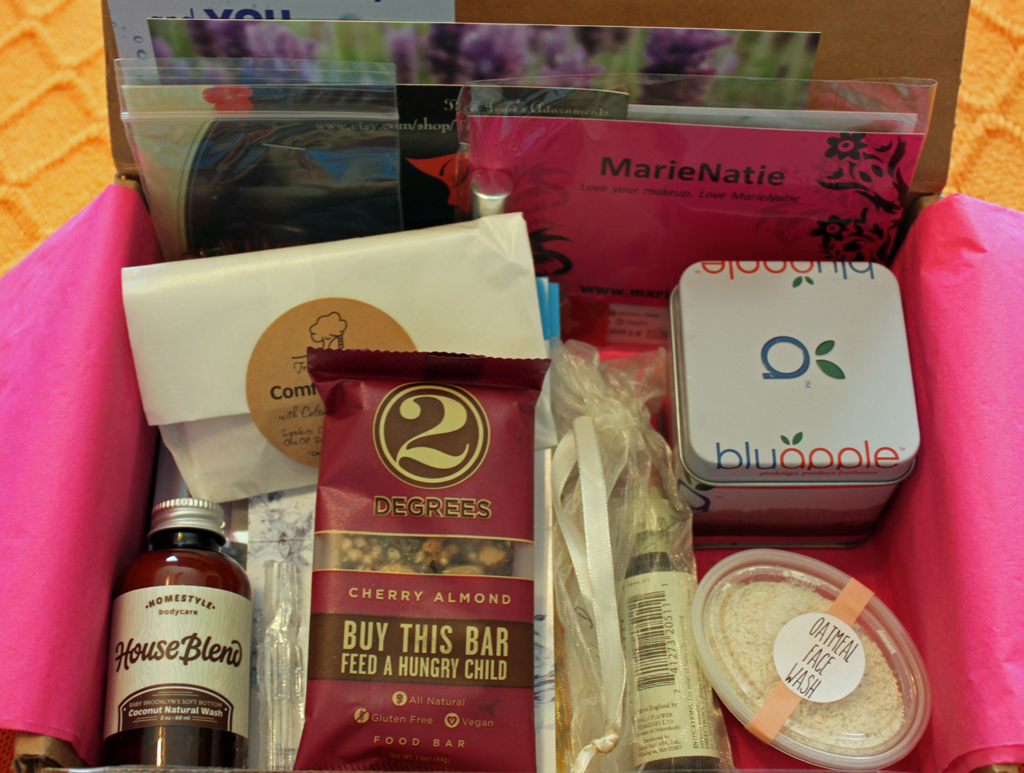
The spring Ecocentric Mom Box was full of wonderful goodies that are perfect for spring and summer! If you are considering joining a subscription box service full of eco-friendly goodies, Ecocentric Mom is for you! A subscription would make a wonderful Mother’s Day gift too.

Here’s a peek inside the March/April Box:

  1. Bach Original Flower Remedies
    I really enjoyed these remedies, I received Elm and keep it on my desk. I pick it up when I am feeling overwhelmed and it really helps be to recenter!
    + $19.98 per 20ml bottle
  2. Eco-Friendly Organic Acai Seed Bead Hair Barrette
    This hair barrette is super cute and would be perfect for a little girl. All of the jewelry is eco-friendly and sustainable too!
    + $5
  3. 2 Degrees Food Bar
    For every 2 Degrees bar you buy, they donate a meal to a hungry child! These bars are also gluten-free, vegan, all natural and GMO free.
    + $1.99
  4. Treefort Naturals Comfrey Salve
    I am a huge fan of salves and keep one in my handbag at all time. They are perfect for burns and scraps – so with a kiddo, it is a must.+ $8
  5. Organic Caffeine Free Roman Provence Rooibos Tea
    I love tea, and this fruity berry flavored tea is one of my favorites!
    + $6.99-8.99/2 oz. bag, brews 20-25 cups
  6. Powernap 2-CD Set
    Yay! Who doens’t love a power nap! This CD features ambiant music which envelops you – I look forward to giving this one a try!
    + $9.99
  7. Oatmeal Grapefruit Face Wash Powder by Homespum Northwest
    This facewash has to be the yummiest smelling one out there – and super gentle on my skin too!
    + $3.50/2 oz
  8. Bluapple – Prolongs Produce Freshness
    Just place this super cute blue apple in with your produce and you will prolong its freshness.
    + $9.99/2 pack
  9. House Blend Organics Coconut Body Wash
    I love coconut and this body wash worked really well on my dry skin – it’s super hydrating.
    + $14.95
  10. MarieNatie All Natural Lip Gloss
    Free from harsh chemicals, this natural lip gloss packs a lot of color!
    + $5
  11. Sport Suds Laundry Detergent
    This laundry detergent removes funky smells from clothes and sporting gear – perfect if you have an active teenager!
    + $20.95/400g Jar/34 loads