Tag Archives | green lifestyle

The Truth About “BPA-free” Plastic

BPA

A few months ago, a good friend, fellow mom, and super responsible eco homesteader sent out an email to all the mothers in her community about a new study on BPA-free plastic. Essentially, the study has found that even plastic products claiming to be BPA-free contain traces of BPA high enough to be harmful to test subjects and, more importantly, our babies. BPA, or bisphenol A, is a plastic additive that is an endocrine disrupter mimicking the structure and function of the hormone estradiol, and exposure to it has been linked with serious health issues including cancer, accelerated puberty, inhibited neurological development, and behavioral and prostate gland issues when fetuses, infants, and children are exposed to it. Practically everyone uses plastic bottles, sippy cups, and toys, and unfortunately not even all of these products on the market advertise themselves as BPA-free. Exposure to this chemical in the early developmental years is especially harmful, making it even more important to eliminate your plastic use, especially when it comes to baby and children’s products. The following are three great ways to ditch plastic.

#1 Switch to Stainless Steel or Glass Bottles and Sippy Cups
Bottles and sippy cups are probably the number one way babies and children become exposed to BPA (and other harmful additives like phthalates and PVC) because they are literally drinking out of them and subsequently drinking traces of these chemicals that have leached into their juice, milk, or water. Fortunately there are a few great companies making stainless steel and glass alternatives. My personal favorite, which the friend I mentioned turned us on to, are Pura Kiki Stainless Steel bottles and cups. The bottles are 100% BPA, PVC, petroleum, and phthalate free, and use silicone sippers and nipples instead of plastic. Bottles become sippy cups just by substituting the nipple for a sipper. Some other great brands that are now producing kids’ products include Klean Kanteen and Lifefactory.

#2 Switch to Wood and Cloth Toys
When I began researching harmful additives in baby toys, I found a list from the Healthy Toys Project of the top ten most dangerous toys, including the “killer zerbra“. I was shocked to find two of my daughter’s favorite toys on the list–one of them at the top. Since babies put everything in their mouths, I’ve come to feel that no plastic is safe in our daughter’s toys. Of course it can feel impossible to avoid it 100% (we still have MANY plastic toys and will get rid of some as she grows out of them), but choosing solid wood toys–made with wood that is safely sourced and non-toxic–with safe, non-lead paint is a safer option. Some of my favorite wood toy brands include Haba, Hape, Boikido, and PlanToys. Under the Nile makes some very cute organic cotton toys including friendly little vegetables with faces. While I’m 100% a supporter of reducing, reusing, and recycling, when I’ve discovered that one of my daughter’s toys contains harmful toxins like lead, PVC, BPA, phthalates, or any number of toxic dyes or any of the other 66 Chemicals of High Concern to Children, I’ve thrown them out. The way I see it, if the toy isn’t safe enough for my child, it’s not safe enough for someone else’s. If you want to help provide toys for impoverished children, donate ecologically responsible, safe toys during toy drives or simply purchase some and donate them to a thrift store.

#3 Don’t Eat off of Plastic
Plastics leach their harmful chemicals continuously, especially when heated (like when you dump still-hot soup or mac and cheese into a tupperware). One of my favorite brands selling safe, non-plastic baby food storage, tableware, and cutlery is Green Sprouts by iPlay. Their collection includes bowls, spoons, plates, cups, and even toys and hygiene products made of silicone, bamboo, stainless steel, and corn starch. I have yet to find a high chair tray that is not made of plastic, but luckily most convertible high chairs these days have a removable tray and can be pushed up to the dinner table so your little one can eat with the family instead of eating off the tray. Once again, we haven’t found it possible to get rid of all the plastic eating-ware in our home, but we’re slowly replacing it at a rate we can afford.

Above all else, the most important thing is that you do your own research and stay up to date on emerging information. YOU know what’s best for you and your family, but having the latest information helps you make an informed decision, whichever way you go. Our babies are little sponges soaking up everything in their environment. Yes, wood toys, silicone eating ware, and stainless-steel baby bottles are more expensive–but so are the harmful diseases these toxins can cause. Because I am someone with an estrogen-fed, chronic condition (endometriosis) that will supposedly be passed down to my daughter, the cost of replacing the plastic in our home is worth it. I’ll do whatever I can to help her avoid developing endometriosis and the resultant infertility and chronic pain it can cause. As always my goal is to support all moms regardless of whether or not we agree. My hope is that this information will help someone else as much as it helped our family.

(Reblogged from Zero to Mom)

Have You Seen Solar Roadways? It’s the Next HUGE Thing

I came across this video recently presenting an entirely novel, brilliant idea for solar powered roads that would generate energy, hugely reduce America’s carbon footprint, and make roads safer—just to name a few of the idea’s many benefits.  Invented by a husband and wife in Washington, the Brusaws, Solar Roadways consist of hexagonal solar panels are covered with tempered glass and equipped with microprocessors and LED lights. These interlocking panels would replace roads, parking lots, sidewalks, driveways—basically any concrete or asphalt surface you can think of.

What’s made the Solar Roadways project the most popular Indiegogo campaign in history is not only the fact that Solar Roadways would produce three times the energy that the United States currently uses while reducing greenhouse gases by 75%, but also that the roads have ingenious safety features that would make driving safer, would lower energy costs, and would boost our economy by creating jobs and literally generating capital. The technology is simple enough to understand: interlocking solar panels replace roads, sidewalks, parking lots, etc. and generate electricity. Underground cable tunnels would run beneath roads allowing workers to easily perform maintenance without shutting down highways for months. When a panel is damaged (which should happen only rarely as the double-laminated glass covering the panels can withstand 250,000 lbs.), it can be popped out and replaced without an entire section of road needing maintenance. Glass-topped roads sound slippery and dangerous, but two safety features actually make them safer than the asphalt and concrete currently in use.

First, panels heat up to temperatures just above freezing in colder climates to melt snow and ice on roads which will help prevent accidents as well as eliminate costly snow removal. The underwater channels that house power lines also have a chamber for runoff that diverts the polluted melted snow and rainwater away from streams and soil and into water treatment facilities—a huge added eco-bonus. Second, the glass’ texture has shown through friction testing to be skid resistant: a car moving at 80 mph can slam on its breaks on a Solar Roadway without sliding.  LED lights within the panels can be programmed to mark traffic lines, bike lanes, and parking spaces, but that’s just the beginning. Because displays can be quickly and easily changed, warning signs on roads can be updated in real time to help prevent accidents. Additionally, panels are pressure sensitive and light up ahead of drivers to signal that an animal or person is in the road, or that a boulder or other obstruction is ahead.

Those who worry that eradicating asphalt and our dependence on oil would destroy jobs and the economy can take comfort in the fact that this entirely new schema would require thousands of jobs that could easily replace all those eliminated and would hugely boost the manufacturing industry. Solar Roadways are not cheap, but they pay for themselves many times over by using an essentially infinite source of power that would generate incredible amounts of capital—something our economy sorely needs. By choosing this technology we also invest in our children’s generation by providing them with cleaner air and resourceful technology. Julie and Scott Brusaw invented the technology behind solar roadways in 2006. They’ve since created prototypes with funding from the Federal Highway Administration and have received $1.9 million from backers on Indiegogo to move forward with production on a larger scale. Practically speaking, implementation of this technology will likely begin with private driveways, roads, and parking lots, but the couple (and their millions of supporters) believes that once people see solar roadways in action the sky is the limit. Their grand vision for this technology includes providing aid to those hit by tsunamis and earthquakes by airdropping solar panels so that rescue workers who wouldn’t otherwise have access to power could provide medical care and distribute food. Third world countries without practical access to electricity could use the panels to create clean drinking water and energy to power lights and computers for education. This technology is so dynamic and innovative that all of its uses certainly haven’t been explored.

This is just the tip of the iceberg. The Solar Roadways Indiegogo campaign has been extended through June 20th, and supporters can donate here. The money generated through this campaign will be used to hire engineers and scale up production of Solar Roadways. The economy, our climate, and our communities are all desperately in need of smart, resourceful technology that is practical while looking towards future needs. Luckily, we’ve found it. The hard work is done; all we need to do now is make sure Solar Roadways don’t remain a prototype.

Happy Earth Day + We Have a New Website!

Happy Earth Day!

Hello, Friends! After a long break due to many changes going on over here, including hiring a team to help keep everything running smoothly and a brand new website, I am ready to jump back into blogging. Thank you for your patience, I really appreciate it – I am very excited for this next chapter at Sweet Greens.

Today is Earth Day! Hooray! We worked feverishly to get the new website up and running in time – and here we are. How are you spending Earth Day? Did you do a special activity over the weekend? Since today is a school day, I have planned a couple of fun laid back projects, so watch for the step-by-step instructions! Also, later today, I will be hosting an Earth Day giveaway with one of our favorite partners, Stubby Pencil Studio – it’s a good one, so check back!

YOUR TURN: What are your Earth Day plans? Please share in the comments section!

10 Simple Ways to Green Your Home For Under $10

by Jennie

Going green starts with small steps – it’s those little choices that can equal a huge impact in the long run. Many small steps are easy, affordable and start with the choices that you make when doing your marketing. Here are my 10 favorite ways to green your home – these are very affordable, in fact they all cost less than $10.

1. Ditch It Paper towels and napkins are used only once and then tossed in the trash. Ditch the paper and choose reusable organic cotton dishcloths and napkins instead. This simple step alone will save countless resources and eliminate the gas emissions created during the manufacturing and transportation of these paper products.

2. Bottle It Instead of buying beverages that come in plastic or even glass containers, pick up a BPA free reusable bottle for each member of your family. Keep the bottles with you at all times, attach your child’s to their backpacks when sending them off to school and throw one in your handbag or car for drinks on the go.

3. Bag It If you, your spouse or children take their lunch to school or work everyday, invest in a great reusable lunchbox or bag. Paper and plastic lunch bags are wasteful, since they are tossed after being used only once!

4. Recharge It The next time you need to pick up batteries for the TV or Wii remote, choose an eco-friendly, rechargeable version. Not only do rechargeable batteries save hundreds of single-use batteries from being tossed, they save you money too. Win, win.

5. Trash It Most trash bags on the market are not biodegradable, which means that it will take thousands of years for the trash bag to break down (not to mention the contents inside). Instead, pick up trash bags that are biodegradable and will break down in only a few months.

6. Compost It Instead of throwing those leftovers or salad scraps into the trash, compost them instead. Regardless of the type of home you live in, you can compost. There are many different composter options available, including ones that you can build out of recycled or leftover materials, rolling composters and even small electronic composters for inside a small home or apartment. (However, the later option is more expensive.)

7. Clean It One of the most dangerous, toxic and harmful items in your home, may be your cleaning products. Not only are these conventional products dangerous to the environment, they are dangerous to the health of your family. There are many all-natural household cleaning products available that are eco-friendly and non-toxic,  you can even make your own.

8. Go Low-Flow A low-flow shower-head will use less than 2 gallons of water per minute, that is still a lot of water going down the drain. However, it is much better than the 5 gallons per minute that an older shower-head will use. The best option is to turn off the shower while you soap up or shampoo your hair.

9. Bulk Up When you can buy products from the bulk section, not only is it more affordable, but you can bring your own reusable containers, eliminating the need for product packaging.

10. Hang It Instead of drying all of your clothes in the dryer, hang them up to dry. You can utilize a clothesline outside or hang them up in your laundry room. Not only does this save a lot of energy, your clothing will last longer and smell fresher too.

What simple, affordable choices do you choose when greening your everyday routine?

How to Transform Leftover Bathroom Tiles into Polaroid Photo Coasters

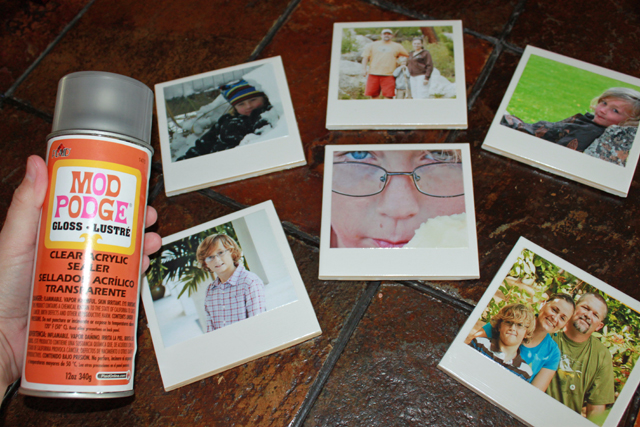
Polaroid-Coasters-7While cleaning out our garage last weekend (New Year’s Resolution #3!), I came across a small box of white ceramic tiles left over from a bathroom remodel that we accomplished many years ago. Instead of tossing them into the donation bin, I thought I could find a way to upcycle them. I considered  transforming them into coasters, I have done this before using leftover tiles; however those tiles were different colors and textures, not stark white like the ones I had.

Then, on Sunday, we went to a local parade, while we were there a little girl asked if she could take a photo of Noodles (our Pug) – with her Polaroid camera! That is when I thought of my white tiles and how if I added a photo to them, they would look just like Polaroid photos!

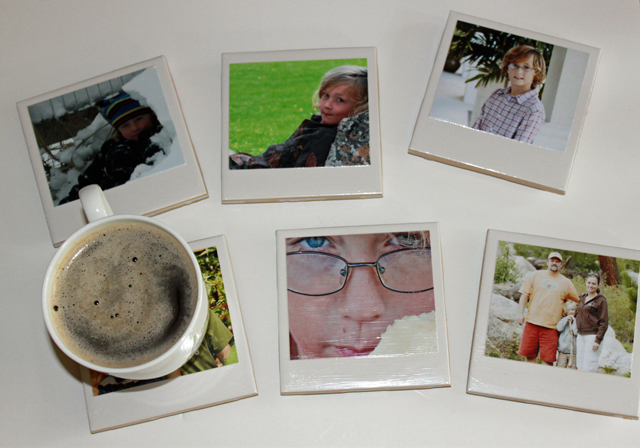
When we arrived home, Eben and I spent the last few hours of winter vacation working on this fun project. I am happy to announce that not only was this a great little project to do with my favorite guy, that coasters turned out fantastically! We are now the happy owners of a fun stack of conversation starting Polaroid inspired photo coasters. The best part – my Polaroid photo coasters are going to be featured in this month’s Green Child Magazine. Hooray!

You can make your own set with my simple step-by-step tutorial, read on to get started:

Polaroid-Coasters-1

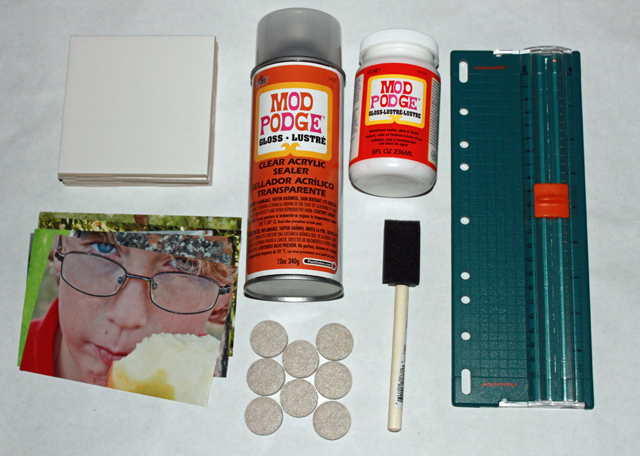
What you will need:

  • 4×4 white ceramic tiles
  • your favorite photos
  • Mod Podge
  • clear acrylic spray
  • sponge brush
  • paper cutter
  • felt circles
Polaroid-Coasters-2

Step 1: Pick Your Photos
First things first, you will want to pick out a selection of your favorite photos – one for each tile. Then, using a paper cutter, cut each of your photos down to approximately 3.25 x 3.75 – I eyeballed mine and I think they turned out great.

Polaroid-Coastes-3

Step 2:  Add the Photos
Wash and dry each of your ceramic tiles, then apply a thin coast of Mod Podge to the back of the photo. Then, position it correctly on your tile – do one photo/tile at a time.

Polaroid-Coastes-3

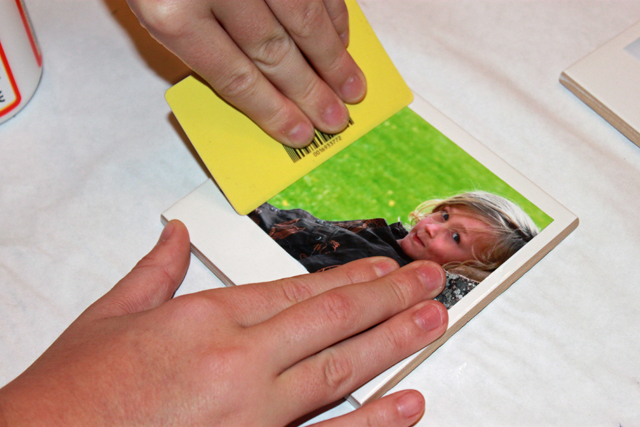
Step 3: Press and Scrap
Use a credit card to smooth out the photo, scrapping off any excess Mod Podge. Make sure that the photo doesn’t slide out of place during the process.

Polaroid-Coasters-4

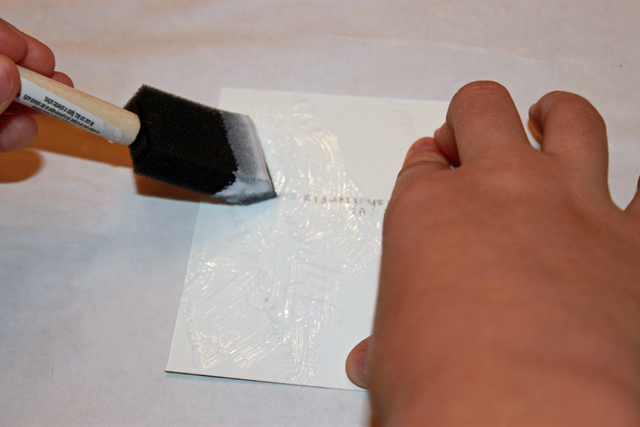
Step 4: Top with Mod Podge
Use your sponge brush to apply a thin layer of Mod Podge over the entire surface of the tiles, including the photo. Let it dry for several hours.

Step 5: Repeat Step 4
Repeat Step 4 several times until you have a strong, thick coat of Mod Podge on the top of the photos (I applied 4 coats). Let it completely dry in between coats – this is very important, if you try to work to quickly the Mod Podge will still be tacky.

Polaroid-Coasters-8

Step 6: Spray with Acrylic Spray
Spray each of the tiles with the clear acrylic spray using short, straight horizontal lines. Let completely dry for at least 15 minutes.

Step 7: Repeat Step 6
Repeat step 6 several times letting the spray completely dry for at least 15 minutes in between coats.

Polaroid-Coasters-9

Step 8: Add Felt Dots
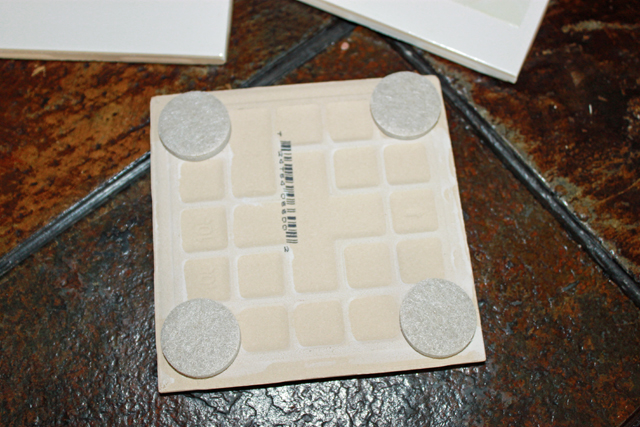
Stick felt circles (the same kind you use to put on the bottom of chairs and other pieces of furniture) on the back of the tiles. Wait at least 72 hours before placing anything on top of your photo coasters, allowing the sealer to completely dry – or your beverage mugs will stick!

Polaroid-Coasters-7

Step 9: Enjoy and Share the Fun!
Enjoy these fun Polaroid coasters and share them with your friends and family when they come over for tea. Wouldn’t these make fun gifts too?