Author Archive | Jennie Lyon

4 Key Steps for Keeping Your Garden Safe

A beautiful garden can be one of the most enjoyable parts of a home, whether you use it as a place to relax in the fresh air, a place to entertain guests with a barbecue, or a place where the kids and pets can play freely. So, it goes without saying that it should be a space that is attractive, practical, and safe, but unfortunately, many homeowners spend lots of time making the garden look good, and in doing so, completely overlook the many potential hazards that could lead to accidents, injury, and property damage. 

It’s time to change that by taking a look at some of the most important things you can do to keep your garden safe for everyone who uses it.

Maintain paths and walkways

Garden paths help people move safely around outdoor spaces, but they can become hazardous if neglected.

Check regularly for:

  • Cracked paving stones
  • Uneven surfaces
  • Loose gravel
  • Slippery moss
  • Overgrown vegetation

Repairing damaged pathways and keeping them clear can significantly reduce the risk of trips and falls. After all, nobody wants their relaxing afternoon outdoors interrupted by an unexpected encounter with the ground.

Inspect trees regularly

If you have trees on your property, it is really important that you take a look at them regularly and check for things like dead branches, disease, and storm damage because those three things can all pose safety risks. Large limbs could, for example, fall unexpectedly when the wind is strong or the weather is harsh, and if they hit someone or a pet, it could be pretty serious.

If you notice signs that something could be wrong, then calling in a professional to inspect your trees and potentially carry out a tree removal, which may be necessary is a tree is very damaged, diseased, or unstable, is a good idea because they can deal with the problem more efficiently and safely than you can.

Keep tools stored properly

Gardening tools can become hazards when left lying around.

Items such as:

  • Rakes
  • Shovels
  • Pruning shears
  • Lawn equipment
  • Power tools

should be stored safely after use. A dedicated shed, storage bench, or secure cabinet can help keep equipment organized and out of the way.

Proper storage also helps extend the lifespan of your tools, and it dramatically reduces the chances of accidentally stepping on something that immediately launches itself toward your forehead.

Secure water features

Water features can be a very relaxing addition to any garden, but they can also pose a safety risk, especially if you have children or pets running around the garden, so it is really important that you do what you can to secure them, whether that means fencing off ponds, covering pools or making sure children and animals are always supervised around them. A safe water feature is a more enjoyable water feature because you aren’t always worrying about it. 

Oh, and remember that standing water needs to be maintained properly so that it does not attract mosquitoes or make people sick.

Safety first, even in the garden!

Frequently Asked Questions About Assisted Living (Such As ‘Is It Right For Your Loved One?’)

Choosing how to help an aging loved one is never easy. Most of us know that we would rather avoid dedicated care facilities for as long as possible, but there are still a range of options to consider. Chief amongst them is assisted living, an increasingly popular option that currently houses around 818,000 residents across the US and counting. 

But what does assisted living actually offer? And is this really the right option for everyone? As with any care solution, asking questions is the best way to decide whether or not assisted living is a viable option for your loved one. Keep reading as we answer the top questions you’ll want to consider.

# 1 – What’s Unique About Assisted Living?

Assisted living refers to independent living communities where residents have easy access to on-site care. Unlike care homes, however, assisted living facilities place a strong emphasis on independence. Your loved one will continue living in their own space, while still receiving care and daily help with tasks they find challenging. 

# 2 – What’s Good About Assisted Living?

Assisted living boasts a range of benefits, including personalized 24/7 care outside of a hospital or care home environment. This can be great for a loved one who is reluctant to relinquish their privacy and home comforts. Yet, families needn’t worry, because assisted living facilities oversee everything from medication management to socialization priorities like group outings and communal meal times. 

# 3 – Are There Downsides to Assisted Living?

No care choice is right for everyone, and assisted living is no exception. While this is an option for individuals with high-care needs, it’s especially worth noting that many facilities aren’t equipped to deal with specialist conditions like advanced Alzheimer’s. As is often the case, care also varies greatly across providers, with some facilities facing serious allegations like negligence or outright abuse at the hands of an assisted living abuse lawyer, while others simply fail to respond to patient needs. Other potential downsides for assisted living solutions include high costs (around $4,500 per month) and limited insurance coverage. 

# 4 – Is Assisted Living Right For Your Loved One?

Ultimately, everything we’ve discussed so far comes down to this – is assisted living right for your loved one or not? In other words, will they be happy in a facility like this?

Unfortunately, we can’t give one sure answer, but most experts recommend considering factors like your loved one’s medical needs and preferences before making a decision. After all, if they still want to live independently and are largely able to do so with assistance, then there’s no reason they won’t get along in a well-chosen assisted living facility. However, if they’re increasingly reliant on specialist care, or are becoming prone to health risks like falls and forgetfulness, then you might be better off considering other options. 

You’re bound to have a lot of questions when it comes to choosing the next steps for your loved one. Hopefully, we’ve helped to answer some of them here.

9 Eco-Friendly Summer Outings for Kids

Now that summer break is in full swing – you may be looking for some fun activities that will get your kids out of the house. Green outings are a great way to get your kids involved in the environment and add a little more excitement to long summer days. Here are 9 of my favorite eco-friendly summer outings for kids.

1. Local Farms
A farm is a great outing to show your children how our food is grown and harvested. They can see which fruits and vegetables grow in your area and can also have a hands-on experience with a farm animal. Many local farms have classes that allow the kids to milk a cow, collect eggs from the hens, feed the goats and sheep, and ride a horse. You could also visit a fruit farm such as a strawberry patch and spend the day picking strawberries, find a nice place to sit, wash the berries and enjoy on the spot with a whipped topping that you packed.

2. Nature and Science Museums
Our local nature and science museum offers exhibits that allow the children to see, touch and even climb on parts of their environment. We recently experienced fabulous exhibits on natural disasters and your health. At these particular exhibits, you could see the effects that a natural disaster has on our environment and the other showed what your face may look like as you age. You can also check out an IMAX – it’s always a super fun time.

3. Butterfly Pavilion
Visit a butterfly pavilion and experience free-flying butterflies, birds, subtropical and tropical flowers, plants, and trees. We love the butterfly pavilion and could spend hours there looking at the butterflies up close and personal.

4. Zoo
Your local zoo may offer a junior zookeeper program where your child can learn about caring for the animals as well as learn about their natural environments and any threats that they face. This is an amazing experience for children who are especially interested in animals and show interest in growing up to work with them as a career.

5. Nature Preserves
Your local nature preserve may offer guided tours to learn about the animals that live there and many offer classes as well. You can also simply pack your binoculars and camera and then hit the trail for an afternoon of animal sightseeing.

6. Library
Your local library is stocked with information about the environment that your children will love. When Eben was younger he always enjoyed checking out issues of Ranger Rick and National Geographic Kids. His favorite part of our library, by far, is the window seats, it’s a great place to hang out and read – he could spend a lifetime there.

7. Botanical Gardens
Visit your local botanical gardens and learn about native plants, trees, and flowers. Our botanical gardens have a great exotic frog exhibit which Eben loves. Many offer classes and have ample space for an outdoor picnic. While you are there, look closely for bugs and birds – don’t forget your magnifying glass and camera.

8. Hike and Swim
No matter where you live there is somewhere outside where you can explore. Whether it is a park or hiking trail, let the kids look in nooks and crannies and climb on the rocks. If you live in an area where you can take a long nature hike, pack a lunch and enjoy it next to a watering hole where the kids can take a swim.

9. Your Own Backyard
If you want to stay close to home, take a walk around your neighborhood or local park. Prepare a nature scavenger hunt for the kids by writing down several items on a piece of paper, give each of your children a pencil and a bucket and collect the items found on the list, such as a leaf, rock, flower, feather, etc; This is tons of fun and gets them looking for items they may have usually overlooked.

What are your green outing plans for this summer?

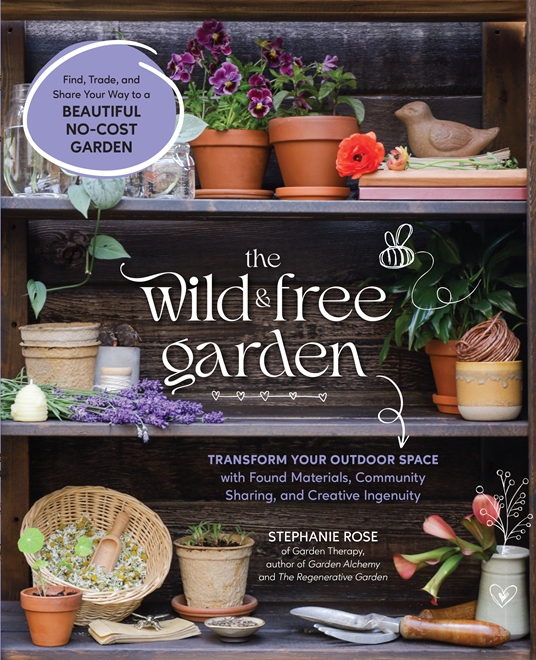
The Wild & Free Garden: A Community-Focused Guide to Creative, Low-Waste Gardening

If there’s one gardening book that feels especially aligned with the moment we’re in, it’s this one.

The Wild & Free Garden by Stephanie Rose is a refreshing reminder that gardening doesn’t have to be expensive, isolating, or overly complicated. Instead, it can be creative, communal, and rooted in what’s already around us.

🌿 A Garden Built From What You Already Have

At the heart of the book is a simple but powerful idea: abundance doesn’t always come from buying more, it often comes from sharing, reusing, and reimagining.

Stephanie Rose, founder of Garden Therapy, leans into a no- and low-buy approach that encourages gardeners to look at their environment differently. Found materials, shared resources, and community networks become the foundation for creating beautiful, functional outdoor spaces.

Instead of starting with a shopping list, you start with what’s already available, locally, socially, and creatively.

🌱 Gardening as a Community Practice

One of the most compelling threads running through The Wild & Free Garden is the idea that gardens can bring people together.

Stephanie explores practical, real-world ways gardeners can build stronger local connections, including:

  • Seed swaps that keep biodiversity flowing through communities
  • Tool-sharing and lending systems that reduce cost and waste
  • Community garden spaces and shared greenhouses
  • Collaborative rainwater collection and resource systems
  • Neighborhood-based exchange of plants, cuttings, and ideas

It’s gardening as something shared, not just grown alone behind a fence.

🌼 Low-Waste, High-Creativity Gardening

Rather than focusing on what you need to buy, the book focuses on what you can create. Stephanie offers approachable DIY projects that turn overlooked or discarded materials into meaningful garden features.

You’ll find ideas like:

  • Dry riverbeds built with reclaimed and natural materials
  • Wildflower lawns designed for pollinators and beauty
  • Garden structures made from found or repurposed items
  • Creative ways to source materials through freecycling networks

Each project is practical, but also imaginative, inviting gardeners to see “waste” as possibility.

🌿 Designing a Garden That Reflects You

What makes this book stand out is how personal it feels. It doesn’t push a single style of gardening or aesthetic. Instead, it encourages readers to build spaces that reflect their values, environment, and sense of creativity.

Your garden becomes less about perfection and more about expression. Less about consumption and more about connection.

🌸 A Shift in How We Think About Gardening

The Wild & Free Garden is ultimately about rethinking abundance. It gently challenges the idea that a beautiful garden requires constant spending or constant input.

Instead, it shows that with a little ingenuity, and a willingness to collaborate, gardens can become places of shared creativity, resilience, and joy.

It’s a reminder that we don’t need more stuff to grow something meaningful. We just need to look a little closer at what we already have, and who we already have around us.

A Low-Maintenance Vegetable Garden: Grow More Food with Less Effort

If you’ve ever dreamed of a vegetable garden that practically takes care of itself, I have the perfect book for you.

You know how some gardens feel like a constant to-do list? Seed trays on every surface, endless transplanting, watering schedules you can’t skip… beautiful, but exhausting. Well, Charlie Nardozzi is here to change that narrative with his brand-new book, The Continuous Vegetable Gardener, publishing February 3, 2026, and it might just be the most freeing gardening guide I’ve read in a long time.

It’s part inspiration, part practical roadmap, and completely refreshing, a guide to growing more food with less effort by letting your garden do what it naturally wants to do.

🌿 A Book That Will Change the Way You Garden
What I love most about The Continuous Vegetable Gardener is how doable it feels. Charlie doesn’t ask you to work harder, he shows you how to work smarter.

His philosophy is simple and honestly kind of magical: plant once, and let your garden keep giving.

Think self-sowing greens that return on their own. Perennials that quietly come back year after year. Seeds you save and replant without starting from scratch every season. It’s a shift away from “start over” gardening and into something more natural, more sustainable… and a whole lot easier.

His approach could be summed up like this:

“Care for your garden just enough, and let nature handle the rest.”

Yes. This is exactly the energy we need going into a new growing season.

The book walks you through everything in a way that feels approachable and encouraging:

  • Choosing the right soil and location for a self-sustaining garden
  • Vegetables that reliably self-sow or return as perennials
  • Creating a long-lasting, low-maintenance edible space
  • Saving seeds so your favorite crops come back year after year
  • Simple, budget-friendly ways to protect plants from frost
  • Easy planting plans for steady, season-spanning harvests

It’s the kind of guidance that makes you feel like gardening doesn’t have to take over your life to be successful.

🌱 Why I’m Adding This to My Spring Planning Stack
Every year around this time, I start dreaming about what I want my garden to feel like, not just what I want it to produce.

And this year? I want ease. I want abundance without burnout. I want a garden that works with me.

This book is perfect for:

  • The busy gardener who doesn’t have time for constant upkeep
  • The beginner who feels overwhelmed by where to start
  • The seasoned grower ready to simplify and streamline
  • Anyone who loves the idea of a more natural, sustainable garden

Or honestly… yourself. Because a lower-effort garden that still delivers incredible harvests? That’s a gift.

🌸 From One Season to the Next, Seamlessly
What’s especially inspiring is how this method stretches the life of your garden. With the right combinations and a little planning, harvests don’t just peak in summer, they keep going.

And whether you’re gardening in raised beds, a backyard plot, or even a few containers on a patio, this approach adapts beautifully. It’s gardening that grows with you.

🌿 Grow Smarter, Harvest More
The Continuous Vegetable Gardener is a reminder that gardening doesn’t have to be complicated to be abundant.

Sometimes, the best thing we can do is step back a little, trust the process, and let nature meet us halfway.

As the new year approaches and garden plans start to take shape, this might just be the shift that makes everything feel lighter, easier… and a lot more enjoyable.

Because what if your garden didn’t need more work, just a better rhythm? 🌱💚