Archive | HEALTH AND WELLNESS

A Substitute for Clean Water: There Is None

Fresh-WaterNOTE FROM SWEET GREENS: This post, A Substitute for Clean Water: There is None was written by Jenna. Jenna is a freelance writer who writing focuses on eco-lifestyle, health and wellness.

That cool, clean water straight from the tap. I grew up with it. As an inhabitant of the Northeastern Washington to Boston population corridor in the United States, it was a sure bet that drinking whatever came from the tap would be safe, plentiful, clear and delicious.

It was on a trip to Philadelphia in the 1980s that I first saw water for sale in a supermarket. What’s the deal, I asked a friend. “Oh, we never drink the water from the tap,” the friend replied. “Not in this city, we don’t.”

Water reminds me of that very pointed cliche about freedom: You don’t understand what freedom is until you have it taken away from you.

Water falls into that category. You don’t appreciate clear, clean, fresh water until you have that taken away from you. Yes, I knew that states in the West viewed water in an entirely different manner that I was used to. Now, however, with energy companies seeking to using fracking methods to mine natural gas throughout the country — including the Northeast corridor — suddenly clean water is the talk of the town. We’re living now with a clean-water scare that is hard to overestimate. Where it takes us at this point is hard to say.

That said, clean water is tasteless, odorless, colorless. This makes it very hard to describe.

So, let’s describe what clean water is not. That is easier, even though it is much, much scarier.

The U.S. Environmental Protection Agency, in fact, can define what clean water is not supposed to be based on contaminants that include microorganisms, disinfection byproducts, disinfectants, inorganic chemicals, organic chemicals and radionuclide. That would be, in less scientific jargon, living organisms, chemicals of various types and varieties of radiation that could poison the water.

The EPA chart on pollutants quantifies the scare factor. The microorganism cryptosporidium, is safe only when it is not present — it has a zero tolerance level. If it makes it into your water, expect stomach aches, cramps and diarrhea. Where does it hail from? From human and animal fecal waste.

That happens to be the first containment on the list. There is, likewise, zero tolerance for Giardia lamblia, Legionella and various coli-form bacteria.

Disinfectants include chlorine, which can cause eye and nose irritation, stomach discomfort above its tolerance level. Inorganic substances include lead, which can cause delayed development and serious neurological damage in children and kidney problems in adults. Nitrates above 10 parts per million, can kill infants. Thallium at 0.0005 parts per million, can cause changes in the blood, intestine, kidney and liver problems, as well as hair loss.

The point is made: Messing with the water can quite simply kill you and does more frequently than most Americans realize. One Pacific Institute report from 2002 estimated that 135 million people would die from unhealthy drinking water between 2000 and 2020.

One rule of thumb holds that if your drinking water is unsafe, it is a good time to pack your bags and move. If your local well is unsafe, there is not much you can do about it.

Often, however, that isn’t the case, especially if the problem is unhealthy microorganisms.  Water in that case can frequently treated (often with something that is also toxic) and left to flush itself clean again. If the source of the problem is found, water can return to health after some time has passed.

Whatever the problem, finding the source of the pollutants is key and this is one of the critical factors when it comes to fracking, which involves many, many drilling sites. As such, if the practice is proven to be unsafe, then there could be tens of thousands of wells each contaminating local water sources.

Many people turn to water purifying systems installed in their home, including the use of water softeners, filters and desalination techniques. Some systems use reverse osmosis. Others use descaling.

Descaling is sometimes called “salt free water softening,” as it seen as one of the basic alternatives to water softeners.

Much of the effort of water treatment in the home is to protect the pipes, the bathroom tiles and the kitchen utensils from a build of of residue that is created by hard water, which is water with a heavy concentration of minerals.

While minerals can build up on pipes and cooking ware, some minerals are good for you and are not harmful. Clean water, in that case, is a requirement for life. Clean, clear, fresh water softened with a private system, in that case, is a very popular luxury.

Winter in May? Going Green to Beat the Winter Blues

Winter in May How to Green Your Winter Blues

NOTE FROM SWEET GREENS: This post, Winter in May? Going Green to Beat the Winter Blues was written by Jenna. Jenna is a freelance writer who focuses on personal finance, eco-lifestyle, and health.

I know that a lot of you around the country are still dealing with winter – snow in May, no fun! Even if you don’t officially suffer from Seasonal Affect Disorder, dealing with the prolonged winter is difficult for anyone. Sure, you appreciate the break in the heat and the cooler wetter days when it first arrives but as it drags on—especially since snow in May isn’t rare anymore—it’s easy to get gloomy. It is important during the last dregs of winter that you take steps to keep your mood and your home as easy to live with as possible.

Believe it or not, one of the best ways to deal with the winter blues is to go green or “green up” your home. Seriously! Think about it for a second: going green helps improve the overall environment in your home, which can improve your mood. It also, often, helps reduce your utility costs (which tend to spike in winter as you run the heater and keep the lights on longer) which reduces stress. So what, specifically, should you do to green up your home for winter?

1. Go Green Literally

Plants are a fantastic addition to any home. They scrub the air, making it healthier to breathe. They also add moisture to the air, which is always helpful during the winter when the air—even when it’s raining—is drier than it is during the summer. Beyond that, there’s the decorative factor—bright green plants add a great decorative touch to a room. Plus, you can always go to a retailer like Willis Orchards to buy palm trees or other organic tropical plants and flowers and pretend you’re at the beach!

2. Daylight LED Bulbs

People who are diagnosed with Seasonal Affect Disorder are usually told to spend some time each day sitting in front of special “sunlight” lamps. These are lamps that are designed to replicate the light and warmth of sunlight and have proven quite effective. They can also be quite expensive. There are, however, cheaper alternatives that you can find with a little investigating. Daylight simulation LED bulbs can be bought piecemeal from most home improvement stores. These are different than sunlight lamps in that they don’t mimic the warmth of sun, just the sun’s light. Look for LED bulbs that are at least 2,000 Kelvins though 5,000 Kelvins is better. Put these bulbs in lamps around your home—it will look like the sun is shining indoors.

Note: LED bulbs are more expensive outright but they save tons of money over time and are better for the environment!

3. Air Flow

During the winter, we tend to bundle up—both our persons and our homes. We latch the windows and close the doors, trying to keep every iota of cold and dry winter air out. It’s understandable that you don’t want to pay to “heat the outdoors.” At the same time, spending copious amounts of time in a stuffy room can do just as much to sour our moods as not getting enough light. Fresh air is important! It’s amazing how we don’t notice the air flow much at all until the air around us just sits still!

There is ducting that you can install in your home to keep air flowing year round, even when the windows are closed. Or, you can simply open your windows a few times a day to let some fresh air inside. There are a couple of ways to do this: you can do this in the late morning or early afternoon when the air outside is warmest. Or, at night when you’re going to bed, you can open the windows in rooms like your kitchen or living room—rooms that won’t need to be reheated right away.

These are just three of the things that you can do to “green up” your home to help combat those winter doldrums. What are some of the things you’ve been doing?


Disclosure Statement

The Ecocentric Mom Box is the Perfect Treat for Summer

ecocentric mom box, subscription service
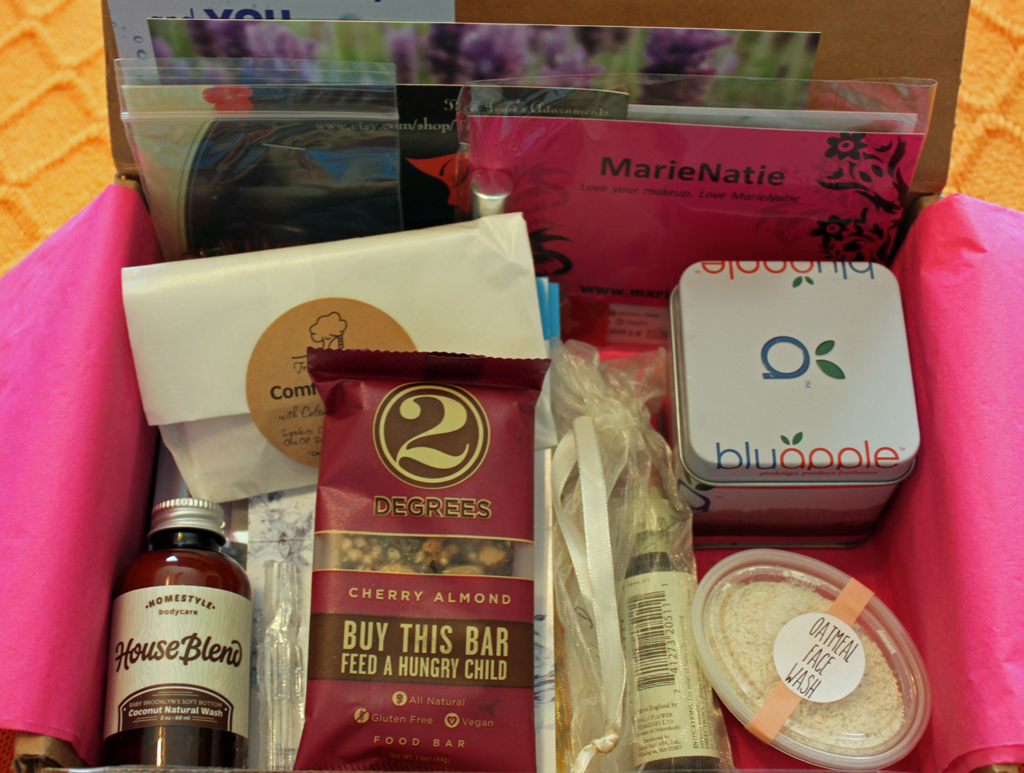
The spring Ecocentric Mom Box was full of wonderful goodies that are perfect for spring and summer! If you are considering joining a subscription box service full of eco-friendly goodies, Ecocentric Mom is for you! A subscription would make a wonderful Mother’s Day gift too.

Here’s a peek inside the March/April Box:

  1. Bach Original Flower Remedies
    I really enjoyed these remedies, I received Elm and keep it on my desk. I pick it up when I am feeling overwhelmed and it really helps be to recenter!
    + $19.98 per 20ml bottle
  2. Eco-Friendly Organic Acai Seed Bead Hair Barrette
    This hair barrette is super cute and would be perfect for a little girl. All of the jewelry is eco-friendly and sustainable too!
    + $5
  3. 2 Degrees Food Bar
    For every 2 Degrees bar you buy, they donate a meal to a hungry child! These bars are also gluten-free, vegan, all natural and GMO free.
    + $1.99
  4. Treefort Naturals Comfrey Salve
    I am a huge fan of salves and keep one in my handbag at all time. They are perfect for burns and scraps – so with a kiddo, it is a must.+ $8
  5. Organic Caffeine Free Roman Provence Rooibos Tea
    I love tea, and this fruity berry flavored tea is one of my favorites!
    + $6.99-8.99/2 oz. bag, brews 20-25 cups
  6. Powernap 2-CD Set
    Yay! Who doens’t love a power nap! This CD features ambiant music which envelops you – I look forward to giving this one a try!
    + $9.99
  7. Oatmeal Grapefruit Face Wash Powder by Homespum Northwest
    This facewash has to be the yummiest smelling one out there – and super gentle on my skin too!
    + $3.50/2 oz
  8. Bluapple – Prolongs Produce Freshness
    Just place this super cute blue apple in with your produce and you will prolong its freshness.
    + $9.99/2 pack
  9. House Blend Organics Coconut Body Wash
    I love coconut and this body wash worked really well on my dry skin – it’s super hydrating.
    + $14.95
  10. MarieNatie All Natural Lip Gloss
    Free from harsh chemicals, this natural lip gloss packs a lot of color!
    + $5
  11. Sport Suds Laundry Detergent
    This laundry detergent removes funky smells from clothes and sporting gear – perfect if you have an active teenager!
    + $20.95/400g Jar/34 loads

Do You Use Herbs During Flu Season to Boost Your Immunity Naturally?

October – March is cold season, which means that over 1 billion of us will have a nasty little cold and 10% of us will get the flu. Getting sick can’t always be avoided, it may just be your body’s way of telling you that you need to slow down and take some time out to rest. I think this is what my body is trying to tell me – I have decided to listen.

You can help your body avoid the cold and flu by pumping up your immune system. Your immune system is your body’s natural defense team with the ability to protect you from potentially harmful bacteria and viruses. There are four key steps that I follow to help keep my immunity in check. You can also support your immunity by discovering what ancient healers have known for centuries – that certain herbs can help support your body’s immune system. My favorite herb immunity boosting herb is ginger – you can put it in a lot of different dishes and it makes a lovely tea too! And remember that the number one way to prevent getting sick is by washing your hands!


Tip: Elderberry tea is super effective when it comes to helping you fight a cold because it has massive anti-viral properties. 

How do you prevent a cold?
If you do come down with a cold or the flu – how do you make yourself feel better?

photo credit

Celebrate National Children’s Dental Health Month With Tom’s of Maine

Hello, Friends! There is still time to download the Tom’s of Maine’s “Brushing Fun,” activity book which supports Oral Health America, a national nonprofit dedicated to oral care and prevention. Remember, with each free coloring book download, Tom’s of Maine will donate 10 tubes of its Wicked Cool! natural toothpaste (up to 200,000 tubes) to children in OHA’s Smiles Across America program. You can find OHA Health America on Facebook and Twitter too!


Parents, you can show off your kiddo’s creativity and inspire others to get involved by sharing a photo of a completed page from the coloring book on Facebook, Twitter or Instagram using #NaturalSmiles (You can see our’s here!) You will also have a chance to win a Tom’s of Maine natural oral care prize pack and a $100 Utrecht Art Store gift card to foster your child’s creativity. Yay!

Full Disclosure: This information was provided through a #NaturalSmiles paid partnership.Â