Archive | HOME AND GARDEN

How To Encourage Your Kids into Gardening

As part of your desire to help the world heal, encourage the next generation into similar lifestyles. By fostering eco-conscious feelings in the next generation, you ensure the future of the planet.

Gardening is a great place to start when teaching your kids about the benefits of leading an eco-friendly lifestyle. It helps them get to grips with the earth and feel the benefits of seeing something they’ve put effort into coming to fruition.

Gardening is a great hobby for children outside of eco-conscious goals. Gardening teaches patience, persistence, and attention to detail. Kids learn to see a project through to the end and learn several interesting scientific facts about plants.

But kids can be fussy and resist doing things they don’t want to do, even if you explain the benefits of them. For this reason, you might be looking for some tips on how to encourage your kids to gardening. Luckily, you’re in the right place.

Give your kids their own space

One of the most rewarding parts of gardening is seeing the fruits of your labor. To foster this feeling in your kids, it can help to allot a section of your garden solely to your child. In this plot, they can plant all of their plants and flowers. It should give them a sense of ownership and pride and set in their mind that gardening is a fun activity.

Give your kids choice

In a similar vein to the last tip, giving your children choice over what they plant can help kids want to garden. First, have a conversation with them about the types of plants: what effort level they will require and what they will look like when sprouted. Once you’ve given them this information, allow your kids to choose what they want to plant. This will provide them with ownership but also self-motivation to look after their plants.

Make the garden a nice place to be

When kids feel comfortable in a space, they are more likely to want to spend time there. For this reason, making your garden attractive is key to keeping your kids’ attention. Comfy outdoor chairs, fun lighting for the evening, even outdoor toys—are all great for keeping your kids happy in the garden.

Take your kid shopping for tools

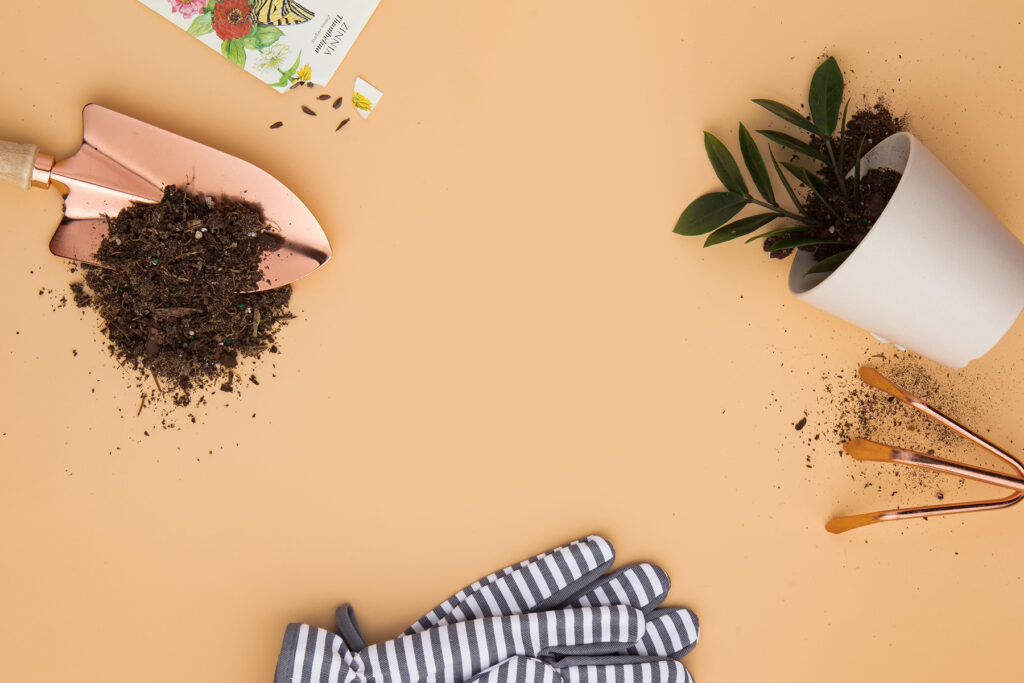
Buying tools for gardening can show your kid how seriously you take their passion for gardening. Plus, picking out their own trowel and gloves can help your child to invest emotionally in gardening as a hobby. After all, when kids use adult tools, they can feel dwarfed by their size and out of place in the garden. We don’t want this!

You can also take the opportunity to invest in some fun and exciting garden tools that will spark their interest and inspire them to want to get outside more often. Drawing them in by showing them just how enjoyable and innovative their gardening experience can be will ensure they learn to love spending time under the sun. 

Show Them It’s Safe 

If your child is a little bit intimidated by gardening and being outside as a whole, then you need to show them that it’s totally safe! They will look to you for inspiration in everything they do, so if they see that you are unwilling to touch mud or run at the sight of an insect, then they will too. Show them that in fact, there are very few threats in your garden that they need to be scared of! Most bugs are not predators, and they won’t do anything other than give you a little painful sting in the worst-case scenario, so make sure your children know they’re out of harm’s way even if a creepy-crawly comes along! Encourage them to get mucky outdoors, immersing themselves in nature without a care in the world. 

Taste what you grow

Once you and your child have grown many fruits and vegetables, eat them! Whether raw—like a strawberry—or cooked into a meal, eating what you’ve grown will show your kids how worthwhile gardening is. You can also use these moments to teach them important messages about produce and the environmental impact of growing your own food.

Practical Ways You Can Keep Your Home Pest-Free

Pests are not only annoying, but they can also carry diseases and wreak havoc on your home. They’re also expensive to exterminate, so it’s in your best interest to keep them out in the first place. 

Here are some practical ways you can keep pests out of your home.

Deal with Stagnant Water in the Compound 

When it comes to keeping pests at bay, water is a common culprit.  Pests are attracted to stagnant water so avoid leaving any open containers outside the house or in your property for too long. 

If you have an outdoor area with lots of vegetation and ponds or pools, keep them clean as this would help reduce possible mosquito infestations by getting rid of their breeding sites. Also, if your home is highly infested with mosquitos, you may want to consider a mosquito trap outdoor. This will be more effective compared to other ways of getting rid of mosquitos.

Trim All Trees and Bushes 

Trees and bushes can be a breeding ground for pests such as ants, cockroaches, ticks, termites, and mosquitoes, to name a few.  By keeping them trimmed away from the house, you are reducing their access points into your property, reducing the likelihood of having an infestation or being bitten by mosquitoes.

Seal Holes and Cracks 

It’s advisable to seal holes and cracks, such as in the home’s foundation. Sealing gaps around windows and doors is a great way to prevent pests from entering the home. There must be no standing water or moist areas where bugs can breed and spread throughout your house if you have a crawlspace.

Cover All Trash 

Cover all trash cans completely, even if you only throw away some paper towels or empty boxes. This will prevent rodents from getting into your home. You can also sprinkle cayenne pepper around your doors and windows to keep pests away.

Use Natural Products

Natural products are great for keeping pests away from your home. Peppermint oil is a great way to keep ants and other little bugs at bay as they hate the smell of it. Try putting some on cotton balls or even around windows. 

You can also mix peppermint with water in spray bottles and use them as an all-over body spray, too, if you’d like. The pungent smell will work wonders against insects that come near your house. 

Evict All Mice 

Mice have been a nuisance in homes worldwide for centuries, and while some may consider them cute, they are more of an annoyance from a homeowner’s perspective. Mice can spread diseases through their droppings, so it is vital to get rid of mice quickly before things go downhill.

To evict mice from your home, you need a multi-pronged approach that will also affect any of their offspring or other family members they may have hiding in the walls and other hard-to-reach places.

Keep Your Home Clean 

Keep your home clean to keep pests out, as they prefer dirty and moist areas. Be sure to clean your kitchen counters daily and sweep or vacuum the floors every day. 

Wash dishes straight away after use, rather than letting them sit in the sink overnight. Keep food covered when you’re not eating it and be sure to throw out any rotting fruit that falls onto the ground since this will attract insects such as ants. 

Residential Cleaning

For many people, the thought of cleaning their home is enough to send them running for the hills. Fortunately, there are eco-friendly residential cleaning services that can take care of the dirty work for you. These companies employ experienced and trustworthy cleaners who will clean your home from top to bottom, leaving it spotless. In addition to saving you time and energy, residential cleaning services can also help to improve your indoor air quality by removing dust, pollen, pests and other allergens from your home. If you’re looking for a hassle-free way to keep your home pest free, consider hiring a residential cleaning service.

The above are some of the best ways to keep your home pest-free. Be sure to use them for excellent results.

Should You Invest In A Home Battery?

Social Squares

Just ten years ago, home batteries weren’t even an option. While the technology existed, no companies were offering homeowners the option of hooking them up to their mains systems. Instead, if you wanted backup power during a power cut, you had to invest in a polluting and loud diesel generator. 

With the advent of home battery packs, though, that’s changing. These systems collect energy from solar panels during the day and then distribute it around your home when you need it.

Battery packs solve a major problem of the solar panel industry – the fact that solar arrays can only collect energy when the sun shines. With a battery in your home, you can collect solar energy during the day (perhaps when you’re out at work), and then use the energy in the evening to power your TV or kettle. 

In addition, installing a home battery lets you overcome some of the technical constraints of a traditional solar electric system. You get to keep the energy you produce, instead of having to sell it to the grid or let it go to waste. 

The Benefits Of A Home Battery

As you might expect, there are multiple benefits of a home battery beyond just providing you with a steady supply of electricity that you can use in the evening, 

Power During An Outage

Home batteries essentially make you entirely self-sufficient. So long as the sun continues to shine, PV panels will continue to collect energy and your battery will continue to charge. Therefore, during a power cut, you can continue using your lighting and appliances. You may even be able to ration your use of electricity, allowing you to survive adequately off-grid for weeks at a time. 

Power Your Electric Vehicle

If you have an electric vehicle, you can also use your battery to charge it. During the day, solar panels collect electricity and store charge in the home battery. Then, when you charge your vehicle at night, you can hook it up to your mains, drawing down on your home battery reserves. Some systems may also allow you to draw power directly from solar panels themselves 

Reduce Your Costs

Home batteries lower your costs. Once you purchase the battery, the energy you use it to store is essentially free. You’re able to use it later. 

Furthermore, your meter stops running backward. You no longer have to sell your collected energy back to the grid at a lower rate. You simply collect and use what you store without having to pay premium prices. 

What’s amazing about battery technology is that you don’t even need solar panels to benefit. You can simply use your battery to draw energy from the grid when it is cheap and then use it to power your home when prices rise again during peak hours (such as the evenings). 

Better For The Environment

Lastly, battery technology is generally better for the environment. It reduces the size of the supply chain and impact on natural resources. 

Battery production is not entirely eco-friendly. Many chemistries contain chemicals which can harm the environment. However, the impact is orders of magnitude lower than it is for conventional energy production. Coal-fired power plants require enormous quantities of resources, including capital and raw materials. 

Estimates suggest that with battery technology, people consume an average of 70 percent of their own electricity. That means that they essentially slash grid demand by a whopping 30 percent – quite considerable. 

What To Consider Before You Invest In Battery Technology

Before you invest in battery technology, you’ll want to consider the following. 

The Cost

How much you spend on home batteries depends largely on the size of the battery. Most batteries offer somewhere between 3 and 20.5 kWh. Price per kWh is around $700. So the price of your system will depend on how many kilowatt-hours you get installed. 

The Lifespan

As you might suspect, batteries don’t last forever. In fact, over time, they degrade and lose capacity. Right now, there isn’t much that manufacturers can do about this. Battery chemistry features mean that most batteries will eventually require replacement, no matter how well you look after them. 

However, ten years is still a long time – enough to make savings. 

Physical Size

You’ll also want to think about the physical size of the battery. Some are quite large and heavy and usually require a service room where engineers can hang them. They tend to be around 1 meter long and 15 cm deep, though designs and styles vary from manufacturer to manufacturer. 

Batteries contain a range of components. The majority of the weight and volume is taken up by lithium-ion cells. Other components include the electronic control system which allows the battery to charge and discharge automatically, as well as the inverter to produce an alternating current that you can use in your home. High-performance batteries also require a cooling system to keep them at optimal temperatures during operation. Current batteries do not convert stored energy into electricity with 100 percent efficiency. 

How You Want To Use Your Battery

Another consideration is how you actually want to use your battery. First, you’ll need to check whether the built-in inverter is suitable for your purposes. Inverters take direct current from the panels and transform it into alternating current for your devices. 

If you want your battery to work in the home, you need a two-way inverter. This will allow the battery to both charge and discharge in the correct manner. You may also need to invest in a backup system or grid-forming inverter if you want to use your battery during blackouts. 

Some batteries offer integration with vehicle-to-grid technology. For instance, you might want your battery to act as a buffer to regular flows. You might also want to connect your home battery to your car battery for powering your home at night and avoiding high grid tariffs. 

In summary, whether you invest in a home battery is very much a personal choice. Given the current economics, however, the vast majority of people stand to benefit. 

How To Ensure Eco-Friendly Home Waste Management

As environmental challenges become more prevalent, you must do your part to ensure that all of your households are more environmentally friendly. An excellent place to start is to examine your waste disposal processes more closely. Are you looking for ways to help the environment by managing your waste at home? Here are a few tips.

  1. Composting

Organic waste generated in the kitchen, such as vegetable peels or clippings, are great for a compost pile. Compost piles are a great way of producing healthy fertilizers for your garden. Worm composting and bokashi buckets are two examples of composting processes that take up little to no space. These compost piles result in compost development that is beneficial to the soil, thus making it more fertile. Some garbage remains after reuse and recycling; rather than burying it, use it to generate electricity. Anaerobic digestion facilities like septic tanks are beneficial in this situation; they take care of anything that rots and converts it into biogas and farm fertilizer.

  1. Use green waste for your yard

Green waste, such as yard trimmings, can be used to keep them out of landfills and supply nutrients to the soil or as animal feed. You can spread grass clippings over the grass and manage yard trash as efficiently as possible. It is now more crucial than ever to concentrate on measures to protect our environment.

  1. Use e-waste management techniques

Certain domestic items, such as outdated televisions and washing machines, must be disposed of properly to avoid causing environmental harm. It’s recommended to do some research before attempting to remove these on your own. Before you toss your e-waste out, see whether the manufacturer offers drop-off services or look for recycling programs in your province. This waste can also be taken care of by a professional garbage management firm. 

  1. Reuse plastic bags

The majority of people are now aware of the negative environmental impact of plastic shopping bags. Everyone should reuse any non-recyclable plastic bags. Keep them in your car or handbag, so you don’t have to buy another plastic bag from the supermarket. Invest in a couple of canvas bags for your next major shopping trip.

  1. Use of waste disposal equipment

The use of correct waste disposal equipment can be classified as environmentally friendly waste management. Garbage disposers are meant to shred bulk rubbish into tiny particles that dissolve more quickly. Waste disposal units and septic tanks make it easier to reduce waste and manage home sewage. Furthermore, because food scraps represent 20% of all waste in the environment, putting them in the garbage disposal rather than the trash would be a critical step toward converting them to fertilizer or renewable energy rather than ending up in a landfill. Plastic bags are often used to dispose of food waste, as is well known. The usage of disposal machines, on the other hand, reduces the amount of plastic bags used. As a result, fewer plastics end up in landfills, reducing land pollution.

5 Red Flags When Shopping Online for an Eco-Friendly Kitchen

When shopping online for eco-friendly products for your kitchen, you may come across some products that are not really what they claim to be. Whether you’re looking for dishwashing liquid, small appliances, or kitchen utensils, finding the right products is important to your health and safety. Many products for the kitchen advertised as sustainable may not be. In this article, we will discuss warning signs to look for when shopping online for sustainable products. We will discuss sites that have products too good to be true, sites with no reviews or refunds, products sold with credit card purchases only, products advertised as green that are not, and how to tell the difference. Follow these tips and you will be able to buy sustainable eco-friendly products for your home with confidence.

Products That Appear Too Good To Be True

When shopping you may come across eco-friendly products that seem too good to be true. They promise more than what they deliver. For example, a dishwashing gel that advertises it is sustainable and safe. When you check the ingredients, you find it has sodium borate in it and other chemicals. The advertising is false because this dishwashing gel is still toxic and not eco-friendly as advertised. Always check the ingredients in a product to use in the kitchen or the materials that cookware and utensils are made of before buying. Nonstick coatings on cookware are known to be toxic, and when advertised as eco-friendly, signal false advertising.

Checking the materials small appliances, cookware, and utensils are made from will help you make better decisions. With a 40% increase in kitchen and bathroom remodeling, it’s essential to know how to shop for eco-friendly products that improve the safety of your home before undergoing your own kitchen remodel. Always research products before buying them for your home.

Website Offers No Refunds Or Product Reviews

The website sells eco-friendly products but offers no refunds or exchanges for their products. This is often a sign that they do not make good products. A credible website will offer refunds for a damaged or defective product or send a replacement. An Internet crime is committed by a site that offers false information about products or services to consumers, and when a product has no customer reviews, that can be a sign that the product could be a scam. Look for products with guarantees or refunds on products you buy.

Website Only Offer Credit Card Payment Option

A site that asks about credit card information before you look at their products or actually purchase them is a big red flag. A good website will offer you more than one way to pay for products. Once you pay by credit card, you cannot really go back and change the transaction. Websites that accept checks or payment on delivery show they are reputable and have different ways for consumers to purchase their products. Sites that accept a variety of payment options show they stand behind their products.

Suspicious Product Advertised

You visit a site and find that they have a product you have never heard of with a rather general description. It has quality photos but the description does not match the photos. You cannot find any information about the product or reviews. This may be a warning not to bother buying it and to just keep looking elsewhere. A website that has no address or phone can mean the site is shady.

Kitchenware That Is Not Eco-Friendly

Plastic products for storage and eating often have chemicals that are harmful to the human body. Polystyrene is used to make plastic cups, plates, rubber, food containers, and packaging has been linked to cancer. Some disposable water bottles have been found to be made with harmful chemicals. Plastics become more lethal when heated, and used with acidic food. Avoid small appliances made of plastic or substances like Tritan that studies link with health problems. Due to the fact that more people are eating at home, it’s important to use safe eco-friendly products in the kitchen.

There are some things we cannot change in our fight to make the environment better. Using oil in our cars and appliances is unavoidable, with oil so ingrained within our culture since the first oil pipeline was constructed in 1862. However, by investing in eco-friendly products for our homes and kitchens, we can do our part in helping to make the planet greener. Just be sure you are watching out for potential scams when beginning to shop for eco-friendly products!