Archive | HOME AND GARDEN

How to Make an Organic Succulent Garden with Paint Dipped Dinosaurs

Even if you don’t have a green thumb when it comes to gardening – you can’t go wrong with organic succulents. I have them all over my home, they are easy to take care of and come in quirky shapes and sizes. Eben has recently shown quite an interest in succulents – remember this indoor succulent garden he made for my birthday? Whenever we are visiting our local organic nursery, he is immediately drawn to the exotic plants. Anything that comes in a quirky shape, color or texture he finds very interesting and enticing. I thought it would be fun to put together a succulent garden that would be entirely his own. We picked up a few of his favorite succulents, grabbed some supplies from our garage and a handful of small dinosaurs from his toy closet and went to work. What we created is a fun and quirky garden for his bedroom that he was able to create entirely by himself – read on for the simple directions:

1. Gather the Supplies

  • organic succulent plants
  • recycled container (your local thrift store is an excellent source)
  • organic cactus potting soil
  • dinosaur toys
  • paint
  • rocks
  • spray bottle

2. Get Planting
Start by adding a layer of rocks to the bottom of your container, keeping your layers as even as possible. Follow by adding the organic cactus potting soil on top of the rocks. Then, arrange and add the plants to the container, leaving enough space for the plants to spread out as they grow.

3.  Dip Paint and Add the Dinosaurs
I gave Eben a set of eco-friendly craft paints to add a little more color to the small dinosaur toys. He simply sponged a little color on them to give them a little pop of color – leaving some of the original color underneath. When they were dry, he added them to the garden.

4. Display and Enjoy the Succulent Garden
We placed the finished garden in a sunny spot on his desk in his bedroom – he enjoys rearranging the dinosaurs, showing it to friends and family who visit our home and sharing the thoughts that it evokes, that is what creative gardening is really about.

EXCITING NEWS: This organic succulent garden with paint dipped dinosaurs will be featured in the spring issue of Green Child Magazine as the Earth Day project. So fun!

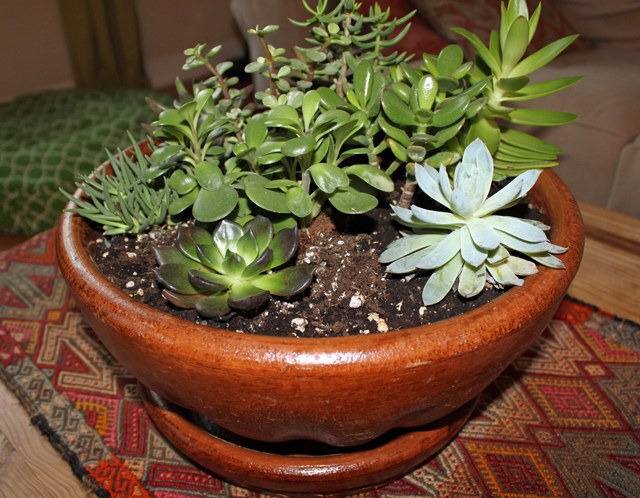
Eco-Friendly Birthday Idea: Indoor Organic Succulent Garden

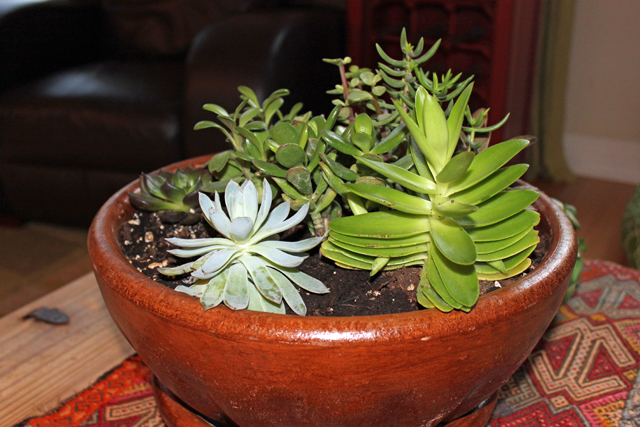
Every year for either my birthday or Mother’s Day, Eben gives me an organic plant. This year, he surprised me with a bunch of organic plants – an indoor succulent garden. It sits on our living room coffee table and makes me smile every time I see it.

Do you have organic succulent gardens in your home?

P.S. Do you remember the birthday project that Eben gave the mister a few years ago? The lemon tree has grown quite a bit – giving us yummy lemons all season long. 

Happy Valentine’s Day!

Happy Valentine’s Day Friends! Are you doing anything special to celebrate today? Eben hasn’t been feeling well – it’s seems the terrible, horrible, no good, very bad day is sneaking up on him! I have his Valentine’s Day scavenger hunt ready to go, I hope he is feeling up to it. Then, I am planning a heart themed dinner tonight – and it just might be pancakes. It has been one of those weeks. Ha!

I hope you have a special day full of fun and snuggles from the ones you love – Have a lovely Valentine’s Day!

xo,
Sweet Greens
…………………………………………………………………………………………………………………………………………..

p.s. I woke up this morning to find a valentine waiting for me on the dining room table. This pink and red letter was filled with the most beautiful words from the mister – it was the best Valentine’s Day gift ever. 

New Uses For Old Things: 6 Ways To Repurpose Old Items In Your Home


Note from Sweet Greens: The following post on 6 ways to repurpose old items in your home is a sponsored post from Home Rehab Online writer Allison Lind. Allison is a home decor and home improvement expert who has extensively written on the topics since 2004. For two years, she worked with home improvement celebrity Ty Pennington, of ABC’s “Extreme Makeover: Home Edition.”

Our landfills are growing by the second — but there’s plenty that we can do to help, while also adding some extra functionality or style in our homes! Find decorating inspiration in these five unique ways to reuse items you already have. Mother Nature will be pleased.

1. Bottle Beauties
Instead of tossing empty glass wine, beer or soda bottles, take a look at them from a different angle. Many bottles have a beautiful shape or color, and could easily stand alone as decorative vases. For a modern look, consider painting the exterior of a bottle in a color that matches your home décor.

If your bottle has a label, soak it in hot sudsy water (use dishwashing detergent) for 5 or more minutes until the label becomes soft. Gently peel it away; use a scrub brush to remove any leftover residue. Before use, clean the insides of the bottles too — fill Âľ with warm water and a bit of dishwashing liquid. Cover the bottle with your finger or hand and give it a good shake. Rinse until the suds are gone and place upside down on a towel or dish rack to dry.

2. On a Roll
Empty toilet paper rolls are tossed in the trash faster than you can flush. Give them a new shot at life by using them to organize and store extra cords (the ones you’re not sure what they go to but you’re too afraid to toss them) to keep them from getting tangled. Wind a single cord into each empty paper roll and store side by side, standing up in a shoebox.

3. Book It
Do you have a pile of old books that you can’t bring yourself to get rid of but are just gathering dust? Opt for this unique idea: Purchase shelf brackets that are slightly smaller than the width of your favorite hardback books (from spine to opening). Secure the bracket to the wall and place the book on the bracket to create a decorative shelf. Stagger a few favorite tomes in a cohesive display and top with bud vases or small decorative items.

4. Display Case
Do you have an old cutlery tray that no longer has any use? Line the inside of the tray with pretty fabric or paper scraps — or paint it a favorite color. Attach small cabinet knobs and/or tiny hooks within each segment of the tray and use them to hang and organize favorite necklaces, bracelets and earrings.

5. Mad About Mason
Empty mason jars have so many reuses you might find yourself overwhelmed with the options. Here are some of our favorites:

  • Fill the jar part way with sand or rocks and top with a tea light candle. A grouping of these beauties will provide lovely candlelight for an intimate gathering.
  • Use them as single bud vases, grouping three or more together for extra effect.
  • Use them as drinking glasses at backyard BBQs — and save the planet from more tossed-aside plastic cups.
  • Store useful items such as sewing kits, colored pencils, ribbons, office supplies or any other items you find yourself stashing away in your junk drawer. The clear view allows you to easily see what’s inside so nothing ever feels too lost.
  • Create a hanging vase or candle holder: Wrap sturdy wire around the opening of the jar (under a ridge so it’s secure). Then use another piece of wire to wrap through that first wire at two points to create a handle. Hang from a wall or garden hook and fill with flowers or a tea light candle.

6. Bonus Round!
Looking for even more ideas? Try these five quick-and-easy reuse ideas for everyday items:

  • Turn old picture frames into cute little serving trays.
  • Use old shower hooks to hang purses in your closet.
  • An old hanging shoe rack can easily organize your pantry. Hang it on the door and separate snacks or spices in the pockets.
  • Need more jewelry organization? Use a cupcake tray to hold small items.
  • Use large clamp binder clips to keep computer and phone charger cords handy. Clip them to the edge of your desk and pull the cord end through the metal clamp hole.

Recycling 101: Are You Doing it Right?

Does your local area offer a recycling program? If so, you may be lucky enough that all you have to do is throw your recyclables in the recycling bin, then tote them to the curb on pick up day. However, did you know that in order for your recyclables to actually get recycled you need to follow a few simple tips? It’s true – first things first, you want to find out what items your local public works or recycling center can recycle, then follow these simple steps. 

1. Cleanliness Is Important
Cans, containers, bottles, and packaging caked in food and liquid aren’t going to make the cut. It makes it difficult to recycle if the bottles aren’t rinsed out. Also, please don’t tote your paper recyclables out to the curb while it is raining – wet paper and cardboard aren’t going to make the cut either.

2. Use The Right Bin
Depending on where you live and what type of recycling services are offered, you may or may not have several different colored bins for your recyclables. If you do have separate bins, please pay close attention to which recyclables go into which bin. Many bins will list on the side what items can be recycled in that particular bin. If not, please contact your recycling center and ask them which items you should be placing in each bin and stick to it!

3. Know What Is Recyclable? 
Just because your local recycling center recycles plastic – it doesn’t necessarily mean that they recycle all types of plastic. Check with your recycling center to find out which ones are suitable for recycling and then check the bottom of the item to find it’s recycling number. For example; our local Public Works Department does not recycle plastic milk and juice bottle caps. And many recycling centers do not recycle Styrofoam – it’s a good idea to find out what items your recycling center doesn’t recycle and then steer clear of those packaging options when doing your shopping.

4. Will They Pick Up Electronics, Household Items And Garden Debris? 
Not usually – again you will want to check with your local recycling center to find out what items they are able to recycle. A great resource for finding recycling centers for almost everything is Earth911.org – you can search by item and find a location in your area that can recycle it. However, if the item is in good working condition, please consider donating it – someone else most likely would love to have it! If you have a composter or your local community garden does – consider taking your garden debris there.

5. What About Hazardous Materials? 
These items usually need to be disposed of separately – again check with Earth911.org for local recycling centers. Hazardous materials include; batteries, motor oil, car batteries, pesticides, chemicals, paints etc; Also, many local grocery stores such as Whole Foods has recycling bins for batteries, plastic bags, and more.

Are you recycling properly? Or, are you guilty of throwing the milk jug and cap in the recycling bin?

photo via epSos.de