
 Gardening is a fantastic activity that everyone in your family will enjoy, regardless of age. It is the perfect way to spend several days a week working together outside in the fresh air and sunshine. Gardening is also great for instilling a sense of responsibility, cooperative learning and excitement in your child. Not to mention, when all is said and done, you are left with a beautiful bounty of fresh, organic foods that your family grew together – and will consume together. Read on to learn how to create an organic garden with your children this spring, you will reap the rewards all year long.
#1: Garden by Design
The first step to creating an organic garden with your child is to design the garden. You and your child will need to discuss which types of plants you will have in your garden and what type of garden you want to cultivate. You will want to take into account where in your yard is the best place to have a garden and what ways you will deter critters from eating all of your goodies. Then, you must figure out where to plant each of those plants within the garden so they have enough room to grow (if you live in small space, a container garden is a great idea), and receive the correct amounts of water and sunshine.
#2: Prepare the Garden
After you have created a design for your garden, it’s time to prepare the space for new life. It is a good idea to measure the space to make sure that it will be large enough for your goodies to grow. Remember goodies such as pumpkins, zucchinis and cucumbers will need a lot of room to grow. Then, you will want to make a border of some sort – in the past we have used reclaimed decking to make a raised garden bed. Next, grab a wheelbarrow and fill your garden beds with a good mix of high quality topsoil and organic compost. Children will love to help fill the wheelbarrow and then dump the dirt into the garden beds. Once you have filled the beds and leveled the tops, you are ready to begin planting.
#3: Get Planting
Now comes the fun part – children love to get their hands dirty, so planting the garden will delight them. You can provide them with handheld shovels, rakes, and hoes to assist in their gardening. Next, it is time to start planting your seeds. Great seed picks for children include; organic carrots, cucumbers, peppers, peas, melons, pumpkins, cabbage, tomatoes, lettuce and berries. Children especially love plants such as melons, pumpkins, and cucumbers because they can see the vegetables growth every day. However, there is a lot of fun in pulling carrots right out of the ground or eating berries straight from the patch. Just don’t forget to label the different goodies in the garden, so your child will know exactly what is growing.
#4: Maintain the Garden
Children love to help maintain the garden – they can help with the watering of the plants, weeding, organic fertilizing and recording the growth of all of their goodies. A fun way to record the growth of your garden is to allow your child to take photographs of it’s progress and encourage them to record how much each of the plants in the garden has grown throughout the season.
#5: Learn as the Garden Grows
Gardening teaches children much more than simply how to grow their own food. Gardening also teaches children the importance of working with others, proper nutrition, responsibility, life cycles, life skills, and can have a wonderful impact on their mental health and well-being. Not to mention, it is a perfect way to spend warm spring mornings together with your children. Oh yes, and they will also learn about bugs and insects – which delight most children!
#6: It’s Harvest Time!
When it comes time to harvest the goodies from your garden, give your child a large basket to collect the bounty in. Allow your child to pick each of the goodies directly from the plant or pull each carrot from the soil. There is something very satisfying about picking a fresh piece of produce from the earth. Then, prepare a space inside or outside where your child can clean each fruit before storing it, until you use it.
#7: Share the Bounty
A wonderful way to turn gardening into a social activity is by sharing the bounty with others. If you have more cucumbers then your family can consume, consider sharing them with family, friends and neighbors. If you have an insane bounty of zucchini, consider baking zucchini bread with your children and then delivering the goodies to someone you love. And if you have a lot of extra vegetables, consider inviting friends and family over for a lovely dinner that you prepare with your child.
Do you organic garden with your children?
What are your favorite tips for gardening with the kiddos?
Celebrate National Children’s Dental Health Month With Tom’s of Maine
 Hello, Friends! There is still time to download the Tom’s of Maine’s “Brushing Fun,” activity book which supports Oral Health America, a national nonprofit dedicated to oral care and prevention. Remember, with each free coloring book download, Tom’s of Maine will donate 10 tubes of its Wicked Cool! natural toothpaste (up to 200,000 tubes) to children in OHA’s Smiles Across America program. You can find OHA Health America on Facebook and Twitter too!
Parents, you can show off your kiddo’s creativity and inspire others to get involved by sharing a photo of a completed page from the coloring book on Facebook, Twitter or Instagram using #NaturalSmiles (You can see our’s here!) You will also have a chance to win a Tom’s of Maine natural oral care prize pack and a $100 Utrecht Art Store gift card to foster your child’s creativity. Yay!
Full Disclosure: This information was provided through a #NaturalSmiles paid partnership.
SkinnyLimits Delivers Juice Cleanses + Cold-Pressed Juices to Your Front Door
 As you already know, our family is really big into juicing. The mister and I usually do a juice cleanse every few months. So, I was excited when SkinnyLimits asked me to give their juice cleanse a try.
Skinnylimits offers juice cleanses and cold-pressed juices that are delivered to your front door – I couldn’t resist! I am doing a 3-day cleanse and started this morning. So far, I can tell you the juices are good (they taste almost identical to the juices that we make at home), the program is easy to follow (the juices come with a quick-start guide that outlines everything you need to know), and you get to drink a lot of juice (6 bottles a day!).
Stay tuned – I will be going into a lot of detail as to what I thought of the entire experience next week. I can’t wait to share!
YOUR TURN: Do you juice? Have you tried a juice delivery service?
Talking Produce? Your Produce Can Tell You if It is Genetically Modified

Did you know that those annoying little stickers that come on your produce really do have a great purpose? Those stickers, also known as PLU codes can actually tell you whether your produce was grown conventionally, organically or if it has been genetically modified. Here is how it works:
1. Conventional Produce:
You will find a four digit PLU code on the sticker.
2. Organic Produce:
You will find a five digit PLU code that starts with the number 9 on the sticker.
3. Genetically Modified Produce (GMO):
You will find a five digit PLU code that starts with the number 8 on the sticker.
Let’s break it down with some examples.
– A conventional apple would have the PLU code: 5454
– An organic apple would have the PLU code: 95454
– A genetically modified (GMO) apple would have the PLU code 85454
How great is that? Next time you are shopping, take a look to see how your favorite produce was grown.
Do You Bulk Up at the Natural Bulk Bins?
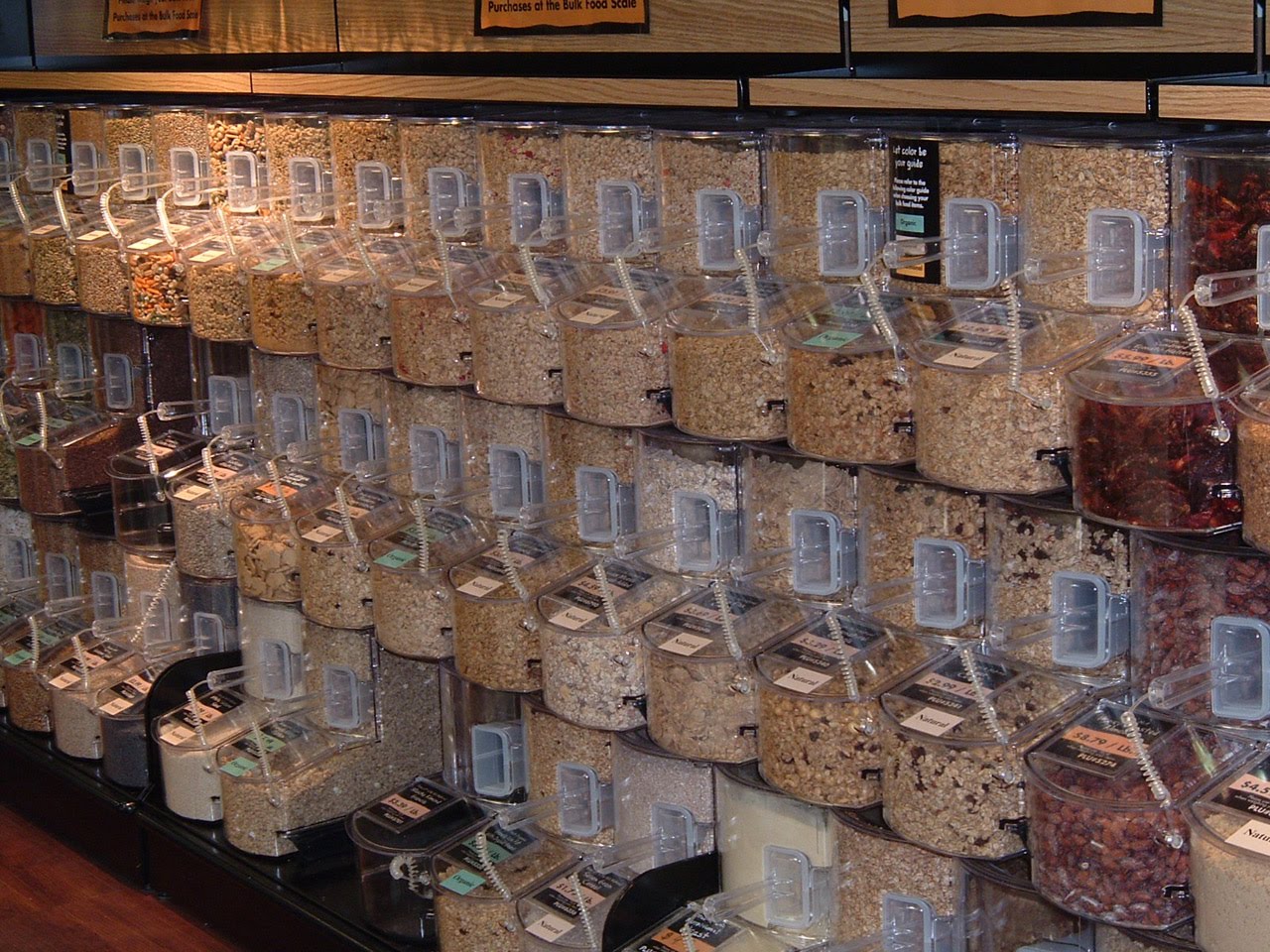 Do you buy in bulk from your local natural grocer? If you do, you already know how affordable it can be, right? However, do you realize that shopping in bulk is also great for the environment? When you buy in bulk, you are only purchasing the exact quantity that you need – which means nothing goes to waste. If you bring your own reusable containers, you eliminate the need for packaging too. There are tons of organic options available in the bulk bins including; cereals, snacks, dried fruits, spices, nuts, seeds, and even peanut butter and honey. Plus, many co-ops offer personal care items such as soap, shampoo, and condition in bulk too.
YOUR TURN: Do you shop in bulk? What are your favorite items to buy? What are your favorite stores to bulk shop at?