Tag Archives | green moms

Eco Baby 101: 5 Steps for Greener Baby Care

Green-BabyBaby’s first year is the toughest phase of many parents’ lives. With all of the demands and details of new parenthood, it can be tough to make eco-consciousness a priority.  The truth is that bringing an entire new person into the world creates a huge impact on the environment—from the thousands (yes, thousands) of diapers he or she will use to the impact your child will later have on the world as an adult who makes daily choices as a consumer and community member. By incorporating environmentally friendly practices now, it will be easier to go green in the future and you’ll be setting a great example for your growing, learning child.  Not only are the following steps green, they’re healthy and safe, too! The following are five first steps to take towards greener baby care.

#1 Breastfeeding
Making the choice to breastfeed has a huge impact on the environment and your child. The American Academy of Pediatrics and World Health Organization advocate exclusive breastfeeding for the first six months of life followed by continued breastfeeding to supplement solid food through 12 months. Countless studies have shown numerous immediate and long-term benefits to both mothers and babies who participate in breastfeeding including reduced incidence of postpartum depression, fewer health issues and increased immunity in babies, and a stronger attachment relationship. On top of the health benefits, it’s free! Formula can be very expensive, especially if your baby does not tolerate cow’s milk protein and needs prescription formula. Formula costs money and takes energy to manufacture, package, and transport. Additionally, most formulas are cow’s milk based so everything that goes into feeding and raising dairy cows comes into play. If your baby is like many who cannot digest cow’s milk protein during their first year of life, you may have to pay extra for special allergy-free formula. Breastfed babies stop eating when they’re full; with formula, it’s a bit harder to predict when baby has had enough, creating waste when extra formula is thrown out after each feed. If you do decide to formula feed your baby, you can make the choice greener by purchasing organic brands or making your own.

#2 Green Diapering
Considering that the average American baby will go through roughly 6,000 diapers during his first two years of life, cloth is by far the greener way to diaper! While the up-front cost is daunting, most parents who chose cloth have estimated that the diapers paid for themselves by the time their baby was eleven months old—and the investment paid higher returns if the diapers were used for multiple children.  Cloth diapering has become increasingly popular and many companies sell organic, colorful, easy-to-use sets that are either sized per age and weight or one-size-fits all. If you are one of the many parents who does not have the time nor resources for the cleanup and laundry that cloth diapering require, there may be a diaper service in your city that offers pickup, cleaning, and drop-off. If you simply can’t commit to cloth, brands like Seventh Generation sell hypoallergenic, chlorine-free, fragrance-free diapers that are easier on the environment and your baby’s bottom. When choosing wipes, a good rule of thumb is to choose fragrance-free wipes with the least number of ingredients to avoid putting unnecessary, harsh additives on your baby’s skin.

#3 Greener Bottles
Several studies have come out recently revealing that even plastic bottles, baby toys, and accessories labeled BPA-free contain BPA in traces high enough to pose a risk to your baby’s health. Fortunately, there are some great companies out there making baby bottles and sippy cups from materials like stainless steel or glass. These options do not contain the harmful PVC, phthlalates, and BPA found in most plastic products.  My personal favorite brand, which I use at home with my daughter, is Pura Kiki. They make stainless steel bottles and sippy cups with silicone nipples and spouts. The bottles are safe, easy to clean, and come in a variety of cute colors.

#4 Homemade Baby Food
While jarred baby food can come in handy when you’re on the go with baby, it is costly to the environment and your wallet overall. Jarred food has a bigger carbon footprint than homemade food because it has to be made and canned in a facility before traveling to your local grocer for you to purchase. One jar or pouch of baby food alone rarely costs more than $1.50, but once baby starts to branch out with solid food she’ll consume multiple jars a day and dozens a week—not to mention the waste that’s produced if she doesn’t finish an entire jar during its shelf life. Making your own baby food certainly takes more time than buying jars, but this time commitment can be minimized by choosing one day a week or even month to mass-produce purees. After the up-front cost of a baby food blender and freezer trays, homemade baby food is far cheaper then store-bought. A couple of organic sweet potatoes at $1.19 a pound makes dozens of single servings. Plus, when you make your own food you choose exactly what goes into it!

#5 When Safe, Choose Used
Safety regulations on baby products are constantly developing and changing as new research surfaces and manufacturers learn by trial and error what is safe and unsafe. There are items that came onto the market during our one year old daughter’s short lifetime that have already been recalled. Used baby clothes are pretty much guaranteed to be safe. While there’s nothing like seeing your baby in a brand new outfit that you picked out just for her, buying new for baby requires purchasing a new wardrobe every three months or less—plus, your baby is guaranteed to stain everything you put her in eventually. Reusing baby clothes is cheaper than buying new and many moms like knowing that cherished memories will live on through another child wearing her baby’s old clothes.

These are just a few of the many, many ways you can begin to green your baby care! What are some of your favorites?
 

Have a Lovely Weekend + A Few Green Things

SummertimeHello, Friends! How was your week? Did you have a fun Memorial Day weekend? Did summer finally arrive at your house?

My family traveled to Georgia over Memorial Day weekend, we hadn’t been back to visit since we moved away over 7 years ago!  It was a much needed break and it was so much fun to visit those beautiful Georgia trees and stay with amazing friends! (Thanks Dion + Gina!) Not to mention, I am a huge sucker for a road trip, I swear I would jump in a car anytime and hit to road to anywhere!

This weekend, we are celebrating another dear friend’s birthday and spending the rest of the weekend at the beach. I am looking forward to sitting in the sunshine with my toes in the sand. I am in full summer mode and really can’t get enough of our Florida summer weather, it is definitely beach weather.

While I wrap birthday gifts and pack my beach bag, here are a few green things I thought you might enjoy:

– Going vegetarian or vegan? Here is a grocery shopping list for the top 50 meat-free staples.
– I am in love with this 221 square foot mansion!
– This father/daughter lip dub made my day.- Great ideas for making your backyard safe this summer.
– I haven’t tried it yet – but you can make your own toothpaste.
– Check out this fantastic timelapse of a superecell thunderstorm.

xo,
Sweet Greens

A Substitute for Clean Water: There Is None

Fresh-WaterNOTE FROM SWEET GREENS: This post, A Substitute for Clean Water: There is None was written by Jenna. Jenna is a freelance writer who writing focuses on eco-lifestyle, health and wellness.

That cool, clean water straight from the tap. I grew up with it. As an inhabitant of the Northeastern Washington to Boston population corridor in the United States, it was a sure bet that drinking whatever came from the tap would be safe, plentiful, clear and delicious.

It was on a trip to Philadelphia in the 1980s that I first saw water for sale in a supermarket. What’s the deal, I asked a friend. “Oh, we never drink the water from the tap,” the friend replied. “Not in this city, we don’t.”

Water reminds me of that very pointed cliche about freedom: You don’t understand what freedom is until you have it taken away from you.

Water falls into that category. You don’t appreciate clear, clean, fresh water until you have that taken away from you. Yes, I knew that states in the West viewed water in an entirely different manner that I was used to. Now, however, with energy companies seeking to using fracking methods to mine natural gas throughout the country — including the Northeast corridor — suddenly clean water is the talk of the town. We’re living now with a clean-water scare that is hard to overestimate. Where it takes us at this point is hard to say.

That said, clean water is tasteless, odorless, colorless. This makes it very hard to describe.

So, let’s describe what clean water is not. That is easier, even though it is much, much scarier.

The U.S. Environmental Protection Agency, in fact, can define what clean water is not supposed to be based on contaminants that include microorganisms, disinfection byproducts, disinfectants, inorganic chemicals, organic chemicals and radionuclide. That would be, in less scientific jargon, living organisms, chemicals of various types and varieties of radiation that could poison the water.

The EPA chart on pollutants quantifies the scare factor. The microorganism cryptosporidium, is safe only when it is not present — it has a zero tolerance level. If it makes it into your water, expect stomach aches, cramps and diarrhea. Where does it hail from? From human and animal fecal waste.

That happens to be the first containment on the list. There is, likewise, zero tolerance for Giardia lamblia, Legionella and various coli-form bacteria.

Disinfectants include chlorine, which can cause eye and nose irritation, stomach discomfort above its tolerance level. Inorganic substances include lead, which can cause delayed development and serious neurological damage in children and kidney problems in adults. Nitrates above 10 parts per million, can kill infants. Thallium at 0.0005 parts per million, can cause changes in the blood, intestine, kidney and liver problems, as well as hair loss.

The point is made: Messing with the water can quite simply kill you and does more frequently than most Americans realize. One Pacific Institute report from 2002 estimated that 135 million people would die from unhealthy drinking water between 2000 and 2020.

One rule of thumb holds that if your drinking water is unsafe, it is a good time to pack your bags and move. If your local well is unsafe, there is not much you can do about it.

Often, however, that isn’t the case, especially if the problem is unhealthy microorganisms.  Water in that case can frequently treated (often with something that is also toxic) and left to flush itself clean again. If the source of the problem is found, water can return to health after some time has passed.

Whatever the problem, finding the source of the pollutants is key and this is one of the critical factors when it comes to fracking, which involves many, many drilling sites. As such, if the practice is proven to be unsafe, then there could be tens of thousands of wells each contaminating local water sources.

Many people turn to water purifying systems installed in their home, including the use of water softeners, filters and desalination techniques. Some systems use reverse osmosis. Others use descaling.

Descaling is sometimes called “salt free water softening,” as it seen as one of the basic alternatives to water softeners.

Much of the effort of water treatment in the home is to protect the pipes, the bathroom tiles and the kitchen utensils from a build of of residue that is created by hard water, which is water with a heavy concentration of minerals.

While minerals can build up on pipes and cooking ware, some minerals are good for you and are not harmful. Clean water, in that case, is a requirement for life. Clean, clear, fresh water softened with a private system, in that case, is a very popular luxury.

Water Conservation Saves the Earth and Saves Money

water conservation

NOTE FROM SWEET GREENS: This post, Water Conservation Saves the Earth and Saves Money was written by Jenna. Jenna is a freelance writer who writing focuses on eco-lifestyle, health and wellness.

Your home is one of the first places to start conserving natural resources and reduce your carbon footprint. Making sure your home is properly insulated not only keeps you warm during the cold months, the insulation, venting and weather stripping can also reduce your energy usage during the warmer months that are popping up ahead.

While energy conservation at home is super important, another area of concern is water conservation. The truth is that there is a shortage of fresh water on this planet. In fact, including municipal water supplies, less than three percent of the water on this planet could be considered fresh. Adopting water conservation practices now will not only preserve our water supply, it can also save you money. There are several ways to conserve water around your home. The two easiest ways are to modify the appliances and equipment that use water, and to modify your behavior.

Appliance and Equipment Modification

Appliance and equipment modification usually involves making changes to your plumbing, or to the devices that use water in your home. Even if you don’t own your home, or you live in an apartment, you can still make many of these changes:

  1. Upgrade Your Toilets
    Prior to 1994, the average residential toilet used 3.5-to-5 gallons of water per flush. In 1994 all residential toilets were required to operate on 1.6 gallons or less. However, if you have an older toilet, you could still have a high-flush model. If you can’t replace the toilets, insert a displacement device into the upper tank to conserve your water use. A displacement device makes the water level appear higher than it is, similar to when you sit in a full bathtub and the water rises. Common displacement devices include bricks and water-filled plastic containers. If you want to add a bathroom to a space in your home that doesn’t have traditional plumbing – a Saniflo toilet could be the solution for you.
  2. Install Special Aerators on Your Faucets and Showerheads
    The aerator makes the water bubbly and provides good water pressure while simultaneously reducing the amount of water flowing through the faucet. So you can enjoy your shower, and actually rinse your hair, without using too much water.
  3. Install Shower Timers
    To reduce your time in the shower, and the amount of water down the drain use a timer when you jump in the shower.
  4. Check and Repair All Leaks, Especially in the Toilet
    Toilet leaks can send hundreds of gallons of water down the drain and cost you a lot of money in water and sewer fees.
  5. Invest in High-Efficiency Washing Machines and Dishwashers
    When it is time to replace the machines that you currently have choose machines are designed to clean effectively with the minimum amount of water.

Behavior Modification

Behavior modification is essentially changing the way you use water, here are 7 ways that will have you conserving water in no time:

  1. Take fewer showers during the week, if possible;
  2. Plug the bathtub drain, during your shower, and reuse the collected water to flush your toilet;
  3. Consider only flushing the toilet once a day, or when you have solid waste;
  4. Avoid running the water while shaving, brushing your teeth, or washing dishes;
  5. If you have a dishwasher, avoid running the washer when half empty;
  6. If you have a washing machine, adjust the water level based on the size of the load;
  7. Use rainwater for gardening, washing your car, and other outdoor uses.

YOUR TURN: How are you conserving water in your home?

Thirteen

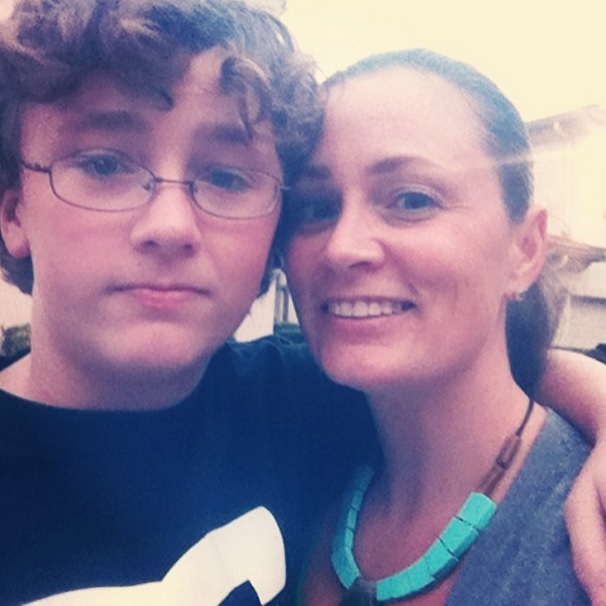
Jennie and Eben Lyon (Jennie-PC's conflicted copy 2014-05-12)Hello, Friends! Today, my one and only child – my pride and joy turns 13! Can you believe it? I am officially the mother of a teenager and I have to tell you, it is pretty amazing. I feel very lucky to get to be the mother of such a wonderful human being. Eben has accomplished so much in his short life and he has taught me that giving up is never an option. I am very proud of him and can’t wait to see where his journey will take him in the coming years. I will be there, right by his side, every single step of the way! I love you Eben, you are my favorite – for sure!