You’ve planned almost everything you need to host your beautifully ethical and eco-friendly wedding – but what about the band? Whilst it might not be the biggest eco offender, your entertainment is still an element that can potentially impact the carbon footprint of your special day. Here, we take a look at some of the top tips for choosing the perfect band for your sustainable wedding.
Be open about your preferences
For the eco-conscious couple, sustainability and ethically sourced supplies are of paramount importance when it comes to planning their wedding. Every potential musician or band you approach should be able to get just as excited about your values and preferences as you do, so be sure to open the conversation around your expectations.
Try to find musicians who also value sustainability. Perhaps they only use green-powered generators for their amplifiers, or use electric vehicles to transport equipment. Or maybe your chosen venue uses renewable energy which makes their equipment more eco-friendly? Even small things bands can do like bringing refillable water bottles to their performances, rather than using multiple disposable cups or adding to the venue’s washing up, will help boost the eco-credentials of your day.
Go acoustic
If your venue is suitable and your guest list is small enough, an acoustic band could be an excellent choice. Without the need for energy-taxing lights and amplifiers, acoustic musicians can make use of a room’s natural space to please the crowd with their melodies and songs.
Even if you’ll need some sort of power to boost the sound as evening falls, try to stick to acoustic-only musicians throughout the daytime segments of your day. A gentle background tune played by a harpist or pianist is very romantic whilst you’re enjoying your wedding breakfast.
Stay local
An easy way to ensure your choice of wedding music is as green as can be is to stick to local musicians. There are bound to be plenty of small groups in your area who can entertain your guests without having to travel long distances. If you manage to find an up-and-coming band, your wedding may even be one of their debut performances. If you’re unsure where to look, try an online database or search through local village magazines for recommendations.
With live bands, you don’t just get music, you get an entire performance. And young bands looking to find their way in the industry can be some of the best and most passionate when it comes to entertaining your wedding guests. Of course, a professional, long-standing local band is also a fantastic option – the key is choosing local artists to cut down on travel and overnight costs.
Tie it all together
All good weddings are seamlessly tied together with an overarching theme, so be sure to factor yours in when choosing your wedding band. Folk bands work well for earthy, rustic weddings, whilst jazz bands can liven up any classic or retro event. Look for musical styles that resonate with you and your partner, and then work with your venue and musicians to find the most sustainable way to incorporate the band into your wedding day.
Making your home more energy-efficient is a great way to reduce monthly expenses and help the environment. In this blog post, we will discuss 13 ways to make your new home more energy-efficient. In addition, we will provide tips on saving energy in every room of your house, so read on for some helpful information!
Install Weatherstripping And Caulk Around Doors And Windows
This will help seal any gaps that might be letting in air from the outside. Check around doors and windows for any cracks or holes and seal them up with weatherstripping or caulk. You can find these items at your local hardware store.
Install Energy Efficient Windows
One of the best ways to make your home more energy-efficient is to install energy-efficient windows. Not only will this help keep your home cooler in the summer and warmer in the winter, but it will also help reduce your energy bills. There are various types of energy-efficient windows on the market, so be sure to do your research to find the best option for your home.
Install Solar Panels
Another great way to make your home more energy-efficient is to install solar panels. Solar panels can help you generate your electricity, which can then power your home. This will not only reduce your reliance on the grid, but it will also help you to save money on your energy bills. There are a variety of solar panel systems available on the market, so you will need to do some research to find the one that best suits your needs. Just make sure that you get a system that is compatible with your home’s current electrical setup.
Making Use Of Propane
Propane is one of the most versatile and energy-efficient fuels available, making it an excellent choice for new homeowners looking to make their homes more energy-efficient. Propane can be used for everything from heating your home to powering your appliances, and it’s also a clean-burning fuel that won’t harm the environment.
For all your propane needs, be sure to visit Annapolis Propane. They are a full-service propane company that can help you get set up with the right Propane system for your home.
Switching Out Your Lightbulbs
One of the easiest ways to make your new home more energy efficient is to switch out your lightbulbs. If you have incandescent bulbs, they should be replaced with LED bulbs. LED bulbs use less energy and last much longer than incandescent bulbs. You can also buy smart lightbulbs that can be controlled with your smartphone. These bulbs can be turned off remotely, so you don’t have to worry about forgetting to turn them off when you leave the house.
Being Mindful Of Your Energy Use
You can’t manage what you don’t measure, which is especially true regarding your energy use. One of the best ways to make your new home more energy efficient is to be mindful of how much energy you and your family use daily.
Keep track of your energy bills and try to find ways to reduce your consumption. You may be surprised how much of a difference small changes can make.
Educate Your Family
Another way to make your new home more energy efficient is to educate your family about the importance of conserving energy. Show them how much money you can save by making small changes, such as turning off lights when they leave a room. Explain how conserving energy can also help the environment. Educating your family about energy efficiency can make a big difference in how much energy your home uses.
Adding Insulation To Your Home
Adding insulation is one of the best ways to make your new home more energy-efficient. This will help to keep your home warmer in the winter and cooler in the summer. There are many different types of insulation available, so you must choose the one that best suits your needs. Then, you can either install it yourself or hire a professional to do it for you.
Making Use Of Natural Light
One of the most effective and free ways to make your home more energy efficient is to take advantage of natural light. During the daytime, open up all the curtains and blinds to let in as much sunlight as possible. You’ll be surprised at how much difference it makes – not only will you save on energy bills, but your home will also feel brighter and more cheerful.
Invest In Energy Efficient Appliances
When it comes to appliances, it is essential to do your research to find the most energy-efficient option for your home. This is especially important for larger devices such as refrigerators, ovens, and washing machines. Not only are energy-efficient appliances more cost-effective in the long run, but they also help to reduce your carbon footprint.
Use Ceiling Fans
Ceiling fans can be used in winter and summer to help regulate the temperature in your home. In the winter, ceiling fans should rotate clockwise to push warm air down from the ceiling. In the summer, ceiling fans should spin counter-clockwise to create a cool breeze. Using Ceiling fans instead of air conditioners can save you money and energy.
Change Your Laundry Routine
Changing your laundry routine is one way to make your home more energy-efficient. Instead of washing all your clothes in hot water, try soaking them in cold water. This can save you a lot of money on your energy bill. You can also line dry your clothes instead of using the dryer. This will save you even more money on your energy bill.
Don’t Overuse Appliances That Use Allot Of Electricity
One of the best ways to make your new home more energy efficient is to be mindful of how often you use appliances that use a lot of electricity. Things like clothes dryers, ovens, and dishwashers can add to your energy bill. So, if you can limit your use of these appliances, you’ll be well on saving money and being more energy-efficient.
When saving energy and money, few things are more important than making your home as energy-efficient as possible. By following these simple tips, you can make a big difference in your energy bills and carbon footprint. So what are you waiting for? Start saving today!
With the increasing awareness of environmental sustainability, people are now actively seeking eco-friendly alternatives in various aspects of their lives, including home improvement. Wallpaper emerges as an option for design compared to traditional paint. Check out some of the advantages of wallpaper over paint, emphasizing how this choice contributes to a more sustainable and environmentally conscious approach to home decor.
There are quite a few reasons why wallpaper can be a better choice than paints regarding environmental impact. Here are a few that may make you change your mind about painting your walls and option for wallpaper instead.
Reduced Environmental Impact During Production
The production process of wallpaper generally has a lower impact when compared to the manufacturing of paint. Wallpaper is often made from materials such as paper, grasscloth, or recycled fibers, which can be sourced and produced in a sustainable manner. This eco-friendly production approach helps reduce harm to the environment associated with manufacturing.
Increased Lifespan and Durability
Wallpaper tends to have a lifespan and more excellent durability than paint. If properly maintained, high-quality wallpapers can last for years without needing replacement. This extended lifespan reduces the frequency of renovations required and minimizes material consumption over time compared to the repainting needs associated with traditional paint.
Environmentally Friendly Materials and Inks
Firstly, paints often contain chemicals, like organic compounds (VOCs), that may be released into the air during and after application. On the other hand, wallpapers, those made from natural or low-emission materials, emit fewer toxic substances. This makes them a healthier and more eco-friendly option for households for people with sensitivities or allergies. Also, most wallpaper will be printed using latex inks, which are water-based and non-toxic.
Easy To Remove and Recycle
Another advantage of wallpaper is its removal process. Unlike paint that requires sanding and labor methods for removal, wallpapers can be peeled off cleanly with little residue left behind. This saves time. It also facilitates recycling as wallpaper materials can be collected and processed more efficiently.
Sustainability
Many wallpaper manufacturers now offer eco options made from recycled paper, bamboo, or grasscloth materials. Homeowners can actively contribute to preserving ecosystems and biodiversity by choosing wallpapers made from resources.
Energy Efficient
Applying wallpaper generally requires less energy than painting. The production and application of paint involve energy-intensive processes, including mixing, tinting, and drying. Wallpaper, on the other hand, often involves less energy consumption in both manufacturing and installation, making it a more energy-efficient option for eco-minded individuals.
Less Water Consumption
When applying wallpaper, less water is typically needed than when painting. Traditional painting involves using water or solvent-based paints that require water for mixing, cleaning brushes, and diluting. With pre-pasted wallpaper options, the wallpaper application reduces water usage and contributes to conservation efforts in home improvement projects.
Customized Sustainability
As consumer demand for products grows, wallpaper manufacturers are also stepping up by offering various eco-friendly options. This allows homeowners to select wallpapers that align with their sustainability preferences through features like recycled content, sourced materials, or compliance with strict environmental standards.
In pursuing sustainable living practices, deciding between wallpaper and paint for home decoration holds environmental implications. Wallpaper emerges as an alternative that embodies sustainability principles due to its eco-friendly production processes, longer lifespan compared to paint, and potential for recycling. Opting for wallpaper over paint allows individuals to embrace a more environmentally conscious approach to interior design, resulting in visually appealing spaces while also being mindful of the environment.
So if you are looking for a wallpaper that checks all the boxes, look at Love vs. Design. They offer a product called Glissade that is 100% paper-based and is printed using nontoxic water-based inks, so from beginning to end, it is a great eco-friendly.
Hey there, fellow Earth-lover! Have you ever found yourself daydreaming about a greener footprint but overwhelmed by the ‘how’? You’re not alone, and guess what? It’s not about monumental shifts but those tiny, playful tweaks in our daily lives that build up to an eco-epic saga. So, if you’re all set to sprinkle a little more green in your routine and do it with flair, come along! Let’s make this eco-journey uniquely yours, filled with fun, creativity, and some heartwarming stories.
Your Joyful Journey with Seed-Based Gift Wraps:
Ever stood there, wrapping a present, and suddenly wondered, “Where’s this paper ending up later?” Oh, you’re not alone! Seed-infused wrapping paper might be your new best friend. Imagine the delight of telling your buddies that they can plant your wrapping paper and watch wildflowers or herbs pop up. It’s like gifting twice, and the excitement of waiting for those blooms is priceless.
Discover the Magic of Beeswax Cloth:
Plastic wraps can be a pesky challenge, right? Sticking everywhere but where you want them. But what if you swapped them for beeswax-infused cloth? Warm it in your hands, wrap up those yummy leftovers, and you’re good to go. Plus, let’s admit it: those patterns they come in? It is absolutely Instagram-worthy and a statement in your kitchen.
Dive into the World of Worm Bin Chronicles:
Here’s a quirky idea: How about having wriggly little pets that adore your kitchen scraps? Vermicomposting might be the eco-hobby you never knew you needed. These little worms don’t just eat; they transform waste into plant gourmet food! Perfect if you’re tight on space but big on eco-ambitions.
Strut Your Stuff in E-fabrics:
Fashion-forward and eco-conscious? Oh, that’s a killer combo! Fabrics like Tencel, and hemp aren’t just eco-friendly; they’re a feel-good treat against the skin. Every time you pick out an outfit, think of it as voting for the planet. Plus, who doesn’t love a compliment on both style and eco-awareness?
Your New Obsession: Digital Subscriptions:
Ah, the crinkle of a fresh magazine page, the unique aroma of a newly printed book – oh, the memories! But here’s a quirky thought: what if you could keep the magic of those stories while giving our tree friends a well-deserved break? Enter the era of digital subscriptions. Not only do these digital darlings give you access to endless content, but they do so with a feather-light footprint on Mama Earth. And between us? Who can resist the thrill of zooming into that latest celeb hairstyle or that drool-worthy chocolate lava cake recipe? It’s like a treasure hunt at your fingertips, minus the paper trail.
Embrace the Sun with Culinary Flair:
Picture this: a leisurely Sunday, the sun shining high, and you’re, well, making lunch with it! Solar cooking isn’t just for those sci-fi movies; it’s a culinary experience waiting to happen in your backyard. Solar cookers harness the sun’s radiant energy, turning it into a gentle, persistent heat source. And the outcome? Dishes infused with deep, natural flavors, as if the sun kissed them. Dive into a sun-baked lasagna or a slow-cooked stew; every bite reminds you of the dance between nature and nourishment. Plus, while you’re savoring every sun-soaked bite, you’re also cutting down on electricity or gas. Win-win? Absolutely!
Your Ultimate ‘Swap-til-you-Drop’ Gala:
Remember those childhood days of swapping toys and feeling like you got a brand-new collection overnight? Now, amplify that excitement, add a dash of fashion, and stir in some eco-consciousness. Voila! You’ve got yourself a clothes-swapping gala. Visualize a vibrant evening where your slightly worn dress becomes someone’s newfound love, and in return, you snag that jacket you’ve been eyeing from your friend’s wardrobe. Not only is this a fantastic way to refresh your closet without the price tags and packaging, but it’s also a celebration of shared stories. Every time you wear that swapped scarf or those trendy trousers, there’s a shared memory, a story, a bond. It’s fashion with feelings and fewer footprints.
Kitchen Chronicles: Digital Over Paper:
Got recipes scribbled on bits of paper everywhere? Think sleek with a digital tablet, or get artsy with chalkboard paint inside your pantry door. It’s a stylish touch that screams eco-chic. Plus, imagine the fun of scribbling down a spontaneous midnight snack idea!
Your Love Affair with ‘Green’ Furniture:
Seen those coffee tables made from old barn doors or chairs made from reclaimed barrels? Choosing repurposed furniture is like owning a piece of history with a green badge of honor. Each piece tells a story, making your living space eco-friendly and uniquely you.
Unleash the DIY Natural Cleaner Wizard in You:
Who knew that kitchen staples like lemon and baking soda could double up as cleaning superheroes? Not only will your home be free of harsh chemicals, but there’s also that delightful fresh scent. Plus, whipping up your cleaning concoction is a certain satisfaction.
Your Bathroom: The Next Jungle Retreat:
Have you ever dreamt of a rainforest shower with verdant greens cascading around while droplets dance to nature’s rhythm? Well, it’s time to bring that vision to life! Transforming your bathroom into a mini jungle retreat is more than just an aesthetic makeover; it’s an ode to rejuvenation. Plants like spider plants or even Boston ferns don’t just up your bathroom’s Instagram game. They absolutely thrive in the misty, humid embrace of your daily showers. So, while you’re mastering that high note in your favorite song, these green beauties are soaking in all the moisture and love. It’s like hosting a mini-concert for your plants every day! Just imagine you, your tunes, and your plants – all vibing together in one harmonious, eco-friendly jam.
Channel Your Inner Artist with E-waste:
Oh, the tech graveyard! Drawers filled with old gadgets, tangled wires, and CDs from yesteryears. But wait, before you sigh at the memories, how about a little creative twist? Instead of seeing them as relics, why not view them as the building blocks of your next masterpiece? With a sprinkle of creativity, that old keyboard can morph into a statement wall piece, or those forgotten CDs can shimmer in your garden as unique mosaic tiles. It’s all about perspective! Dive into the world of e-waste artistry, and you’re not just reducing waste but also crafting tales of transformation. And let’s be honest, the next time friends drop by and gasp, “Did you MAKE that?” oh, the pride!
Trees: Your Green Heroes’ Nourishment:
If trees could talk, oh, the tales, they’d tell! From witnessing history to offering shade on a sultry day, these towering wonders are nature’s silent custodians. But every hero, even the green and leafy ones, could use a bit of pampering. And that’s where you swoop in like a guardian angel. Sprinkling organic mulch around their base or introducing them to the nutritious world of compost isn’t just about feeding them; it’s about honoring their timeless service. By taking these eco-steps, such as fertilizing trees, you’re ensuring that these arboreal giants continue to stand as sentinels, sheltering countless creatures and whispering tales of yore to the winds. So, the next time you stroll under their canopy, know that you’ve played a part in their legacy.
Wrapping It Up
Your journey to eco-kindness is all about the joy in those daily choices, the little adventures, and sharing stories of discovery. As you embrace these unique ideas, remember each step, no matter how small, is a hug to our planet and a better future for generations to come.
Everyone knows how sneaky and mischievous Leprechauns can be – especially around St. Patrick’s Day. They leave a trail of gold or green glitter footprints and can make a terrible mess when they are looking for that pot o’ gold. This St. Patrick’s Day, be prepared and make a Leprechaun trap. If you trap one of these little, diminutive men you will have your choice of either his pot o’ gold or three wishes!
What you will need:
– an empty box (large enough to fit a Leprechaun) – a piece of cardboard (the same length as your empty box) – multiple pieces of colorful paper – cutting tool – scissors – eco-friendly packing tape – pencil and markers – something to use as a “pot o’ gold” – leftover yellow eco-felt – coins and something that smells yummy (we used a stick of gum)
Step 1: Design the Trap
I did this project with Eben when he was little, he was so intrigued by the idea of actually capturing a Leprechaun and insisted that he only wanted to see one and take its photograph. Then, of course, he would release it. I asked him to sit down with pencil and paper and design the perfect trap in honor of St. Patrick’s Day. He did so with delight and your child will enjoy being the brainchild behind the project, too.
Step 2: Build the Trap
Once your child has designed the trap, get to work creating it. We taped a piece of cardboard to the back of the empty box to hold the rainbow. We also taped the empty box closed and then covered it with white office paper scraps.
Step 3: Add the Rainbow
Using scissors, let your child cut out several rainbow stripes to create a backdrop rainbow above the trap, secure with eco-friendly packing tape.
Step 4: Make the Pot o’ Gold
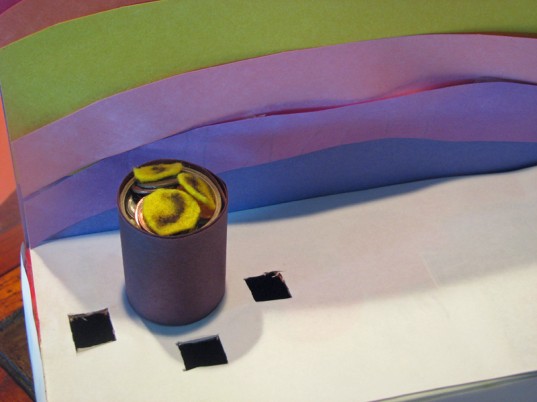
Cover a small cylinder-shaped object for the pot o’ gold in leftover black paper scraps. We used a pencil sharpener covered in black paper, however, you could use a small jar, food container, or even a toilet paper roll cut in half.
Step 5: Create the Trap Doors
Place your pot o’ gold at the “end of the rainbow” and mark three places to cut the holes that the Leprechaun will fall into (while trying to steal your gold) using your cutting tool.
Step 6: Disguise the Trap Doors
Using leftover blue paper, cut out three clouds that will cover the trap holes. Place the clouds over the holes. When the Leprechaun steps on the clouds to reach the pot of gold, he will fall in and become trapped inside the box.
Step 7: Decorate the Trap
Give your child creature control and a stack of markers or crayons to decorate the outside of the trap any way that they would like. Just remember that Leprechauns like “outdoor” colors and are attracted to bright, shiny objects. My son also decided to use a leftover piece of cardboard to create a ladder, so the Leprechaun could climb up to the pot o’ gold.
Step 8: Set the Trap
Fill the pot with gold coins that you made from the leftover eco-felt. We also mixed in real coins and a piece of bubblegum. (My son was positive the Leprechauns would be attracted to the minty scent.) Place the pot o’ gold in between the three traps.
Step 9: Leave the Trap and Wait
Find a quiet place for your Leprechaun trap. My son chose the counter in our kitchen because he thought the Leprechauns may be looking for food. However, you can also place your trap outside among the trees and bushes, since this is one of the places that Leprechauns tend to frequent. Then, smile with delight as your child periodically checks to see if the trap has been sprung. Just maybe, by St. Patrick’s Day, your child will find a Leprechaun in the trap, if not – hopefully “Mr. Leprechaun” left a small surprise or his green and gold glitter footprints.
Spend the afternoon with your littles creating a Leprechaun trap and they will be engrossed in the entire process from design to set-up and will be checking the trap consistently. Your little one can get in on the St. Patrick’s Day crafting fun by following our easy Leprechaun trap how to.