We are very fortunate to now be living in a digital world, where we can remotely do anything we want. We can turn up the thermostat at home from our smartphones. We can check in with the kids by tapping into the live cameras in the house. We can even unlock the door from a distance, or video call Australia from the U.S. We have the capability to do so many things remotely these days, so why is it that so many employers don’t go for remote working?
When you’re spending your time clocking in long hours at the office, the last thing that you want to do is to face a commute all the way home again. Commuting adds hours to your day and it can really prevent you from feeling motivated and ready to work. You don’t have to get behind the wheel of a car and get into an accident because you’re exhausted from driving and working. The other massive bonus of working from home? It’s how much fuel you’re going to save! Working remotely saves you the money on gas, and it saves you pumping those fumes out into the atmosphere. One of the best arguments that you could give your boss is that you can save the planet – just a little bit!
Working from home adds a level of flexibility that you cannot get in an office, and there are plenty of scenarios in which working from home is a great idea. You can make the most out of your personal injury claim from the accident you had while exhausted by working from home and earning without commuting. You can even relax and work from home around your children, which not only saves you money on your commute, but on your childcare, too.
All you need to know is how to get your boss on board. Shall we take a look?
Research. You need to approach your employer with all the good things about remote working. You should include the fact that you can cut your emissions with your lack of commute to work – it’s a bonus if your company has a mission to be a greener business! You should also check out the employee handbook to know whether it’s an option already and you just don’t know about it. You have to be able to rebuttal any argument, so look at all the negatives, too and figure out how to argue against them.
Plan. Look at what you are currently doing and what your responsibilities are all about, and then figure out how you can translate these to a home office. For example, you may find that a lot of your duties can be done in the home. Always have a list of how you can do them from home and communicate this to your boss.
Meet. You want to sit down with your boss properly and discuss this as a matter of concern. Explain how your commute is affecting you and your home life, that you are worried about getting into an accident through sheer exhaustion. Explain how you plan to stay motivated in a home office and ask them to consider your role and the fact you don’t have to be in an office for it to work.
Negotiate. Your boss may not be keen on your working from home all the time due to the fact that they need you in the office to meet and plan with your team. So, offer alternatives. Think about offering to be in the office three days a week with the other two days at home to start with.
Sometimes, employers need to see this work in practice, so offering a trial run is going to be a good way to assure them that you plan to be just as productive.
Maths questions from past papers are an essential aspect of revision. For many children, these periods in their life are the first exam condition tests they experience. Given this, it is important that, as well as doing well and achieving their potential, they can come away with a positive view of the experience as a whole. To achieve this, it is important that the idea of undertaking exams is second nature and that preparation, including using maths past papers, starts early and is integrated into the children’s normal routine.
Of course, when it comes to past papers, we certainly do not recommend wasting lots of paper! You can read this on how to recycle paper the right way for more details.
Understanding The Role Of Maths Past Papers
Years of research have shown that when it comes to revising for any exam, it is important to start early. Cramming, although it works for a small minority, overloads the brain and can increase anxiety while reducing the actual amount of information retained. When it comes to younger children facing exam conditions for the first time, the experience of the exam itself is just as important as remembering the facts, techniques, and methods that have been studied. This is one of the ways in which past maths questions can help.
If children are introduced to the form of the paper early, they become familiar with the layout, question styles, and answer spaces they face. Parents can ensure that they are providing the right stimulus at home with recognized and approved past papers. Past papers are also a great way of finding gaps in children’s knowledge and understanding.
Once these areas are highlighted, teachers, tutors, and parents can work with the child focusing on maths questions and answers that the child lacks confidence in. If you’re not confident in helping your child, tutors can assist. Remote tutors using the likes of https://setapp.com/apps/gifox can show how children should answer questions.
Having access to a range of past and sample papers also means that children can be prepped for the different types of questions that could be asked. This is important as, if they are only taught one form of a question, they could lose marks simply because they did not recognize what a question was asking them to do.
Reducing The Stress Of KS2 Maths Reasoning Questions
One area where children definitely need to experience a range of question types is KS2 maths reasoning questions. Reasoning in mathematics can take many forms, and it is crucial that children experience as many of these forms as possible, so they do not experience stress, anxiety, and panic during exams.
Using a range of past papers with different maths questions KS2 allows children to experience the different ways in which reasoning questions can be worded. They can see that while the wording changes, and different situations are used within the questions, the methods needed to solve the questions remain consistent. The question needs to be decoded, and the specific mathematical parts of the question found and understood. Once the child has understood how to determine the important information, they can work on solving the problems and presenting their workings and answers.
Barn doors are an excellent way to introduce eye-catching decorative
elements into your home’s decor. They come in different styles from a country
look to a more modern feel and can be used for closets, bathrooms, or pantries.
If you are limited on space, barn doors are an excellent way to manage the
floor plan because there is almost zero clearance for them. They are also
excellent substitutions for traditional cabinetry as they can be used to add
style to a kitchen island or for cabinetry in a bathroom design. The charm and
character they add to a home’s decor can be as unique as you choose.
Beautiful barn doors can be
installed flat to the wall or at a 90-degree angle to add even more interest.
What’s more exciting about these beautiful design elements is they can be made
with any material from environment-friendly reclaimed wood to metal materials.
The hardware used to install barn doors can also create and contribute to the
overall feature of the door. They can be applied to almost any space for
functionality and add a unique character. The design options with barn doors
are almost limitless.
The Design Element
The design element and functionality of barn doors work in a variety of
different spaces. They can be constructed of reclaimed wood, metal materials,
or even framed glass. You can create barn doors in any size you choose. For a
more stately piece, you can design a one that is twice the size of a normal
door and still be able to keep your floor plan spacing intact. For a more
scaled-down model, you can create a barn door that is smaller in size.
Regardless of the size of the doors, these beautiful design features add a
unique character to a room that is aesthetically pleasing to the eyes.
Eco-friendly Materials
One of the many neat features of barn doors is that they can be created from
eco-friendly
materials. These environmentally friendly materials help to save you money
and are good for the environment because they are made using renewable
materials. Renewable materials can be found at deeply discounted prices from
your local hardware stores or secondhand stores that specialize in recyclable materials.
Just because a barn door is made from reclaimed or recycled materials,
doesn’t mean that it would not be as attractive as a more custom made door. In
fact, the opposite is true. Recycled materials can add such a unique aspect to
your barn door design. More than likely the materials are left over from other
projects, therefore, they are probably not readily available to other
consumers.
Creating your Own Unique Barn Door Design
If you’re in the market for a barn door and not able to find what you want
within your budget, you are able to create a timeless
design piece using reclaimed materials. By designing your own barn door,
the sky is truly the limit. The only limitation with this option is your
imagination. This type of DIY project would take some time, but in the end, it
would be worth it to know you have created a truly unique design piece
customized just for your personal space.
From the hardware selection to the choices of door materials, there is no
limit to your design for your customized door. Even though this would be a
customized piece for your home, this doesn’t mean that you would pay a higher
price. The pricing to make your own barn door can be as low as $200 to $300.
Depending on the material and the size, prices can increase significantly for a
larger or heavier door. The choice, however, is totally up to you.
Adding a barn door design to your home can create a unique feeling by adding
a touch of character to any space. Whether you plan to use them for your
bedroom, bathroom or for the pantry in your kitchen, these functional design
pieces can add a touch of style to any home. They are a cost-effective option
for installing a traditional pocket door and are excellent if you are limited
on floor space. The main goal for your home is to design a space that works for
you.
Have you been looking for something lovely and unique to give to that special someone this Valentine’s Day?
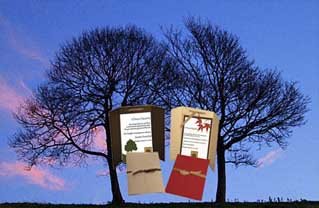
You can give the gift of carbon-offsetting for Valentine’s Day – doesn’t sound too romantic? If your sweetie is sustainably minded, it just might be the perfect gift. You can give the gift of a tree or an entire acre of trees from Trees Instead. Tree Instead offers the amazing gift of trees for Valentine’s Day or any special occasion. For $25 you can have a single tree planted in any U.S. State, Israel or the Amazon. Better yet, plant a 1/2 acre for $40 or 1 acre for $80. Your special someone will receive an elegant tree certificate with their tree number on it and your love can find their tree’s location on Trees Instead’s website.
If your sweetie loves the environment, this may be the perfect gift for them. Thoughts?
As 2020 kicks off and we start this new decade many wellness trends have appeared as more people resolve to take care of themselves. These trends show that personal wellness is much more than going for a jog every week or cutting back on the amount of ice cream you eat, which the average American consumes 28.5 times every year. If you’re looking to start this new decade right and focus on your own personal wellness, here are the top three popular trends that you need to be aware of.
Massage and Acupuncture
Firstly, massage and acupuncture are a potentially beneficial combination that everyone should take note of. Stress can build up and take a toll on the body leaving you with pain and tight muscles that make daily activities uncomfortable. Worst of all this stress can also contribute to headaches and poor moods that add to the stress and further perpetuate the cycle! Currently, 14 million Americans are using or have used acupuncture. Here’s how massage and acupuncture can help.
Encouraging Healthy Energy Acupuncture has long been used to treat neck and back pain, as well as headaches, nausea, insomnia, anxiety, and depression. This is because acupuncture helps promote natural healing which can then improve how the body functions. By stimulating specific places — acupoints — proper energy flow can be encouraged throughout the body which can in turn ease pain and discomfort, and improve sleep and digestive functions. Massage can work in a similar way to stimulate these points and release tension to promote better circulation.
Relieving Chronic Pain With six in every 10 Baby Boomers expected to be managing a chronic condition by 2030, solutions such as massage and acupuncture will be more important than ever. While both are great for relieving chronic pain, acupuncture can be used in places where massage would be uncomfortable. That said, massages can be great on their own for relaxing overtaxed and tight muscles. Some studies have even found that massages can help reduce inflammation and boost the overall immune response making your body more effective at keeping itself well.
The Sense of Wellness While both have tangible physical benefits that can be felt and experienced, they also can work on a mental level when it comes to soothing stress and making you feel more centered and calm. By encouraging energy flow, acupuncture can encourage feelings of stamina and emotional release making you feel more content and alert. Both of these options can be used as powerful healing methods that, with continued use, can help you feel healthier, calmer, and happier in 2020.
Medical Body Modifications
More specifically one such modification that acts in a way similar to acupuncture: the daith piercing. These piercings have been growing in popularity as an alternative way of mitigating migraines both in frequency and in severity. A daith piercing involves piercing the innermost cartilage of the ear and usually is maintained with the use of a clicker, curved barbell, or captive bead rings.
This type of modification is usually sought out by those who have seen an impact in their migraines with the use of acupuncture and see the daith piercing as a more permanent solution. This is because the piercing itself goes through the place there the acupuncture needle is usually placed. By replicating this with a permanent piercing, the hope is that the benefits of acupuncture treatment can be longer-lasting and more significant. While there haven’t been very many scientific studies on the effects, in a survey released by MigrainePal, 47% of those polled say that they have experienced a lower number of migraines after obtaining a daith piercing, and 50% reported the piercing reducing the severity of migraines when they did occur.
If you’re looking for a way to reduce migraines in 2020 a daith piercing might be for you; however, you could try using acupuncture first to see how the less permanent form of control works for you. That said if you do choose to seek out this type of piercing, know that the healing process can take around 2 – 3 months on average, and taking care of the piecing via regular cleanings is imperative. It’s also recommended that you speak with your piercer to ensure it is fully healed before you switch out the jewelry or stop any aftercare.
Alcohol is often put on a pedestal by many who see it as a way to unwind or let loose; however, a new movement is on the rise, one that aims to put the benefits of sobriety into the limelight. Ruby Warrington, a British writer and founder of Club Soda NYC, an alcohol-free event series, states in her book Sober Curious that reducing alcohol consumption is “the next logical step in the wellness revolution.” While the liver is the second largest organ after the skin, Warrington is on to something when she links lowered alcohol consumption with wellness. Overdrinking is a problem that many Americans face and addiction is something that is easy to fall into. An article released by Medical News Today in 2019 states that consumption of alcohol has risen globally by 70%, a statistic that is too large to ignore. The short-term risks of excessive drinking can include:
Injury from falls, burns, drownings, and motor vehicle accidents.
Increased violence, suicide, and sexual assault risks.
Alcohol poisoning.
Increased risky behaviors such as unprotected sex.
Increased risk of stillbirth, miscarriage, and fetal alcohol spectrum disorders.
If those weren’t enough, the long-term effects of excessive alcohol consumption can include:
A greater risk of heart disease, liver disease, high blood pressure, and digestive problems.
A greater risk of cancer in the throat, mouth, esophagus, breast, and colon.
Increased memory and learning problems that can include poor school and work performance and a higher dementia risk.
Increased risk of developing anxiety and depression.
The potential for family issues, unemployment, and loss of productivity.
Increased risk of alcoholism and alcohol dependence which further contributes to the above.
What Ruby Warrington is advocating for is not the abstinence of alcohol forever and always, a glass of wine once and a while with dinner is not frowned upon, it is the dependence on alcohol as a prerequisite for having a good time and being happy. While some of this is ingrained in us by Hollywood culture, the wellness movement now is challenging how we think about drinking.
Consider how much alcohol you consume regularly and see how much you can cut back. If you find that you’re struggling to go without, it could be a sign that you’ve become too dependent. In order to achieve a better sense of wellness in 2020, look seriously into the sober culture and see if it can make a difference in your life. If it’s problematic and you need to get sober, you can always look into Jewish substance abuse programs and similar areas to help put you on the path to sobriety.
A New Decade, A New You
With 2020 getting into full swing, these three wellness trends are something to consider if you want to feel better and take better care of yourself as a whole. Used together or separately, you could see benefits from these trends such as a stronger immune system, which can help you recover from a cold more quickly than the average 10 days. Acupuncture and regular massages can help you unwind from the day-to-day and help keep your stress down at a manageable level. Those suffering from migraines could also benefit from acupuncture, and by extension, daith piercings, as a way to manage painful migraines and decrease them in frequency and intensity. Furthermore, cutting back on the amount of alcohol you consume can help you stay focused, take care of your body, and discover that you can, in fact, have a great night out without being under the influence. Each of these steps can contribute to making you a healthier and more wellness conscious individual ready to tackle the new decade without harmful habits.