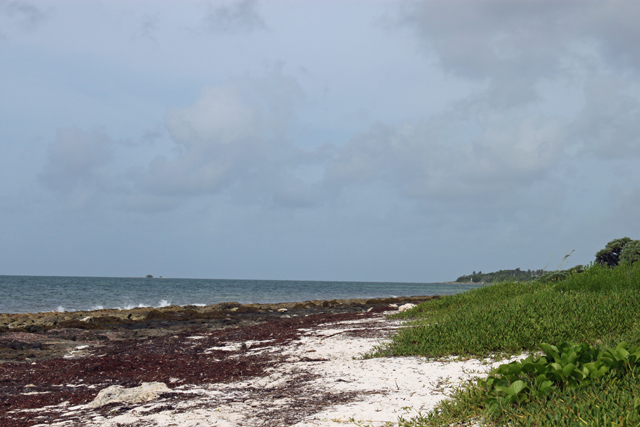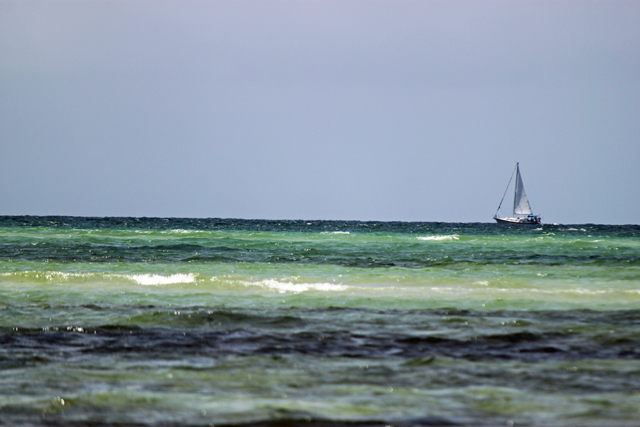
While at Bahia Honda State Park in the Florida Keys, we always plan to spend our afternoons at Sandspur Beach. After a long day of snorkeling, sailing, or paddleboarding, Sandspur Beach is the perfect place to relax. Known as the best beach in the Florida Keys, you quickly understand why when you get there. The sand is powder soft and the water is super warm with beautiful hues of dark blue to light aquamarine. It is paradise!

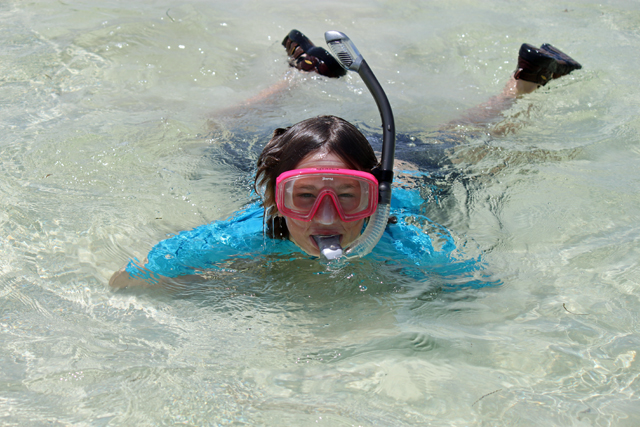
The water is super shallow and you can walk quite a distant out and still touch the bottom. In fact there are many sandbars that you can walk out to, set up your umbrella and it’s like you are on your own mini private island. The water is super clear so you can see to the bottom as well – making it easy to watch fish swim by and great for snorkeling (if you are patient, there aren’t a ton of fish, you mostly have to wait and see what you will come across). If you want immediate gratification snorkeling, scoot over to the 7 mile bridge for great snorkeling. There are meandering walkways in the water, part of the bottom is completely covered in sea grass and the other is a mixture of soft sand and shells. This is an excellent beach if you have small children and is perfect for swimming, relaxing, snorkeling, and exploring.
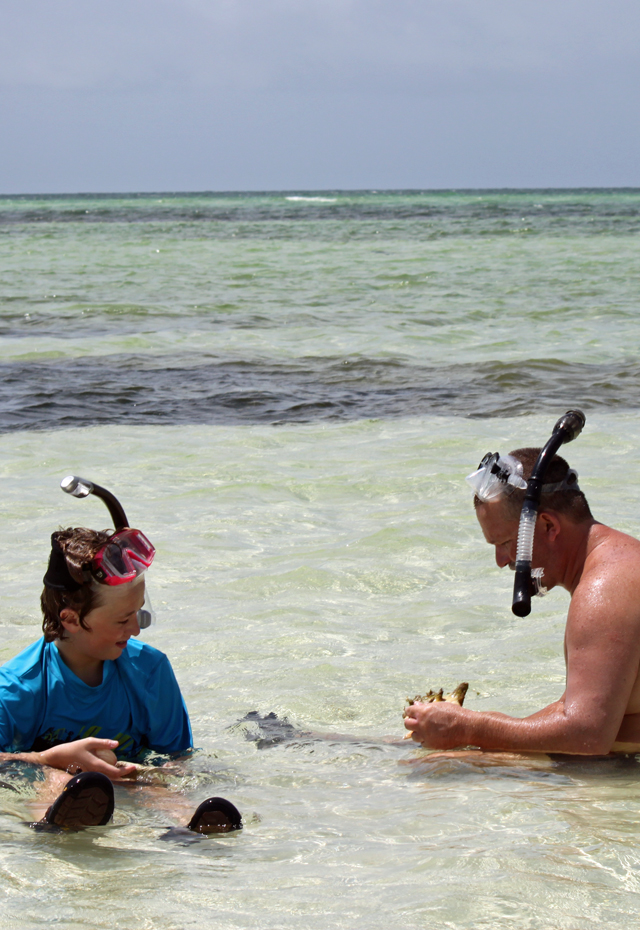
Sandspur Beach is amazing for collecting sea biscuits, empty conch shells and for observing the amazing creatures that live in the sea grass. We spend a lot of our time combing the beach and snorkeling for shells. Eben found a large empty conch shell and a couple of sea biscuits. In the past, we have found dozens of sea biscuits.
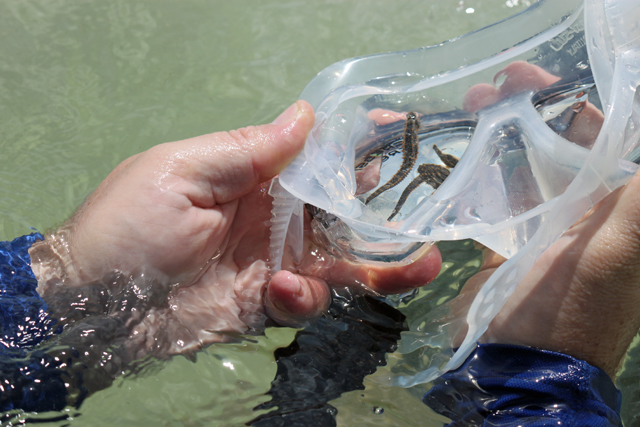
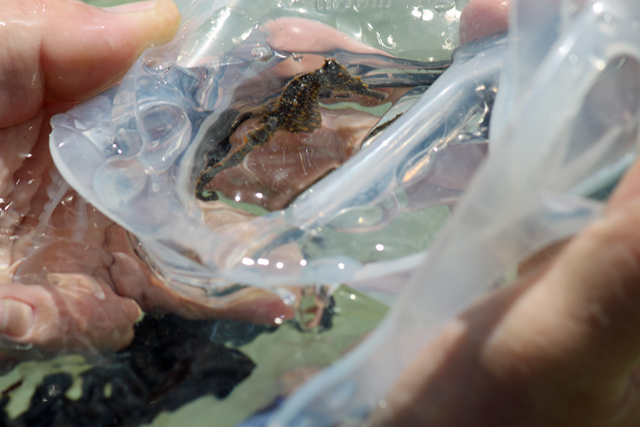
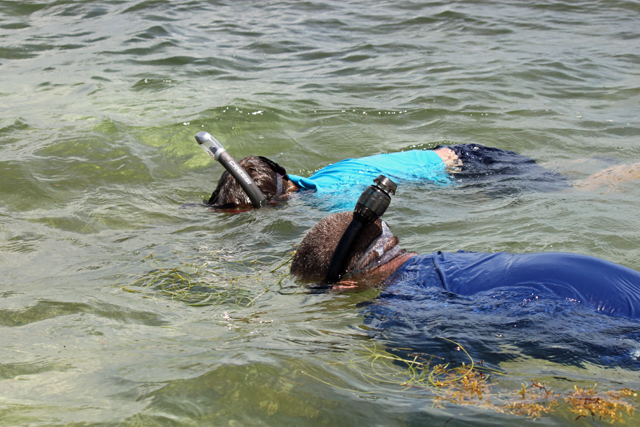
While snorkeling we observed crabs, sea hares, fish and were even lucky even to spot a seahorse. The mister has been looking for a seahorse for years – and after floating above the sea grass literally for hours, he spotted one as it darted from one sea grass patch to another. He carefully urged the seahorse into his mask so we could take a couple of quick photos. Isn’t she amazing?
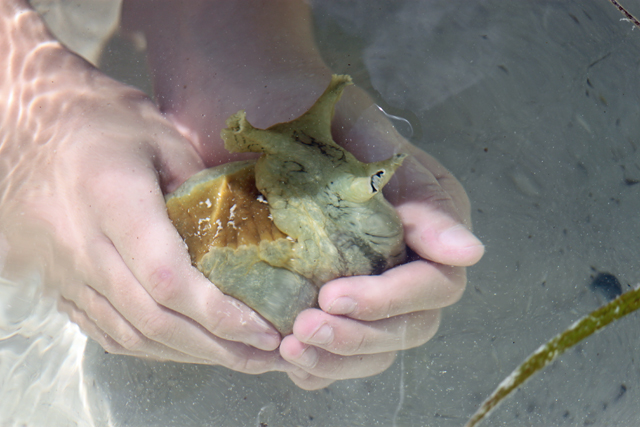
 Eben was delighted to find a couple his favorite sea creatures in the warm water – the Sea Hare. These little critters are silky soft, and ink a dark purple-reddish color if you pick them up. They suck to your hand and will crawl along your arm if you let them. They are so sweet looking, like a giant slug.
Do you have a favorite spot for snorkeling, swimming or exploring? I would love to hear about your summer adventures!