
 Today is my 38th birthday! I love birthdays! Over the weekend, the mister surprised me with a birthday luncheon at The Morikami Japanese Gardens with all of our Florida family. When a birthday starts out with family, Japanese gardens, and green tea ice-cream – it was destined to be the beginning of a great year! Thank you Mister Lyon. I have a feeling 38 is going to be pretty amazing – I can’t wait!
Author Archive | Jennie Lyon
Energy Savings and the Environment: The Secrets of Solid Home Insulation
 Hello, Friends! This post was sponsored and wasn’t written by me. Thank you for supporting the companies that help to run Sweet Greens!
———————————————————————————————————————————————————————–
Better insulation keeps your home more comfortable, and it is good for the environment and your heating and cooling costs. Improving the insulation of your home can pay for itself in energy savings in a very short period of time. This means you are reducing your home’s carbon footprint by reducing the amount of resources needed to heat and cool your home. Even a small reduction can have a significant impact on the environment. Less energy means less nuclear waste, methylmercury released through coal combustion, and other toxic volatile compounds released into the environment. You can read more about it on Reviewlr. Precious animal habitats are also disrupted less frequently if new sources of energy are not required to be utilized. Here are some tips for improving the energy efficiency of your home.
Older homes
If you live in a house made before the 1950s, it is likely that you have no insulation besides an air space. If your walls are six inches thick then you probably have at least four inches of air space. This was a traditional building method before the advent of fiberglass insulation and foams. In some cases you may be able to use expanded foam insulation to fill in this space via small holes in your walls that can be concealed with paint or patching. If you are replacing the wall coverings then you can use an eco-friendly insulation.
Roof and attic space
Heat rises. The insulation value of your roof or attic is crucial to the energy efficiency of your home. It is simply amazing how much heat a home can lose. One option for insulating an attic space that is unfinished or not used for storage is to use insulation made from shredded cellulose or recycled paper. This is blown into your attic space for even application. It offers superior insulation value at an economical cost. For those with a cathedral ceiling, foam insulation or fiberglass is the best option. There are many eco-friendly options available now – just ask.
Shutters
Some insulation solutions can add a lot of class and sophistication. Consider window shutters, for example. They are available in a wide variety of styles to suit the architecture and charm of your home. Custom shutters are also available if you want a truly unique style. This is an especially good choice for older and traditional styles of home.
Basement or crawlspaces
What is under your home is a much overlooked area. It is possible that you are losing a lot of heat through your floor. While modern building codes usually require insulation in floors, older homes may have none. Newer homes may have some but it might be minimal. Spraying expanding foam insulation can make your floor a lot warmer to the touch and cut down on your overall heating and cooling costs.
As you can see, there are many ways to increase the energy efficiency of your home. The methods you choose will vary depending on the age and condition of the house. Getting a professional to do an energy audit and helping you to make the best choices when it comes to insulating your home in an eco-friendly way can be a big help if you are still having trouble deciding what is best for your home.
6 Affordable Ways to Eat Healthy on a Budget

Feeding your family well-balanced, healthy, and delicious foods is very important. However, for many families finding extra money in the budget to eat well can seem impossible. Since one of the largest expenses in many families monthly budget is food, making the most of your money at the grocery store is essential. Eating well on a budget is possible, you just have to be thrifty, creative and smart. Read on to discover my 6 favorite ways to stretch your budget while buying the best groceries (even organics) for your family.
1. Set a Budget
First things first, figure out how much your family can afford to spend on groceries each month – be realistic. Then, take only cash with you to the closest local grocery store – it is impossible to go over your budget when you are paying with cash only. Also, stop by the customer service counter on your way in and ask for any coupons they have available – you would be surprised at the goodies they have, if you ask.
2. Shop in Season
When it comes to produce, only buy what is in season. Not only is it more affordable, it will be fresher too! It’s a good idea to buy produce when it is in season and then freeze it. For example, hit the local farm when strawberries are in season – get an even greater deal when you buy a large quantity, then freeze what you can’t use now to enjoy all year long.
3. Cook with What you Have
This one is simple, use the ingredients that you have on-hand now to make your meals. This is a great way to use food before it spoils and while it is at it’s freshest. This goes for your refrigerator and the pantry! We eat a lot of soups at our house, because the mister will put together all of our veggies before they spoil.
4. Stock Up
When an item that you frequently use goes on sale, that is the time to stock up on it. This is a great way to stock up on spices, canned goods, dried beans and rice. This is also a great time to whip out those coupons – you can double your savings when you use coupons on food items that are already on sale.
5. Prepare Vegetable Based Meals
Let’s face it, meat products are more expensive than vegetables. Instead of basing all of your meals around meat, make veggies the main course. Not only is this a healthier way of eating, it is much more affordable and better for the environment too! When you do cook meat, for example chicken – purchase a whole organic chicken and when you are finished eating the meat, boil the carcass down for stock.
6. Make Your Own Snacks
Processed foods can be expensive, unhealthy and usually come in wasteful packaging. Instead of purchasing processed/packaged foods, make your own goodis. It is very easy to make your own cookies, granola bars, frozen pops, or granola – and your children will love cooking with you!
How does your family eat well on a budget?
Mom Starts Ranch to End the Cycle of High Priced Organic

Hello, Friends! This post was sponsored by and wasn’t written by me, it was written by Michael and Anna Mills from Mills Organic Hills. Thank you for supporting the companies that help to run Sweet Greens!
———————————————————————————————————————————————————————–
This is a simple trick I learned while starting our Ranch. In this post I will show you how to tell if the fruit and veggies you purchase from the market are GMO or not. Keep an eye out for this valuable info.
I guess I came up with the idea out of necessity. My husband worked a job as a Bridge Carpenter in California, making close to $40hr. We have 4 children and wanted to feed them what they needed, but sadly was a near impossible task. With the price of organic, and the cost to live in CA; it seemed that we could never get ahead. I told my husband that we needed a change, having him gone all the time just so we can purchase organic foods was not good for the family, especially the children. So we made the decision to leave CA and start a farm in Colorado. We spent the next 6 months touring Colorado, looking for the right spot, then we finally found Olathe, a small farming community nestled in the corner of Montrose County. We made a point to rent there first, not wanting to get into a situation we would regret. This would give us time to prove that we could do what we planned, and “Lower the cost of Organic”at the same time.
After being successful at it, I decided that we needed to take the next step. So I told my husband: “Let’s do it!” he looked at me confused and replied: “What now?” You know how men get, their minds easily get stuck. I explained to him: “No, not that! Lets do more, lets take what we have done here and make it even bigger.” We realized that we could not accomplish this with out some assistance. So after some time discussing what we could do, we decided to start a fundraiser. We wanted to continue what we had found to be possible, but on a larger scale. We talked about it for a long time, and after convincing my husband that we could make a difference in organic. He became fully committed.
When you have 4 children, and 2 with developmental disorders, it’s not easy. I wanted the best for my children, especially the 2 most in need. I feel that if I had started an organic based life with my older children, I would not have had all the problems which I did. But there is no use crying over spilt milk, the best we can do now is work to reverse the damage that was done. We have striven for a better life for our family, but discovered that it was not enough that our kids had access to real food. We wanted more than our own children to have this privilege, so we did some math, looking into the feat that we longed to accomplish. What we found is that we could support 10 sheep on an acre of pasture. This was very important for us to know, because we knew that we could be successful with just 9 sheep. That would leave us with an extra sheep, and as a proper business we have to look at everything from a “gain, loss” perspective. What would be her purpose? Why would we want her on the Ranch? The answer was simple, if we didn’t need her, than someone would, but who. We decided to take 1 sheep out of every 10 sheep that we had and give it to the needy. We call it our 10 to 1 program. It has given our ranch a community rich drive: a loving heart so to speak, which helps us to remember where we once were and help those like ourselves, as we wanted to be helped.
Come by and take a look at what we are doing now, and if you see our operation, and how we care and love every animal on our Ranch; then I know you will want to help us!!! Remember this is not just a single business that you are helping, you are helping to change the course of the future of organic foods, so all can afford good, healthy, humanely treated, real meat. As Americans/Humans we deserve no less; isn’t this what our forefathers (grandfathers, fathers, grandmothers, mothers, and others) came into this country, and some fought and even died for; in order to grant us a future were their posterity only received the best possible. Then tell me why would we settle for anything less. Please give to enliven our dream, and make real food a reality.
Now to what I promised. This is how it works: look at the PLU that is on the fruit and veggies in your local grocery store.
- If the PLU number is 4 numbers long than it is not GMO, but it was sprayed with Pesticide.
- If there are 5 numbers and the first number is a 9, its Organic.
- If there are 5 numbers but the first number is a 8 it is GMO.
Ecocentric Mom Box is Perfect for Soon to Be Mom’s Too!
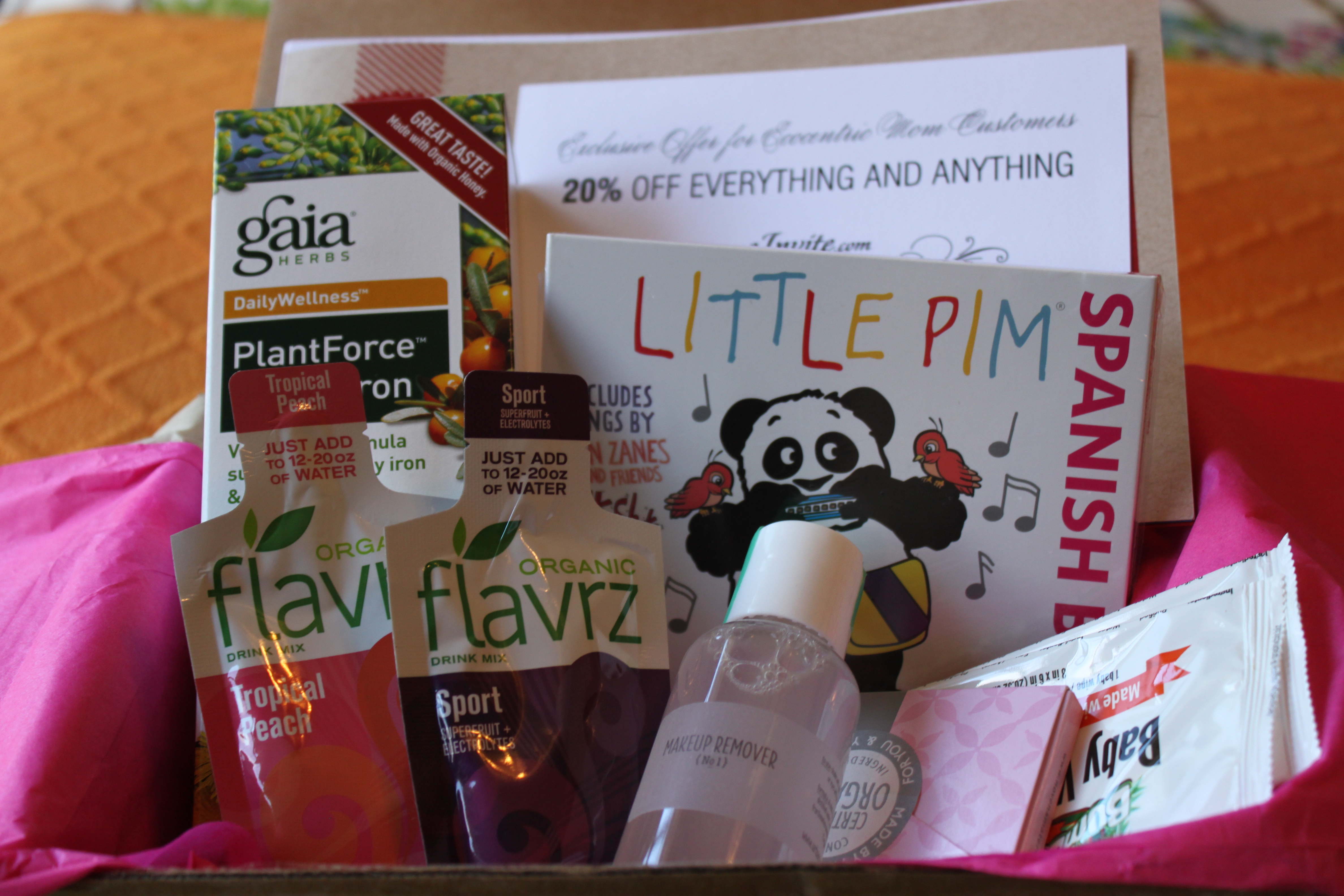
My Ecocentric Mom Box showed up right on Christmas Eve, so I felt like I was getting a special early Christmas gift! It was full of eco-friendly goodies and treats I didn’t feel bad about eating. If you’re an expecting mom, a new mom, or long-time mom, there is a box for you!
- Lovely Candy Company Caramels (on sale right now!)
These, plus the next item on the list, were my favorite! Because it’s treat-season I’ve been indulging a little too much in sweets and treats that aren’t exactly guilt-free. Lucky for me, Lovely treats are! They are all natural, soft, chewy caramels made with real butter and sweetened condensed milk. Bonus: they are gluten free, non-GMO, kosher, and you can pick them up at Target!
- Organic Flavrz Water Enhancer (get 15% off with code: ecocentric)
Flavrz bills these as the “world’s best organic alternative to artificially flavored, colored, and sweetened beverages,” and they aren’t lying! These drink mixes are made with organic fruit juice, organic flavorings, and a hint of sweetness. I gulped mine down in seconds flat.
- Little Pim CD
This CD is just too cute. When I opened my box to reveal a CD sleeve featuring an image of a panda bear playing harmonica while two friendly birds rest on his shoulders, my daughter immediately knew it was for her! Little Pim is an award-winning language program designed for children aged 0-6, and its unique Entertainment Immersion Method makes it fun and easy to learn. Our CD, Spanish Bop, features 15 favorite children’s songs in Spanish.
- Bum Boosa Bamboo Wipes
My daughter has always had very sensitive skin, requiring us to buy diapers and wipes with zero added ingredients, like chlorine and synthetic fragrances, so I was delighted to try a new bum-friendly wipe. Bum Boosa replaces synthetic or tree-pulp wet wipes with renewable and sustainable bamboo, and uses ingredients like Calendula, Chamomile, and organic Aloe Vera so that they’re gentle on even the most sensitive bottoms.
- Novena Skin Care Sample Pack
When I was pregnant with my daughter, I got a LOT of samples from my OB office, baby classes, and friends who didn’t use the million samples they got during pregnancy. As nice as it is to have options, most of the products I was given to sample contained ingredients I wouldn’t use when I’m not pregnant—let alone with I am. Novena’s organic pregnancy skin care line is a great choice. My sample pack included fruit facial cleanser, bearberry brightener moisturizing cream, bearberry brightener moisturizing lotion, belly/bum cream, and beautifying breast cream.
- Gaia Herbs PlantForce Liquid Iron (25% off with code: Ecocentricmom14)
Did you know that your blood volume doubles during pregnancy? As a result, many pregnant mamas end up with an iron deficiency. Gaia’s liquid iron supplement replaces lost iron and is tasty, too—just make sure that, as with any supplement during pregnancy—you OK it with your OB first!
- eInvite Holiday Cards (20% off with code HOLIDAYCODE20)
These are too cute and super easy to use. The cards come as pre-printed backgrounds that you can easily stick a cute photo onto and pop into the mail for a unique, sweet greeting. eInvite.com has a wide selection of baby products, too, like shower invitations and birth announcements—and they’re made in the USA.
- Urban Oreganics Full Size Makeup Remover (20% off orders over $20 with code: ECOMOM20)
Urban Oreganics handcrafts the highest quality skin food from natural ingredients. This all-over makeup remover binds to cosmetics and gently lifts them off, and is safe for eyelashes and skin. With ingredients like coconut oil and witch hazel, it’s an eco-friendly no brainer.