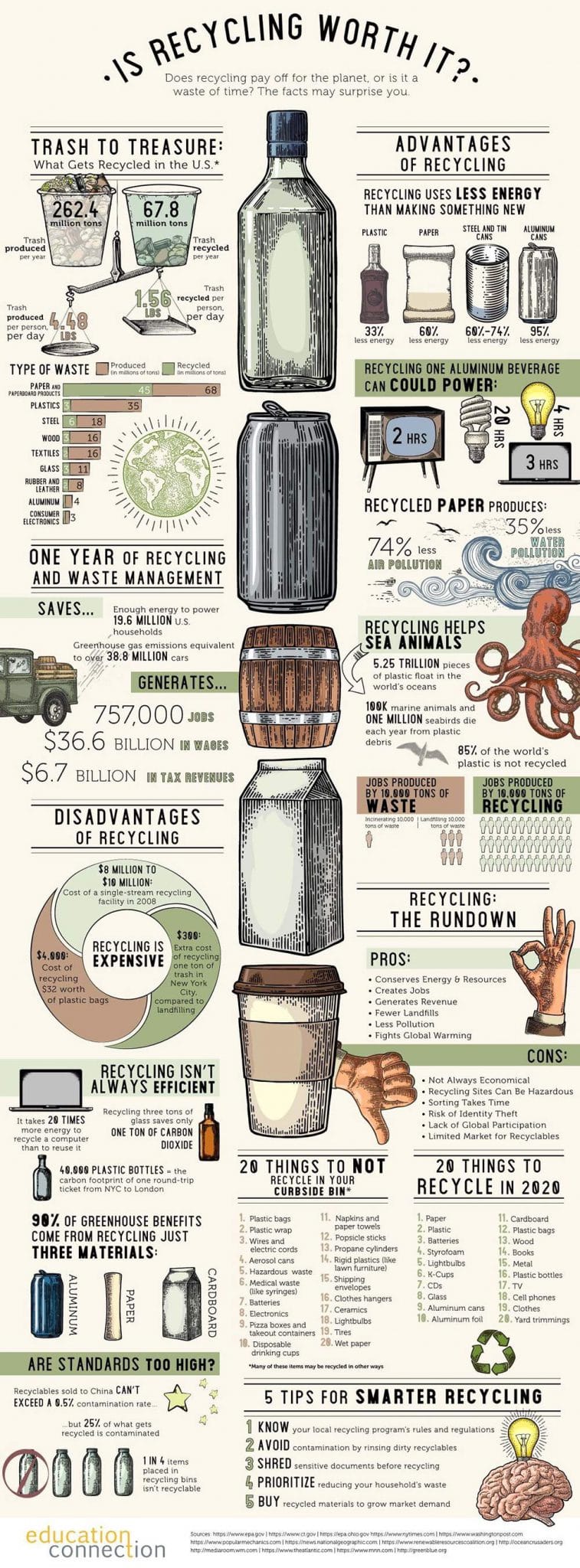
We all need to recycle, yet we need to make sure we do so in a thoughtful and considered manner. There are a lot of problems with recycling today. This includes the fact that people aren’t recycling enough, as well as the fact that it is expensive and people are going about it in the wrong way. However, there are a number of different ways that you can make recycling easier.
Firstly, you need to get into a routine. You need to understand the ins and outs of how recycling will operate in your household, and then make a routine to ensure it happens. This all depends on the products you use and your location. You also need to make sure you recycle properly. Some items need to be recycled by specialist companies, with electronic goods being a prime example of this. You should never simply throw a broken phone or laptop in the bin! The same goes for the batteries that power them as well. Education is power how. You not only need to know what to recycle, but how to go about it.
To discover more about recycling – the good, the bad, and the stats – take a look at the infographic below. You will find out some great information regarding the smart way to recycle, as well as some advice on what you should recycle in 2020, as well as the items that cannot be placed in your curbside recycling bin. This information should help you to make recycling a lot more straightforward.
The climate crisis is deepening and every day the clock ticks ever on. We cannot escape the fact that the way that we have been living as a society has damaged our world and that we need to do a lot more in order to change the tide.
Many people may spend their time pointing the finger at big businesses and the world’s governments as being the people who are to blame for the lack of improvement in the health of the planet. But, while they need to change their ways, we all need to start making greener choices in our everyday lives.
There are a lot of things that each and every one of us could be doing in order to make an impact on reducing the damage we are inflicting on the planet. Here are some ways that you could make your home greener.
Look At Your Energy Sources
Who do you get your energy from? If you get your gas and electricity through one of the biggest energy providers, do you know how they produce this? There are many electricity companies that are still burning coal in order to fuel their power stations. This throws out a considerable amount of pollution into our atmosphere. So, every time you turn on the lights in your home, you are contributing to global warming. One option that you have at your disposal is to switch to a completely renewable energy provider.
An option that is likely to save you money in the long run through is if you have your own solar power systems fitted to your property so that you can generate your own electricity. While it might be a big expense now, eventually you will see cost savings, as well as a reduction in emissions
Regardless of your energy sources, you should ensure that you are not wasting valuable resources. Make sure that you turn lights off when you are not in the room, try not to leave the TV on, and don’t leave your computer on standby and plugged in. Use a smart meter to show you exactly how much energy you are using by doing simple things around the home.
Eat Less Meat And Dairy
The animal agriculture industry is responsible for a great deal of pollution on this planet. Meat consumption has risen dramatically over the last few decades. And, in order to produce more meat and dairy, we need more animal feed. That means more land to grow crops to produce feed. In order to obtain that land, forests are cut down. The rainforests are being destroyed to create farmland to feed our needs.
By cutting down the amount of meat and dairy we all consume, the demand for this type of agriculture will drop.
Think about having days when you don’t eat any animal products. You can start to gradually increase these as you get used to cooking in new ways. You may even want to switch to a fully plant based vegan diet.
Becoming more environmentally friendly is something that most of us are keen to do. We’re all finally becoming more aware of the damage that we, and our bad habits, have been causing our planet, and that we need to make some changes. Some of these changes are big. Some are global in nature and affect every single one of us. But, there are plenty of changes that you can make yourself.
Some of these changes are still pretty significant. You’ll undoubtedly have to put a little effort in if you want to give up your car and start walking more, and your bank balance will notice a considerable expense, like an electric car. But, not all changes come as such as shock. If you are in the habit of either saying, “well, nothing I could do will help enough” or, “I don’t want to change the way that I live.” Then these changes are things that you should consider at home. If we all did them, they’d make a substantial difference, but when it comes to your day to day life, you’ll barely notice.
Solar Panels
Having solar panels installed can be an expense, but many of us are entitled to grants, and you’ll save a lot more money over their lifetime once they are in place. Yes, there may be some disruption as solar installers work, but once your panels are operational, you’ll start to enjoy their benefits, without noticing any change to your home life or power supplies.
Reusables
For the first few weeks, remembering to take your bags to the store, or to fill up your reusable bottles in the morning, can be tough, and many of us are guilty of forgetting. But, once you do get into that habit, you’ll soon start to resent having to pay for bags or bottles when you are out and about.
Switch to a Renewable Energy Provider
Many energy providers today claim to supply 100% renewable energy. But, not all of them actually do. Check out your current provider’s policies, and consider a switch if necessary. You shouldn’t notice any difference, and most green providers now offer very competitive rates.
Unplug Devices and Skip Standby
Your devices might stop charging when they hit 100%, but they still run on the mains power. Unplugging them when they are fully charged, and turning appliances like your TV off, instead of on to standby, won’t affect your life, but it will save energy.
Let the Sun Heat Your Home
The sun is exceptionally powerful. Even on a colder day, when the sun is out, shining through your windows, it can help you to keep warm. Follow the sun around your home, opening curtains when the sun is shining in, and closing them when it isn’t. This can help you to turn your heating off a few weeks earlier.
Swap Your Cleaning Supplies
Cleaning supplies can contain harmful, unfriendly chemicals. We don’t need these. It’s perfectly possible, and safe to clean your home with natural products, which still kill germs. You can also switch to washable cloths instead of disposables.
If you’re looking for a new home, or you’re preparing to relocate, there are several steps you can take to embrace greener living and protect the planet. As more and more of us look for ways to reduce carbon emissions and waste, here are some top tips for house hunters.
Choosing a location
Many buyers prioritize location as a result of wanting to be close to relatives and friends or to be in the catchment areas for good schools. While these factors may be critical to you, it’s also beneficial to consider location in terms of your carbon footprint. If you can buy close to your place of work or your kids’ school, for example, this will enable you to save money on commuting and travel costs and to embrace greener ways of getting around such as cycling and walking. If you have an area in mind, look for properties that are available within your budget, and consider nearby neighborhoods if you can’t find exactly what you’re searching for. The smaller the search area, the lower the probability of securing the property of your dreams, especially in sought-after suburbs and streets.
Focusing on energy efficiency and cutting costs
When it comes to your finances, it’s important to be aware of how much you’re spending up-front, how much you’re borrowing and how much you’re going to spend running your new home. As well as looking for the best home loan, it’s wise to consider ways to lower longer-term living expenses. Check energy efficiency certificates and take a look at building projects that have already been completed. There are all kinds of incredible eco-friendly homes popping up all over the world and you could take inspiration from them to increase energy efficiency and create a greener home. Look into possibilities like building and decorating with sustainable materials, adding insulation and using green weather-proofing concepts. You could also consider adding solar panels to switch to renewable energy.
In years gone by, you might have been greeted with a confused expression when asking real estate agents about finding a green property, but today, the world is a very different place and demand for eco-friendly homes has soared. If you do have designs on a property that is sustainable and energy-efficient, it’s beneficial to discuss your preferences with your realtor and to outline the issues that matter most to you.
Size and space
Many of us have got used to living in houses that are too big for us. We have living rooms that we use once a year, attics that lie empty and more bedrooms than we know what to do with. If you are moving, be mindful of how much space you actually need. Bigger homes take more energy to heat, so consider downsizing. Think about how often you use each room in your current home. If you don’t need five bedrooms or two formal living areas, look for a smaller property, which will cost less to run.
Recycling
If you’re planning on taking on a project, and you’re preparing to get your hands dirty and carry out renovations, try and recycle as much as you can. Take old furniture to salvage yards or donate it to charity if it’s in good condition. You could also consider embracing the upcycling trend and using your creativity and DIY skills to create new pieces. Separate recyclable materials when you’re clearing out the property and take them to a plant. When redecorating, look for furniture made from sustainable materials and opt for eco-friendly paint.
While it can be tempting to ‘get the job done’, it is vital to stay committed to your values and take your time to use the right materials to achieve your goals. You don’t have to be a carpenter to achieve the look you’re after; for example, if you’re looking for a wood-like finish on your walls, you could opt for a Stikwood solution like their minimalist fir option. Check it out here: https://www.stikwood.com/products/minimalist-fir. Recycling isn’t only about getting rid of or upcycling materials; it also refers to sourcing materials. So keep it in the back of your mind.
Outdoor space
For many house hunters, outdoor space is an essential. If you’re looking at gardens and backyards, consider the level of upkeep required and look for potential to create vegetable patches and wildlife-friendly zones. You can use your garden to provide a safe haven for feathered or furry friends, to add greenery and to provide food for your family. Even if you’re not a green-fingered guru, you should be able to grow your own produce, provided you’ve got a sheltered area you can turn into a designated vegetable patch. If you’re a beginner, it’s a good idea to start with salad leaves, peas, runner beans and radishes.
If you’re concerned about the environment, it makes sense to think about how you can embrace greener living when buying a new house. Most of us will move a few times in our lifetimes, and it’s beneficial to consider these tips if you are house hunting, and you’re keen to do your bit. Think about the location carefully, figure out how much space you really need and look for ways to create a more cost-effective, energy-efficient, environmentally-friendly home.
Get your place up-to-date by making it sustainable, yet as stylish as possible. Don’t worry you don’t need to spend a fortune re-doing up your living space. In 2020 it’s more fashionable to minimize your consumption and in turn your spending. You can give your place the refreshing touches it needs to reflect your character while reducing your carbon footprint at the same time. Have fun with your decor and create a more unique, yet timeless look with a combination of vintage and more personal additions.
Art Attack
Have a look online or in vintage or second-hand shops for unique pieces of artwork. Choose the ones that best reflect your sense of humor and personality. Vintage posters are in style and always create a timeless look if you’re stuck for ideas. Vintage advertising can be really fun and quirky.
If you’re feeling brave enough, why not create some art yourself? You can go to a painting or drawing workshop to learn the basics if you’re not an expert. If you don’t feel up to it yourself, why not ask a friend with a more artistic touch? Something more personal will definitely add a lot of character and sentimental value. You could create a piece out of recycled materials again, or photos, if you’re not feeling very inspired.
Collectors’ Items
Collecting is actually considered pretty trendy nowadays. Pick something that interests you. There are many cool things to collect this year such as old tech, vinyl and music memorabilia, toys and basically anything vintage. You can set up areas to display your collection, for example, an old record player in the corner displayed next to your collection of vinyl. Bookshelves are also a great way to display your collection of books and these familiar reads will make you feel more like yourself in your home. Hipster-types tend to go for old video consoles and technology, such as typewriters and other household machines. Go for something that reflects your interests, however, and don’t worry about following the crowds.
Lighten up
Nothing is more important to interior design than light. Learn how to use light to your advantage, both natural and artificial. This year it’s all about staying as sustainable as possible, this will more often than not, also save you a lot of money. Replace your existing lightbulbs with LEDs as these will last you a lifetime. Stick to white or lighter colors for the main walls and ceilings. This will help to light the room. Put up wall lighting or sconces to highlight more artistic features. These could be interesting artwork for example, or parts of the architecture, such as naked brickwork. Lower hanging ceiling lights are trending at the moment, these can also be used as a feature piece. Look for some cool lampshades in a second-hand shop near you, for a cheaper and more individual look. You don’t need to worry about matching as you can get a collection of feature pieces and fun items.
Throws and Pillows
Add some comfort to your living room and bedrooms with second-hand rugs, carpets, pillows, and throws. This can help to create insulation and warmth as well, particularly carpets as you won’t lose as much heat through the floors. Again you can go for the second-hand option and find some cheap bargains. Choose patterns with white or lighter lines to help to throw light around the room. Color schemes trending this year are navy against white, natural blues and greens and soft pinks and peaches. Go for as wild a pattern as you like. As for patterns in 2020, anything goes so choose whatever best suits your personality.
The only way is upcycling
Overspending on lavish or ostentatious furniture is not the done thing anymore. If you really wanna show off your living space, you’ve got to decorate it yourself with recycled materials. Get creative by refurbishing with used fabrics. Choose your favorite designs to spruce up your chairs, sofas, bedding, and cushions. Upcycling is trending massively this year. If you’re feeling able to pysch yourself up for a bit of a project why not give it a go? Get your friends to join in or look for a group or a workshop near you, if you need a little bit of help or inspiration.
Here are just simple ways you can make your home match your environmentally-conscientious life changes this year. Now you can get back to your ev trip planner and mapping out your next big journey as an eco-warrior.