Sweet Potatoes are an excellent source of Vitamin C, B6, fiber and potassium. They also provide 3 grams of fruit fiber per serving. Tip: Each 10 grams of fruit fiber may reduce your risk of coronary heart disease by 30%. Tweet This!
For some reason I really crave sweet potatoes in the winter and the mister makes the yummiest ginger mashed sweet potatoes. They add a perfect sweetness to any meal – and kids love them, read on for the recipe:
Ingredients
3-4 large organic sweet potatoes (peeled and cut into quarters)
1/2 stick organic butter
3 tablespoons organic brown sugar
1 teaspoon organic ginger
salt and pepper to taste
Preparation
Boil the sweet potatoes for 20 minutes until you can easily pierce them with a fork, strain them and while hot, mash all of the ingredients together with a hand masher.
Organic food shopping can be expensive – we have all heard Whole Foods called “Whole Paycheck”, right? Buying healthy, organic food for yourself and your family doesn’t have to break the bank. In fact, if you follow some of the tips that I use when I do my green marketing, you can get all of the high-quality organic groceries that you love, without the hefty price tag. Read on to learn my 7 favorite ways to save money while organic food shopping to get started.
1. Shop with Coupons There are many fantastic coupons floating around out there that can save you big bucks on organics – you just need to know where to find them. I always check my local organic food store for coupons – these are usually located inside the front doors and I always drop by the customer service counter to see if they have any manufacturer coupons available. (Which they always do!) You would be surprised the amount of coupons, they will give you. You can also check my eco-friendly + organic coupons section for free printable and mail-order coupons.
2. Shop the Store Brand Whether you are shopping at your local grocer, Whole Foods or Costco, chances are that they offer fantastic organic products under their store name brand. Whole Foods has an excellent 365 Everyday Value Organic and Costco offers many organic products that are made by national brands.
3. Shop the Bulk When purchasing dry goods such as rice, pasta, grains, beans, cereals, teas, coffee, flours, sugars, soup mixes, spices, snacks, dried fruits and trail mixes, hit the bulk section. This is a great way to save a ton of money and when you bring your own reusable containers, you also save the packaging waste.
4. Shop for Free If there are particular organic products that you love, drop the manufacturer an email and let them know. In most cases they will thank you by sending you out free product coupons. You can also send an email to the manufacturers of organic products that you haven’t tried yet, but would love to. This is a great way to save a little dough. (I once purchased 6 cases of organic milk boxes for Eben’s school lunches for FREE, using coupons the manufacturer sent me – in that case, I saved $120).
5. Shop with a Friend When it comes to big warehouse stores such as Costco, consider shopping with a friend. You probably don’t need a 20 pound bag of organic flour, but when you split the product and the cost with a friend, you both win. This is a great idea for purchasing organic goods in a large quantity without breaking the bank.
6. Shop Locally The quickest and easiest way to save a little green while shopping organic is to shop locally. You don’t need to drive across town to the nearest organic grocery store to do your marketing. Instead, shop at your local grocer and hit the natural food section. Even better, shop your local farmer’s market or go straight to the farm. Or, plan to do your marketing at the organic grocer when you will be in that neighborhood for another reason, such as a doctor’s appointment or meeting. Saving gas money and emissions is just as important as saving money at the grocery store. Even better, shop your local farmer’s market or go straight to the farm.
7. Shop a CSA When it comes to farm fresh organics including fruit, vegetables, dairy products, grass-fed beef, cage-free eggs, and other goodies, consider joining your local CSA. If you can’t use a whole share of a CSA yourself, consider splitting the cost with your friends or family members. This is great way to get whole, organic foods straight from the farm, while supporting your local farmers, community and saving money in the long run.
YOUR TURN: How do you save money when shopping for organics?Please leave your comments below – your tips help us all!
We have been adding a lot more meatless meals to our 2014 meal plan. One of our family’s goals to cut back on any organic meats that we were buying and replace those with great meatless alternatives. We recently picked up a beautiful head of cauliflower from the farmer’s market and the mister made the most amazingly creamy, organic, gluten-free, vegan cauliflower soup, it is so good and a great way to warm up on a cold winter day.
Eben has an odd aversion to cauliflower so when he said, “This is the best potato soup ever – can I have another bowl?” Of course, I just smiled and said, “Yes, of course you can!”. Ha! With it being kid-friendly, it makes it that much more a must for our winter meal plan, we hope you will add it to yours. Here is the recipe:
Ingredients
1 organic head of cauliflower
1 organic onion, chopped
2 cloves organic garlic, chopped
4 cups organic vegetable broth
2 tablespoons organic extra virgin olive oil
salt and pepper
Directions:
Chop the cauliflower, onion and garlic. In a saucepan heat the olive oil over medium heat, add the garlic and onion. Cook until soft about 5 minutes. Add the cauliflower, vegetable stock and bring to a boil. Reduce the heat and simmer until the cauliflower is very soft, about 15 minutes. Remove from heat and using a handheld immersion blender, puree the soup. Of course, you could add larger chunks of carrots, potatoes and celery too! Eben likes his served with a gluten-free grilled cheese sandwich. Serves 6.
The mister and I decided to kick off 2014 with another juice detox. I decided to give it another go because I have been in and out of the doctor’s office for the past few months struggling with an undiagnosable issue.
I have been having a pain above my rib cage, right below my left breast. At times it was so bad that I couldn’t fall asleep at night because of the crushing pressure. It hurt to breath, bend or lay on that side – so I went to the doctor. I thought that the issue was caused by a fall that I had sustained a few weeks before and assumed the doctor would tell me that I had broken a rib. However, after several doctor appointments including my gynecologist and a gastrointestinal specialist – several x-rays, ultrasounds and a CT scan later – the doctor’s couldn’t find anything wrong.
My doctor suggested that I do an elimination diet to see if the pressure could be due to an allergy to diary or gluten or possibly my diet in general. I figured now was a good time to do another juice detox, since the only thing I would be consuming is vegetables and a few fruits, (although she did recommend that I steer clear of cruciferous vegetables, since they can cause gas and bloating). I am currently on day 6 of the detox and the pain has subsided a little bit. I am focused on doing this fast for 2 weeks, last time I completed a 30 day detox, but because I suffer from anemia (I do take an iron supplement), I don’t want to go longer than than this time. Then, I plan to start adding in foods slowly while paying close attention to how my body feels overall.
I will keep you updated on my progress and let you know if at the end of the fast, the pain has gone away. My next steps are going to see a Chiropractor (I wonder if my body is out of whack from sitting at my desk all day) and then possibly an Acupuncturist.
Have to tried an elimination diet before to try to pinpoint a health problem? Was it successful for you? Do you have recommendations? Please share your thoughts below in the comments section, your tips help us all!
————————————————————————-
P.S. The photo above is of my favorite breakfast juice, here is the recipe if you are interested:
Let’s face it – eating healthy can be expensive. Actually, groceries in general are expensive – and in today’s economy it is important to stretch your family’s budget in any area that you can. Next to our house payment, our grocery budget is our family’s largest monthly expensive. That is mostly because we eat almost exclusive at home. All three of us pack our lunches and snacks for work and school each morning, and other than an occasional meal out, we eat at home.
The mister is our family’s chef, so he plans out all of our meals for the week, making some ahead of time for night’s that he has to work late and even making all of Eben’s breakfasts and lunches for the week on the weekend. He does all of our cooking from scratch and says that this is the single best way to save money. Since boxed foods are expensive and packed full of perservatives, I agree that cooking from scratch is the way to go.
However, there are other ways that you can save money on your grocery shopping bill, and these ways are also great on the environment too. Read on to get started and save some money in grocery budget in 2014:
1. Track Your Food Budget
Keep all of your grocery shopping receipts for an entire month and place them in an envelope in your kitchen or office. At the end of the month, tally up your food spending for the month. Then, spend some time analyzing your spending to determine what items you could cut from your shopping list and where you could save money. Take that total dollar amount and divide it by four, that is your new food budget for the month – now stick to it for the entire year. By doing this alone, you should be able to cut down on your grocery budget considerably.
2. Stick to the Budget and the List
Once you have established a budget for your grocery shopping, the next step is to make a list and stick to it. I like to organize my list by the layout of my grocery store. I divide it into different sections; produce, dairy, dried goods, household items, etc; This makes it much easier to ensure that I don’t miss anything and don’t have to track back to one area once I have moved on. Most importantly, you have to commit to only purchasing what is on that list and avoid all impulse buying – tell yourself if it isn’t on the list, I am not buying it.
3. Join A CSA Or Co-op
A CSA (community supported agriculture) gives you the opportunity to develop a relationship with your local farmers and is a simple concept that can have a profound impact not only your health but on the farm that you support and your local community. We have found that by building a relationship with our local farmer, she is willing to give us any surplus produce at a discounted rate.
Another great option is a food co-op, which is is a collectively owned grocery store. The common goal of a co-op is to bring together a community by providing products that are eco-friendly, organic, fair trade, and socially responsible, many food co-ops will have the option to purchase items in bulk – which can save you money in the long run.
4. Meatless Monday, Tuesday, Wednesday….
Let’s face it organic meat is expensive, not only on our food budget but also on the health of our families and the environment. In our home we do still consume some fish and poultry, however when we eat those proteins we treat them as a side dish and not the main course. We try to have a meatless dinner several times a week, and this has definitely cut down on the size of our grocery bill and our family feels healthier too!
5. Buy More Vegetables and Fruits
In our home, we plan our weekly menus based on what we find in our bi-weekly CSA box (when we are a member of one). We plan meals that are plant based and have found that not only is this great on our budget, it has really boosted our health. We have replaced our regular morning breakfast with smoothies and green juices made using the fresh fruits and vegetables that we receive in our CSA box. If you don’t have a local CSA, other great options include the farmer’s market and produce stands. Eating more fruits and vegetables has not only shrunk our budgets but our waistlines are shrinking too – and that is a good thing!
What ways have you found to cut your grocery store spending?
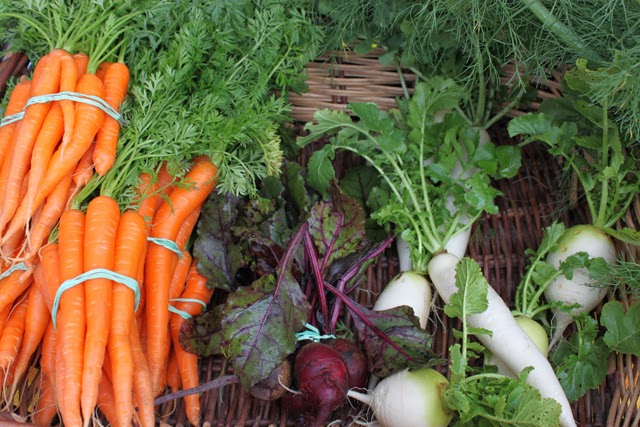
———————————————————————– The photo is from our stop at our local produce stand – they have the best selection and are a great way to supplement any items that we run out of in between CSA boxes.